
Transferring an Analytical-Scale LC Method to an Integrated Microfluidic Device for Quantification of Human Insulin and 5 Analogs in Plasma
Transferring an Analytical-Scale LC Method to an Integrated Microfluidic Device for Quantification of Human Insulin and 5 Analogs in Plasma
18 Jun 2015This application note investigates how ionKey technology led to improved sensitivity for insulin and it's analogues, achieving levels of quantification of 25pg/ml whilst reducing plasma sample and injection volumes. This method was carefully optimized to maximize sensitivity using a multi-dimensional LC system.
Related products
Request Quote for All Products
ACQUITY UPLC® BEH C18 and C8 Columns
WatersACQUITY UPLC® BEH C18 and C8 columns were designed to be the universal columns of choice for most UPLC® separations by providing the widest pH range.They incorporate trifunctional ligand bonding chemistries which produce superior low pH stability and ultra-low column bleed. This low pH stability is combined with the high pH stability of the 1.7 µm BEH particle to deliver the widest usable pH operating range. In addition, these new chemistries also utilize new, proprietary endcapping processes which produce outstanding peak shape for bases. These bonding chemistries and particle synthesis innovations produce the sharpest peaks, highest efficiencies and maximum MS sensitivities.
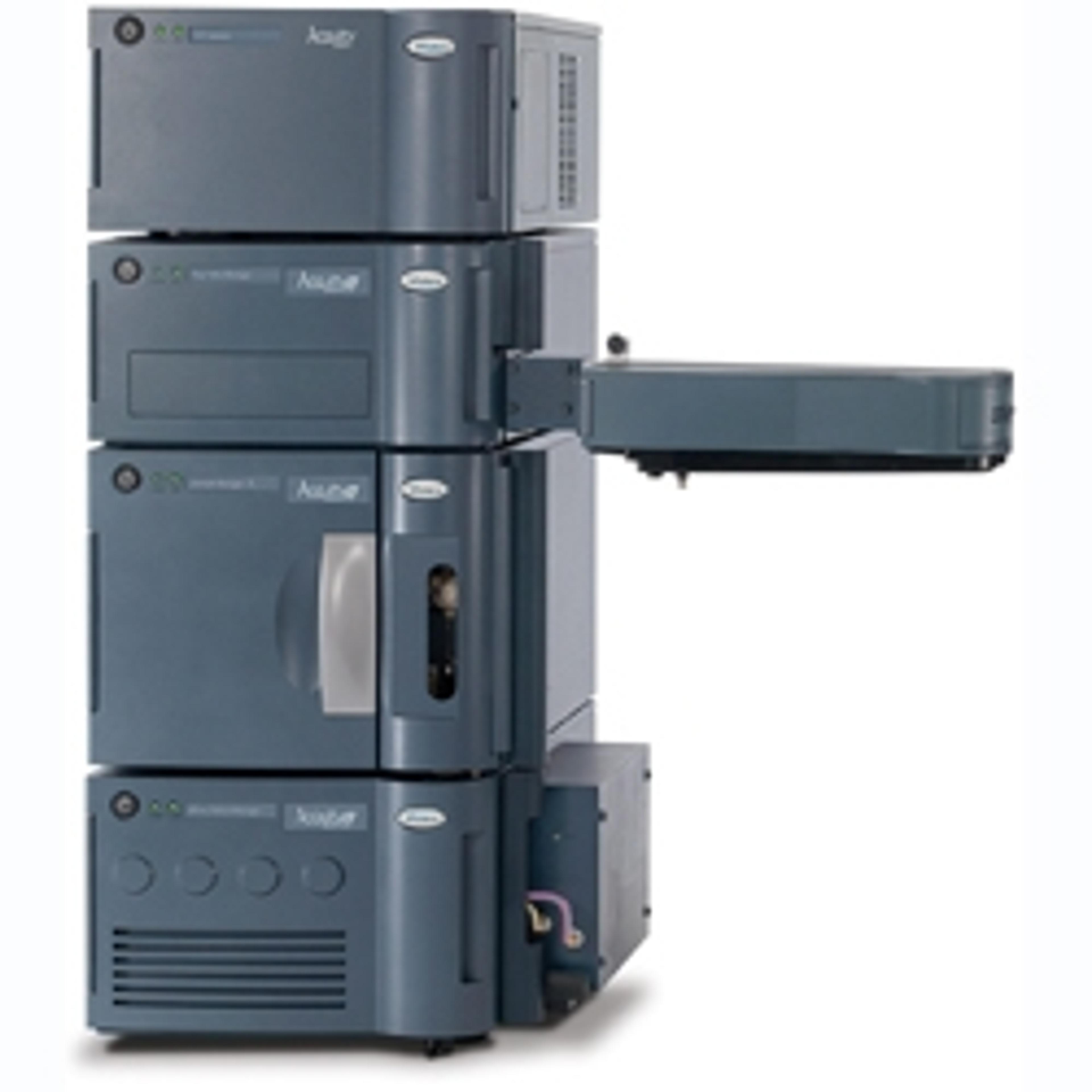
ACQUITY UPLC M-Class System
WatersThe analysis you’ve always desired for nano- to microscale separations The ACQUITY UPLC M-Class System delivers the most robust, reliable, and highest quality nano- to microscale UPLC separations to every laboratory performing LC/MS analyses. With unprecedented usability, the ACQUITY UPLC M-Class System enables laboratories to succeed in analyzing compounds that are severely limited in amount or availability, even amid a complex matrix over several orders of magnitude. Confidently achieve your laboratory goals with high-efficiency ACQUITY UPLC M-Class Columns ranging from 75 µm to 1 mm I.D. by using complementary mass spectrometry to support our full range of column I.D.’s, or run 300 µm to 1 mm I.D. columns with optical detection.The system also offers a range of flexible configurations for HDX technology, UV detection, and 2D analysis.ACQUITY UPLC M-Class System Features: Highest sensitivity - UPLC separations yield increased analyte concentration for higher UV and MS signal responses Maximum chromatographic resolution - New 15k psi-capable ACQUITY UPLC M-Class Columns deliver sub-2-µm particle performance Faster nano- and microscale separations - Increased operating pressures yield maximum flexibility for higher throughput analyses Higher resolution with longer columns - Increased pressure enables more separation power Confidence in sample analysis - New non-reactive wetted surfaces throughout the fluidic path minimize absorptive losses Increased solvent compataibility - Improved range of solvent blends precisely metered for gradient fidelity Increased sample capacity - Sample organizer compatibility allows you to store a wide variety of plates and vials in the system for longer, unattended operation UV compatibility - UV flow cells compatible with 300 µm to 1.0 mm I.D. columns to augment your UPLC/MS analysis Scalability - With flow rates from 200 nl/min to 100 µL/min, achieve the best chromatographic performance, from 75 µm to 1.0 mm I.D. columns covering a 170-fold range of column sizes Increased flexiblity - More value configurations enable a variety of applications, icnreased throughput, and maximized peak capacity
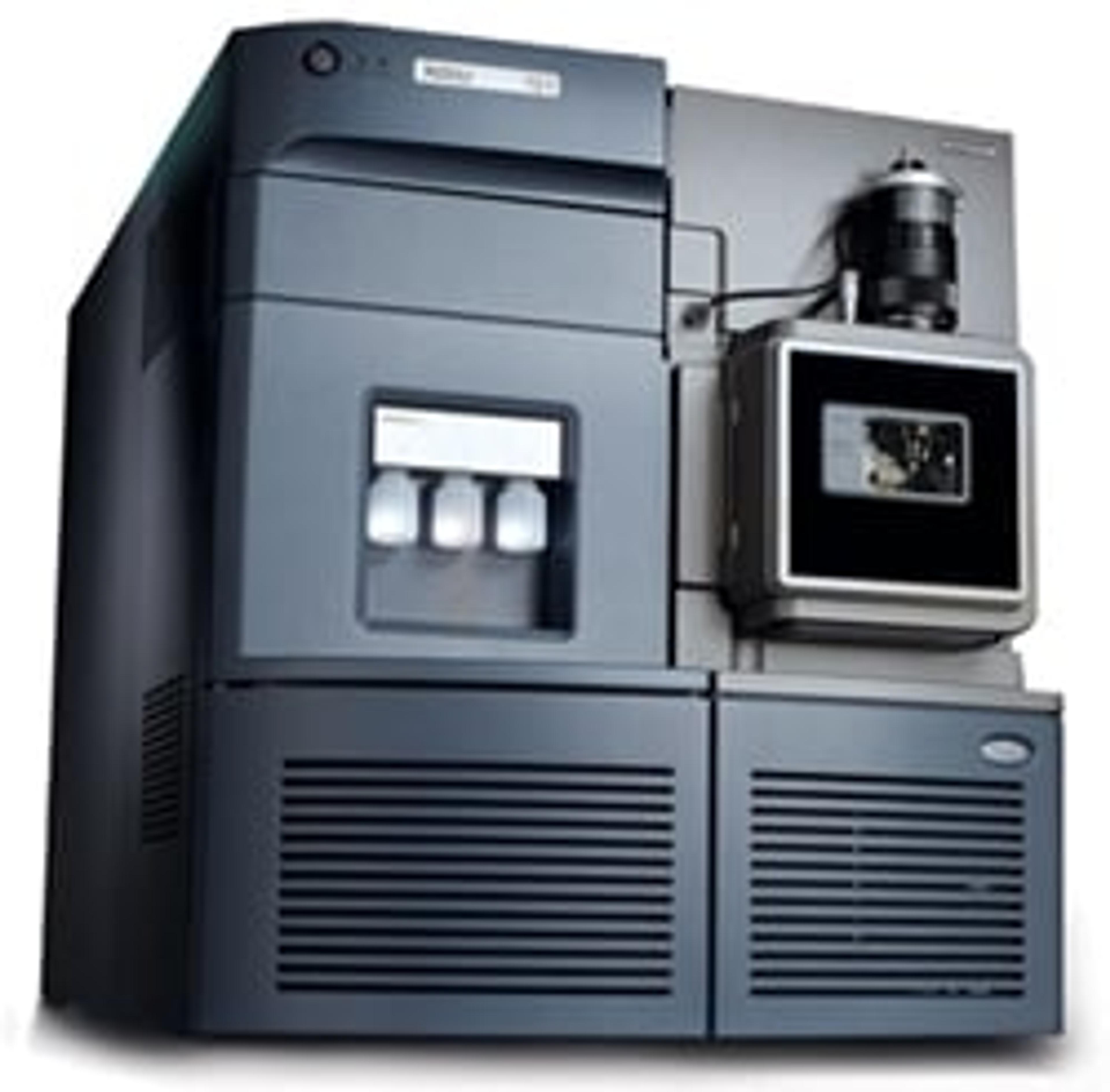
Xevo TQ-S
WatersXevo TQ-S tandem quadrupole mass spectrometer - designed for the most demanding quantitative UPLC/MS/MS applications. The ultimate in tandem quadrupole performance allows you to achieve unrivalled sensitivity and robustness, available to everyone due to the accessibility of the Xevo platform. The Xevo TQ-S gives you class leading sensitivity and robustness, qualitative information when you need it most and accelerated method development for sensitive and robust methods. Reducing complexity, increasing ease of use, and ensuring the correct result every time.