
Sensitive and Repeatable Analysis of Pesticides in QuEChERS Extracts with APGC-MS/MS
21 Apr 2014Multi-residue pesticide analysis is challenging due to the low limits of detection required in a diverse range of food commodities. As there are currently in excess of 1000 pesticides in use, laboratories are under increasing pressure to broaden the range of pesticides determined in ever shorter turnaround times. Therefore, the analytical methods they employ need to be sensitive and robust in a wide variety of sample matrices. This application note demonstrates that the Waters Xevo TQ-S equipped with an APGC source provides a sensitive and repeatable solution for the analysis of pesticides in QuEChERS extracts of strawberry, pear, and spinach.
Related products
Request Quote for All Products
TargetLynx
WatersThe TargetLynx™ Application Manager automates sample data acquisition, processing and reporting for quantitative results.It incorporates a range of confirmatory checks that identify samples that fall outside user-specified or regulatory thresholds. Identify Non-compliant Samples TargetLynx rapidly identifies and flags samples where: Analytes are above a specified maximum reporting level (MRL) Analyte confirmatory ion ratios are outside specified limits One or more analyte signal-to-noise ratios are below a defined value An analyte retention time or relative retention time is outside limits An analyte concentration is below set LOD and LOQ thresholds The standard deviation of response for QC standards exceeds a defined value The blank response is too high The coefficient of determination (r2) of the calibration curve exceeds a defined value LC/MS & LC/MS/MS and GC/MS & GC/MS/MS Use TargetLynx to quantify and confirm both LC/MS & LC/MS/MS and GC/MS & GC/MS/MS data. This data may be selected ion monitoring (SIM), multiple reaction monitoring (MRM), or full scan/full spectrum. In the case of full scan/spectrum data, extracted ion chromatograms are used for quantification. Ensure Regulatory Compliance The demand by regulatory authorities for assurance of confirmation in quantitative analysis continues to increase. To ensure cost-effective compliance, TargetLynx offers software that gives you confidence in your results and eliminates time-consuming, costly manual checks.

Waters Atmospheric Pressure Gas Chromatography (APGC)
WatersGC capabilities for today's advanced MS technologies
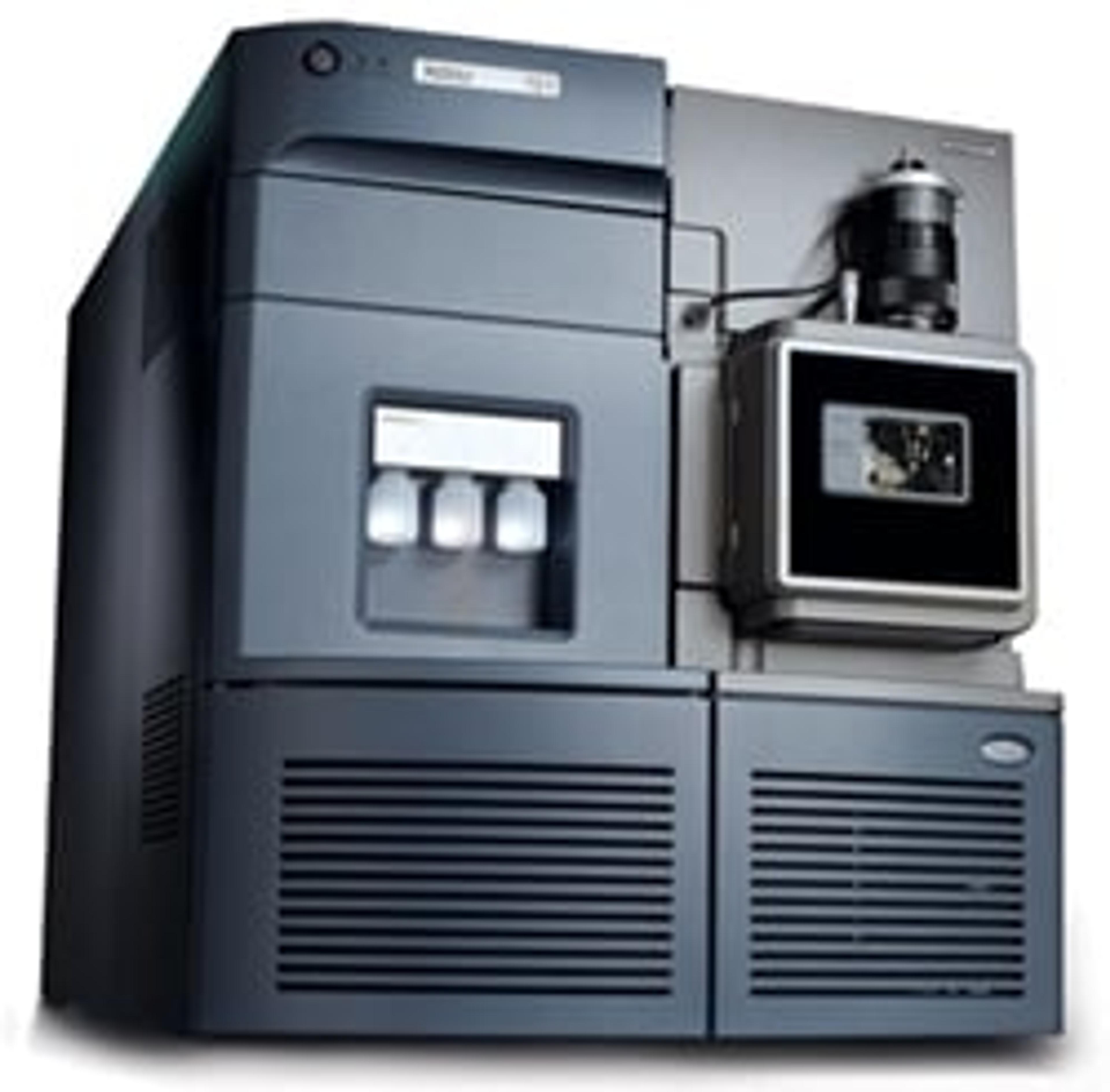
Xevo TQ-S
WatersXevo TQ-S tandem quadrupole mass spectrometer - designed for the most demanding quantitative UPLC/MS/MS applications. The ultimate in tandem quadrupole performance allows you to achieve unrivalled sensitivity and robustness, available to everyone due to the accessibility of the Xevo platform. The Xevo TQ-S gives you class leading sensitivity and robustness, qualitative information when you need it most and accelerated method development for sensitive and robust methods. Reducing complexity, increasing ease of use, and ensuring the correct result every time.