
Screening for Classical and Novel Drugs in Pooled Urine Using UPLC-Tof-MS<sup>E</sup>
15 Jun 2014This study presents the results of screening using a method based on UPLC /Tof-MSE. Accurate mass measurement allows the prediction of elemental composition, which is particularly beneficial when dealing with situations involving potential emerging drugs and analogs.
Related products
Request Quote for All Products
ACQUITY UPLC HSS T3 Columns for Polar Compound Retention
WatersACQUITY UPLC® HSS (High Strength Silica) T3 Columns contain the first and only 100% silica particle designed, tested and intended for use in applications up to 15000 psi/1000 bar. The ACQUITY UPLC® HSS particle is not an HPLC particle. High pore volume HPLC particles do not possess the mechanical stability necessary to withstand the high column packing and operating pressures of UPLC® separations. The first ligand chemistry in this UPLC®-certified column family utilizes T3 bonding in order to retain and separate polar organic compounds. ACQUITY UPLC® HSS T3 columns possess the superior polar-compound retention, aqueous mobile phase compatibility and ultra-low MS bleed of Atlantis® T3 columns. Easier Method Transfer Since Atlantis® T3 HPLC and ACQUITY UPLC® HSS T3 columns utilize T3 bonding, LC methods can be transferred from HPLC to UPLC® separations. Because Atlantis® and HSS particles are different substrates, some method modification and/or optimization may be required. A compelling benefit of UPLC® technology is the ease and speed at which this method optimization can occur since UPLC® separations offer greater resolution in less time. Moving from XBridge™ HPLC to ACQUITY UPLC® BEH columns is nearly seamless, as the hybrid particle substrates differ only in particle size. However, because of T3 bonding it should be straightforward to make simple adjustments to successfully transfer a separation from an Atlantis® T3 HPLC column to an ACQUITY UPLC® HSS T3 column.

ACQUITY UPLC System
WatersWaters ACQUITY UPLC - Dramatic Improvements in Speed, Sensitivity and Resolution Whether you work in methods development or quality assurance, in drug discovery and development or testing for safety in food supplies, you seek a productivity edge. With the ACQUITY UPLC® System, now you can get more information in a single, short run than you've ever seen with HPLC. Waters ACQUITY UPLC System UltraPerformance LC® (UPLC®) technology starts with unique 1.7 μm small-particle chemistries. Chromatographers no longer need to choose between speed and resolution–with UPLC you get both. Instrument Designed for Chemistry; Chemistry Designed for the Instrument The ACQUITY UPLC System has been holistically designed to match the performance needs of our innovative column chemistries with robust hardware, easy-to-use software and specialized support services. Small, pressure-tolerant particles High-pressure fluidic modules Minimized system volume Negligible carryover Reduced cycle times Fast response detectors Integrated system software and diagnostics With UPLC you have the ability to work more efficiently with higher speed, sensitivity and resolution at a much wider range of linear velocities, flow rates and backpressures to obtain superior results. The Waters ACQUITY UPLC System's high-pressure fluidics optimizes flow rates to make the most of small particle technology. The ACQUITY UPLC System's sample-handling design is designed to ensure exceptionally low carryover and reduced cycle time. And when interfaced with the Sample Organizer, it increases unattended sample capacity by ten times. High-speed detectors, both optical and mass, contribute to increased sensitivity and help manage the heightened speed and resolution requirements of UPLC. ACQUITY UPLC Systems are easily controlled, diagnosed, and monitored via a graphical system console interface. The console offers: Quick and easy access to critical instrument parameters Simple system start-up, elegant system status monitoring and predictive performance indicators to ensure maximum productivity Data management capabilities that are supported by both MassLynx™ and Empower™ software The ACQUITY UPLC System is also supported by Intelligent Device Management technology with our Connections® INSIGHT™ service, providing instrument diagnostics.
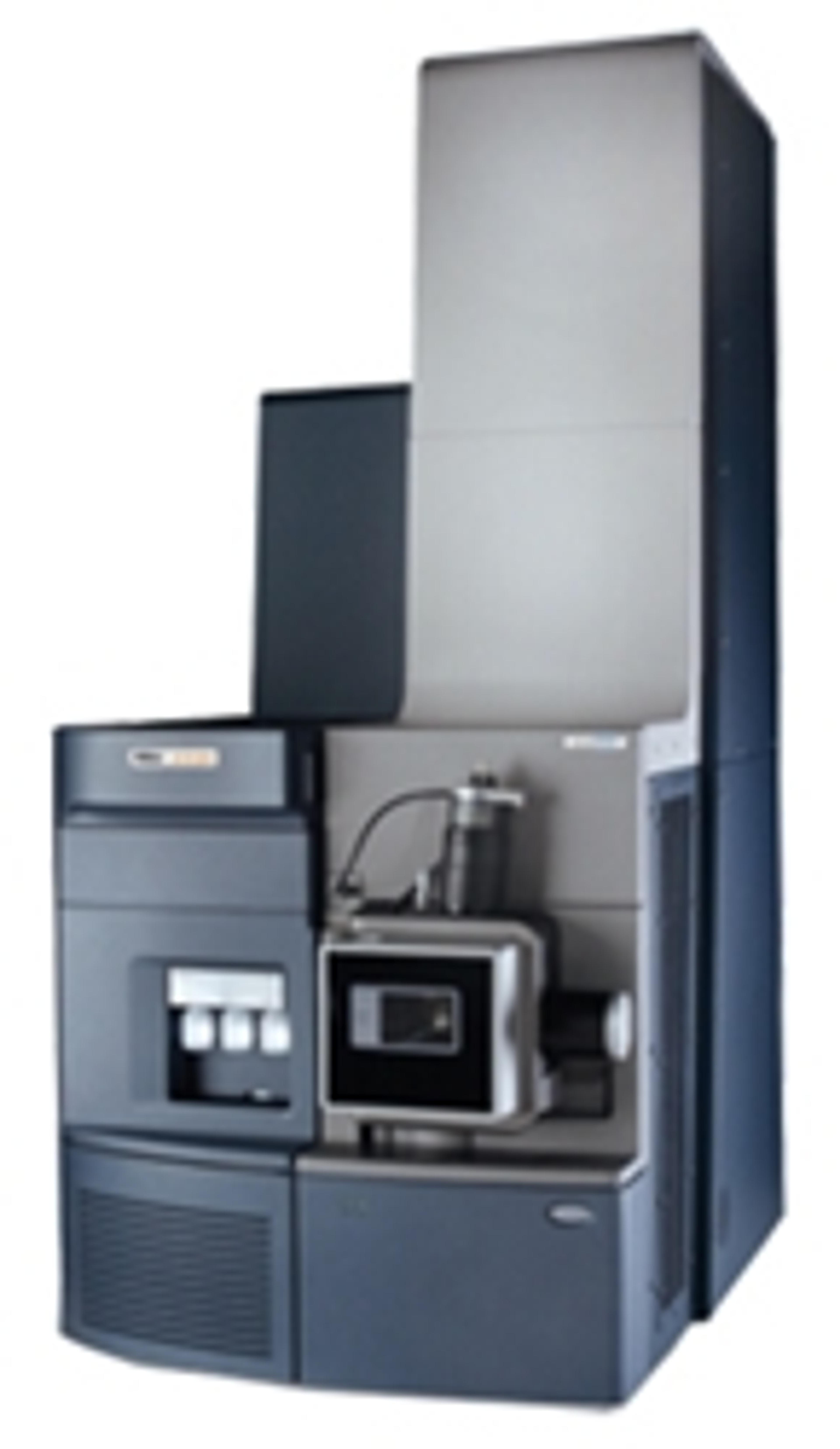
Xevo G2-XS QTof
WatersXevo G2-XS QTof - eXtreme Sensitivity, eXtraordinary Selectivity, eXceptional Solutions. For the scientist who needs to identify, quantify and confirm the broadest range of compounds in the most complex and challenging samples the Xevo G2-XS QTof provides maximum robustness with no compromise in performance, class-leading real-world quantitative sensitivity, the highest quality, most comprehensive qualitative information, flexibility to adapt to changing needs and is accessible to experts and non-experts alike.