ResourceSeparations

Sampling and Analysis of Combustible Air Fresheners

15 Feb 2017

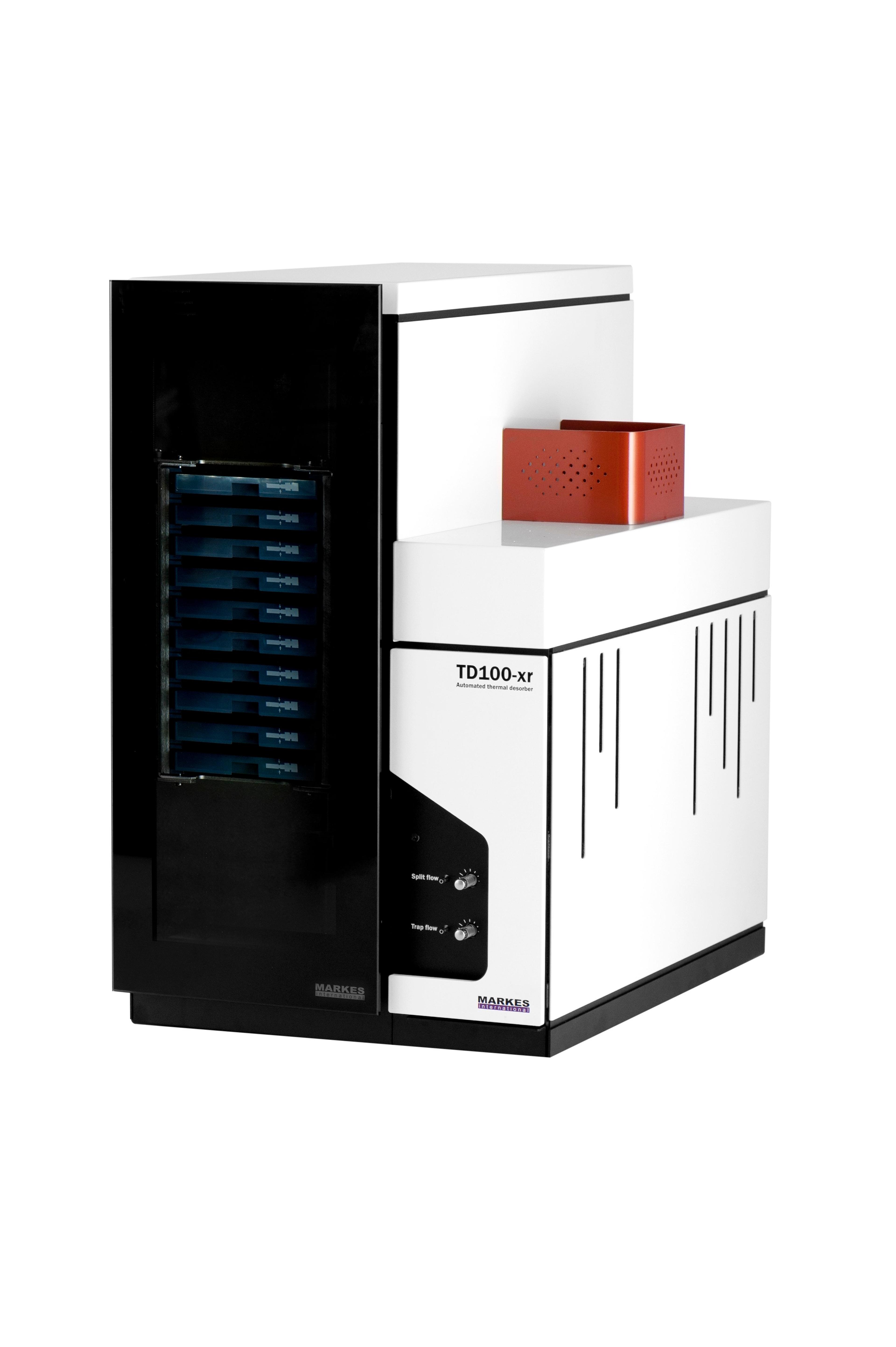
Combustible air fresheners are known to release numerous volatile organic compounds (VOCs) including both pleasant aromas and toxic components into the indoor environment. The EN 16738 is a test method for prepared by the European Committee for Emission Safety of Combustible Air Fresheners to ensure that air fresheners meet safety requirements. This application note describes how the EN 16738 test method can be carried out using Markes International ACTI-VOCTM and Markes International TD100-xrTM.

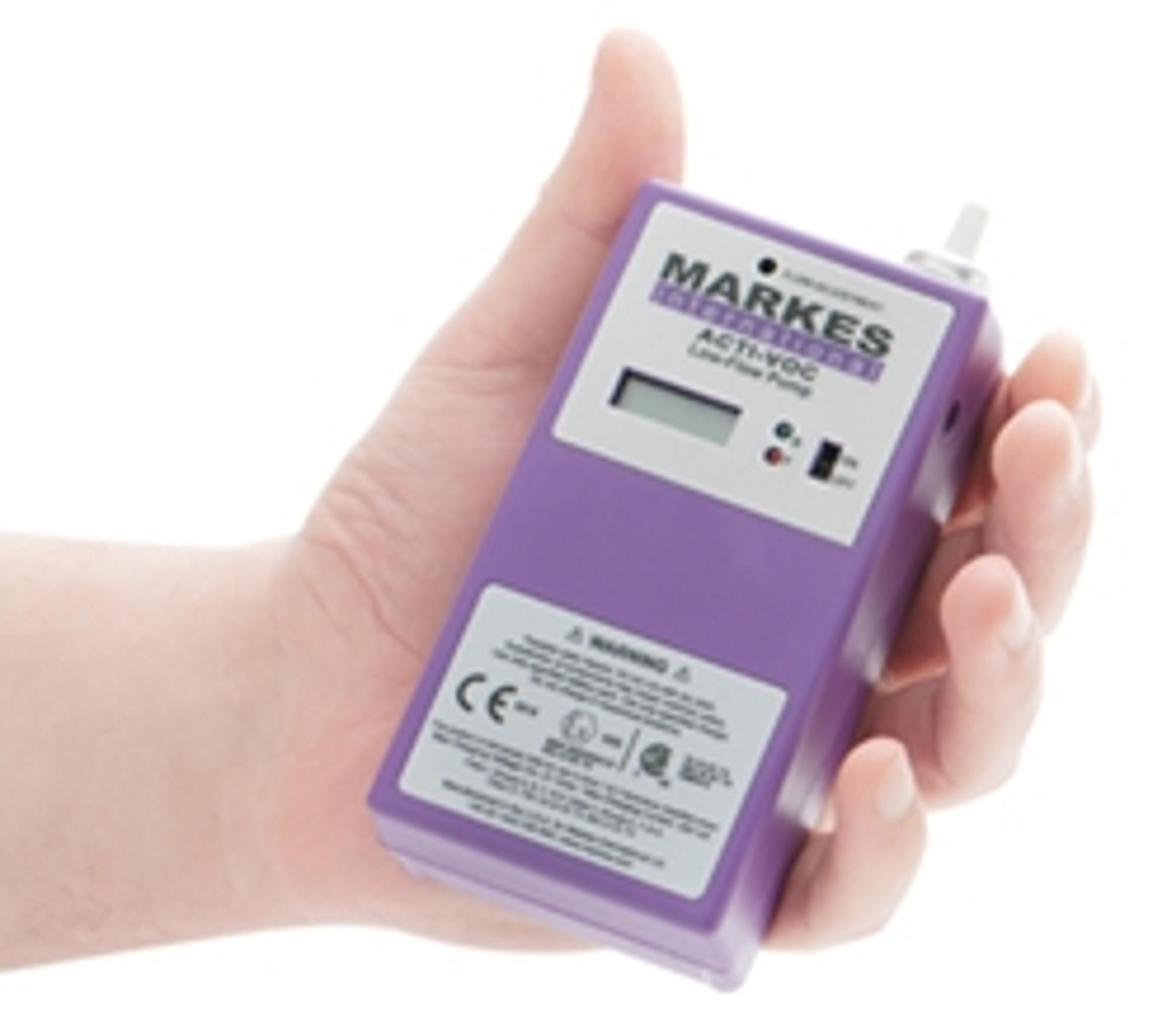
ACTI-VOC

Markes International Ltd

ACTI-VOC™ is a robust low-flow pump for sampling vapour-phase organic compounds (VOCs) onto sorbent tubes for subsequent analysis by thermal desorption (TD). Being lightweight, easy-to-use and intrinsically safe, ACTI-VOC is ideal for personal monitoring and a wide range of other air and gas sampling applications. Optimised for thermal desorption tubes Unlike other personal monitoring pumps on the market, ACTI-VOC is optimised for sampling onto thermal desorption tubes, and automatically compensates for different impedances, ensuring constant flow rates whatever the sorbent packing. Product highlights • Optimised for sampling onto thermal desorption tubes • Compatible with any thermal desorption tube (up to a max. flow of 350 mL/min) • Constant-flow sampling from 20–200 mL/min • Constant-pressure sampling from 1–350 mL/min • Simple screw-operated flow adjustment makes ACTI-VOC easy to calibrate • Intrinsically safe (ATEX-approved) • Long battery life ensures stable performance for over 8 hours • Pocket-sized, lightweight and easy to use • Supplied in a convenient carry-case with charger and accessories

(0)

Links

Tags

Atomic Absorption / Emission SpectroscopyAtomic absorption spectroscopy (AAS) and atomic emission spectroscopy (AES) — also called optical emission spectroscopy (OES) — are used to detect the elemental constituents in samples. Both techniques involve the atomization of a sample. Atomic absorption spectrometers may use a flame or furnace to create an atomic vapor of the sample before irradiation with spectral light. Optical emission spectrometers may use a flame, inductively coupled plasma (ICP), microwave plasma (MP) or spark arcs to atomize and excite the sample. At higher excitation energies, electrons can be emitted instead of photons, which can be useful for samples that can’t be atomized and for surface analysis. Explore electron spectroscopy equipment such as Auger spectrometers and photoelectron spectrometers for surface elemental analysis of samples. Find the best atomic absorption, photoelectron and optical emission spectrometers in our peer-reviewed product directory: compare products, check customer reviews and receive pricing direct from manufacturers.GC-MS GC-MS (gas chromatography-mass spectrometry) instruments and equipment are used to separate, quantify and identify mixtures of small and volatile compounds, such as polycyclic aromatics, fatty acids and alcohols. Often used in drug detection, forensic investigation and environmental analysis for pesticides and contaminants, GC-MS is a powerful addition to your lab’s analytical capabilities. GC-MS/MS instruments equipped with a qTOF or triple quadrupole analyzers can give greater sensitivity and resolution to your analysis. Find the best GC-MS instruments and equipment in our peer-reviewed product directory: compare products, check customer reviews and receive pricing direct from manufacturers.Air SamplingAir sampling is described as the technique used to capture air for the subsequent purpose of analyzing, typically by thermal desorption, the presence of trace particulates, such as volatile organic compounds (VOCs).Air ToxicsVolatile Organic Compounds (VOCs)Volatile organic compounds (VOCs) are chemicals that have a low boiling point. Some VOCs are harmful to human health, whereas others can be used to determine the shelf-life of foods samples. Semi Volatile Organic CompoundsSemi volatiles organic compounds (SVOCs) are a groups of compounds that have a low boiling point and evaporate above room temperature. SVOCs include phenols and polynuclear aromatic hydrocarbons (PAH).