Removal of Beta-Glucuronidase Enzyme from Urine Post-Hydrolysis to Improve Assay Performance and Column Lifetime

14 Nov 2014

Beta-glucuronidase is a 332 kDa enzyme that remains solubilized after incubation. Centrifuging samples post-hydrolysis is a common step to help remove the enzyme before analysis. This process works well in tubes, but the current centrifuges available for 96-well plates do not allow for sufficient speed to precipitate the enzyme. The increase in popularity of the 96-well plate format for high-throughput analysis has created a need for a simple technique to remove the enzyme that does not add significant cost to the assay. This application note demonstrates a simple post-hydrolysis step that removes the enzyme and significantly improves column lifetime.

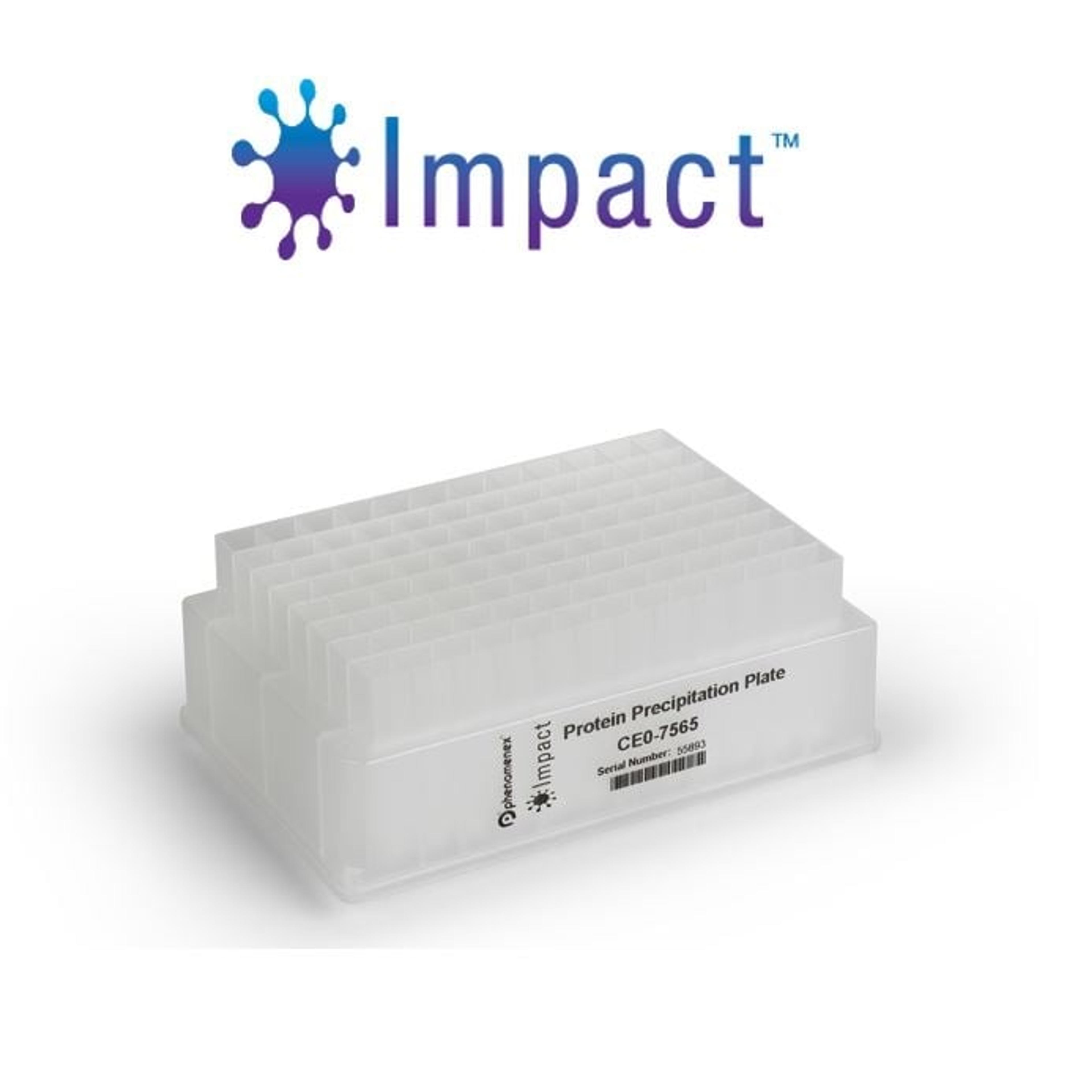
Impact™ Protein Precipitation Plates

Phenomenex Inc

Impact™ protein precipitation plates with Solvent Shielding Technology™ offer a rapid and convenient way to remove proteins from plasma and tissue homogenate samples prior to analysis.The Solvent Shielding Technology design will withhold organic solvents above the filter membranes for up to 25 minutes, allowing for direct in-well precipitation upon sample addition. The precipitate is then filtered out via vacuum, centrifuge or positive pressure resulting in a clean, protein depleted extract.

(0)

Links

Tags

UHPLC and HPLCHigh performance liquid chromatography (HPLC) and ultra high performance liquid chromatography (UHPLC), also known as UPLC, are analytical techniques used to separate, identify and quantitate components of complex mixtures including biological samples such as proteins and lipids as well as chemical mixtures of pesticides, drugs and oils. Both techniques are liquid chromatographic methods but differ by operating pressures (HPLC < 6000 psi < UHPLC ). Components of HPLC and UHPLC systems include columns, detectors, pumps, autosamplers and column heaters. Explore a range of UHPLC and HPLC columns for your specific sample needs including reverse phase, normal phase, ion exchange, HILIC, ion exclusion and size exclusion columns. For more specialized HPLC, explore FPLC, countercurrent LC and simulated moving bed systems. Find the best UHPLC and HPLC equipment in our peer reviewed product directory: compare products, check customer reviews and receive pricing direct from manufacturers.Clinical ChemistryBiochemistry (or clinical chemistry) involves the analysis of bodily fluids using chemical tests. Techniques used include HPLC, chromatography, spectroscopy, mass spectrometry, immunochemical, electrophoresis, turbidometric / spectrophotometric assay, MRI and ISE analysis. Tests are often carried out on plasma or serum but urine (urinalysis) and fecal specimens are also processed.EnzymesEnzymes are macromolecular biological catalysts used across life science, pharmaceutical and clinical research. Various enzymes can be purchased for research applications including ligases, high fidelity polymerases, nuclease, protease, restriction enzymes, tissue dissociation enzymes and enzyme inhibitors. Find the best enzymes in our peer-reviewed product directory: compare products, check customer reviews and receive pricing direct from manufacturers.High ThroughputHigh throughput experiments allow the simultaneous processing of several samples. This parallelization reduces the cost per experiment and increases reproducibility and output volume of data.UrineThe analysis of urine is important in medicinal, anti-doping, forensic and life sciences applications. The ability to evaluate what someone has ingested through their urine enables fast detection and diagnosis of certain illnesses.
Removal of Beta-Glucuronidase Enzyme from Urine Post-Hydrolysis to Improve Assay Performance and Column Lifetime