Polycyclic aromatic hydrocarbon analysis in food

21 Sept 2021

Polycyclic aromatic hydrocarbons (PAHs) tend to bioaccumulate in fatty foods such as fish, meat, oil, and milk and are extremely toxic to humans even at low concentrations. The US Food and Drug Administration (FDA) requires PAH analysis at low ppb levels in seafood. The European Union regulates a series of PAHs found in food matrices as EU PAH4. Download the application note below to see how you can utilize Agilent's technology in your research when analyzing PAH in food.

Captiva EMR-Lipid

Agilent Technologies

Captiva EMR-Lipid provides highly selective, efficient lipid/matrix removal without analyte loss. The novel EMR-Lipid technology removes lipids based on size exclusion and hydrophobic interaction. Effective lipid removal ensures minimal ion suppression of target analytes, significantly improving method reliability and ruggedness.  
(1)

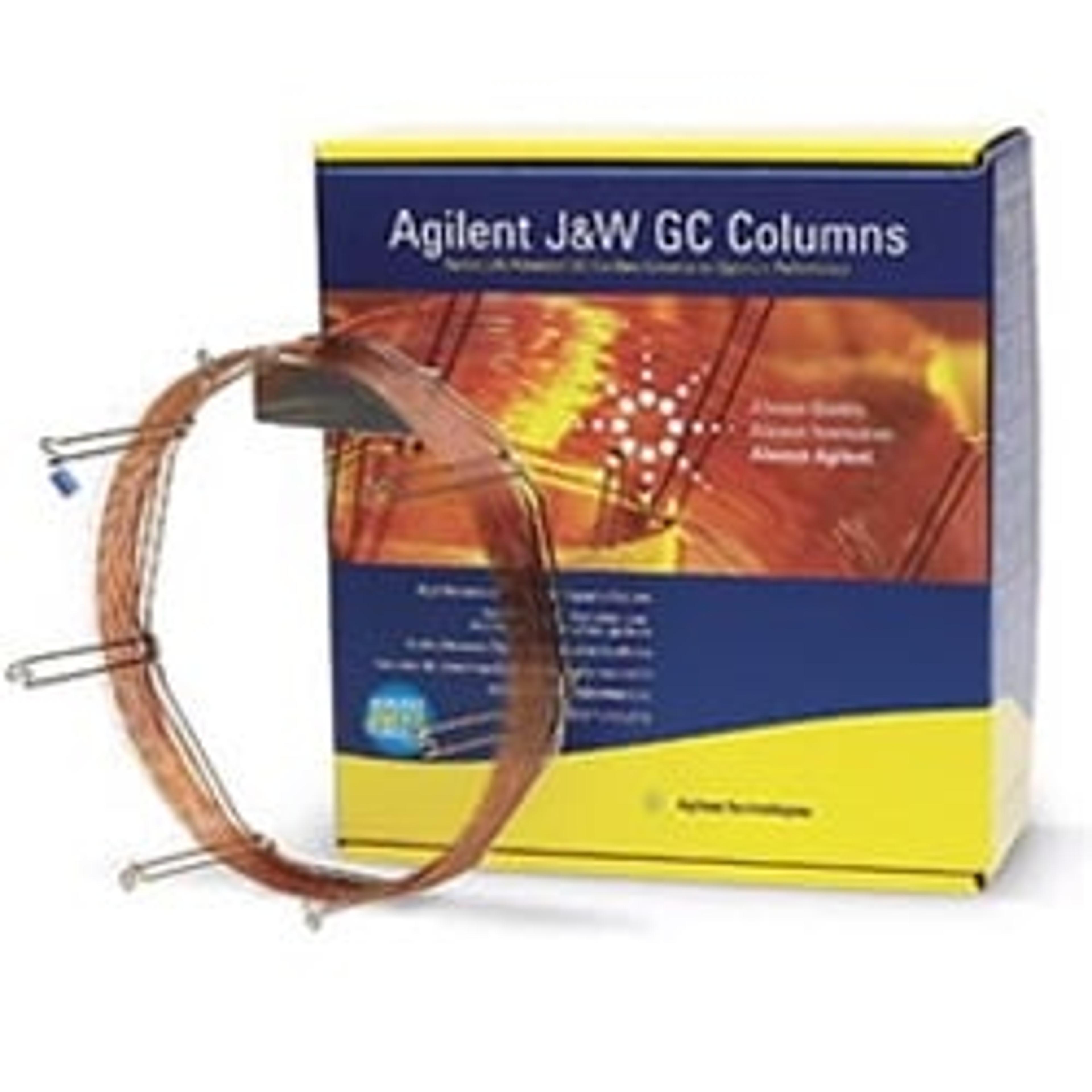
DB-EUPAH GC Columns

Agilent Technologies

Agilent J&W DB-EUPAH columns are designed and tested to provide the most optimal performance for all 16 EU-regulated polycyclic aromatic hydrocarbons (PAHs). The columns are individually tested with an application-specific QC test probe mixture and deliver excellent resolution of critical PAH isomers, such as benzo(b,j,k)fluoranthene.

(0)

Links

Tags

Gas ChromatographyGas chromatography (GC) is an analytical technique used to separate and quantitate mixtures of small and volatile compounds. Gas chromatographs or GC systems include components such as GC columns, detectors, pumps and autosamplers. Choose from packed or capillary GC columns, flame ionization (FID), photoionization (PID) electron capture detectors and selective or non-selective detectors. Find the best gas chromatographs in our peer-reviewed product directory: compare products, check customer reviews and receive pricing direct from manufacturers.GC-MS GC-MS (gas chromatography-mass spectrometry) instruments and equipment are used to separate, quantify and identify mixtures of small and volatile compounds, such as polycyclic aromatics, fatty acids and alcohols. Often used in drug detection, forensic investigation and environmental analysis for pesticides and contaminants, GC-MS is a powerful addition to your lab’s analytical capabilities. GC-MS/MS instruments equipped with a qTOF or triple quadrupole analyzers can give greater sensitivity and resolution to your analysis. Find the best GC-MS instruments and equipment in our peer-reviewed product directory: compare products, check customer reviews and receive pricing direct from manufacturers.ChromatographyChromatography is a powerful technique used to separate and analyze components of mixtures based on their chemical properties. It is widely used in fields like biochemistry, pharmaceuticals, and environmental analysis. By exploiting differences in the interaction of substances with a stationary phase and a mobile phase, chromatography enables precise purification and quantification of compounds. Whether you're working with complex biological samples or industrial chemicals, chromatography is essential for obtaining high-quality results. Browse our peer-reviewed product directory to find the best chromatography systems, compare products, read customer reviews, and get pricing directly from manufacturers.Food TestingFood testing refers to a variety experiments including PCR, mass spectrometry, processing, QuEChERS, analyzing and Kjeldahl.Chemical Residues in FoodGas ChromatographyGas chromatography (GC) is an analytical technique used to separate and analyze gases or volatile liquids in a sample. It is widely used in environmental testing, food safety, pharmaceuticals, and forensic science. GC is ideal for identifying and quantifying compounds that are gaseous or can be vaporized without decomposition. Browse our peer-reviewed product directory to find the best gas chromatography systems, compare products, check reviews, and get pricing directly from manufacturers.
Polycyclic aromatic hydrocarbon analysis in food