
N latex FLC ratio for definition of ultra-high-risk smoldering multiple myeloma (SMM) - validation of the FLC rule 100
4 Nov 2022Smoldering multiple myeloma (SMM), an asymptomatic precursor of multiple myeloma (MM), is often accidentally detected during serum or urine electrophoresis testing, and patients presenting with this disease have a 10% progression rate to MM within 5 years after diagnosis. In order to prevent the development of end-organ damage in MM by preventing the progression of SMM via early therapy, biomarkers are needed to accurately identify SMM patients who are at imminent risk of disease progression and presenting with biological malignancy. A serum free light chain (FLC) ratio equal to or more than 100 can act as a biomarker of malignancy, and in this white paper, Siemens Healthineers validates the FLC rule 100, explaining how their N Latex FLC assays can be used to determine FLC ratios and define ultra-high-risk SMM patients.
Related products
Request Quote for All Products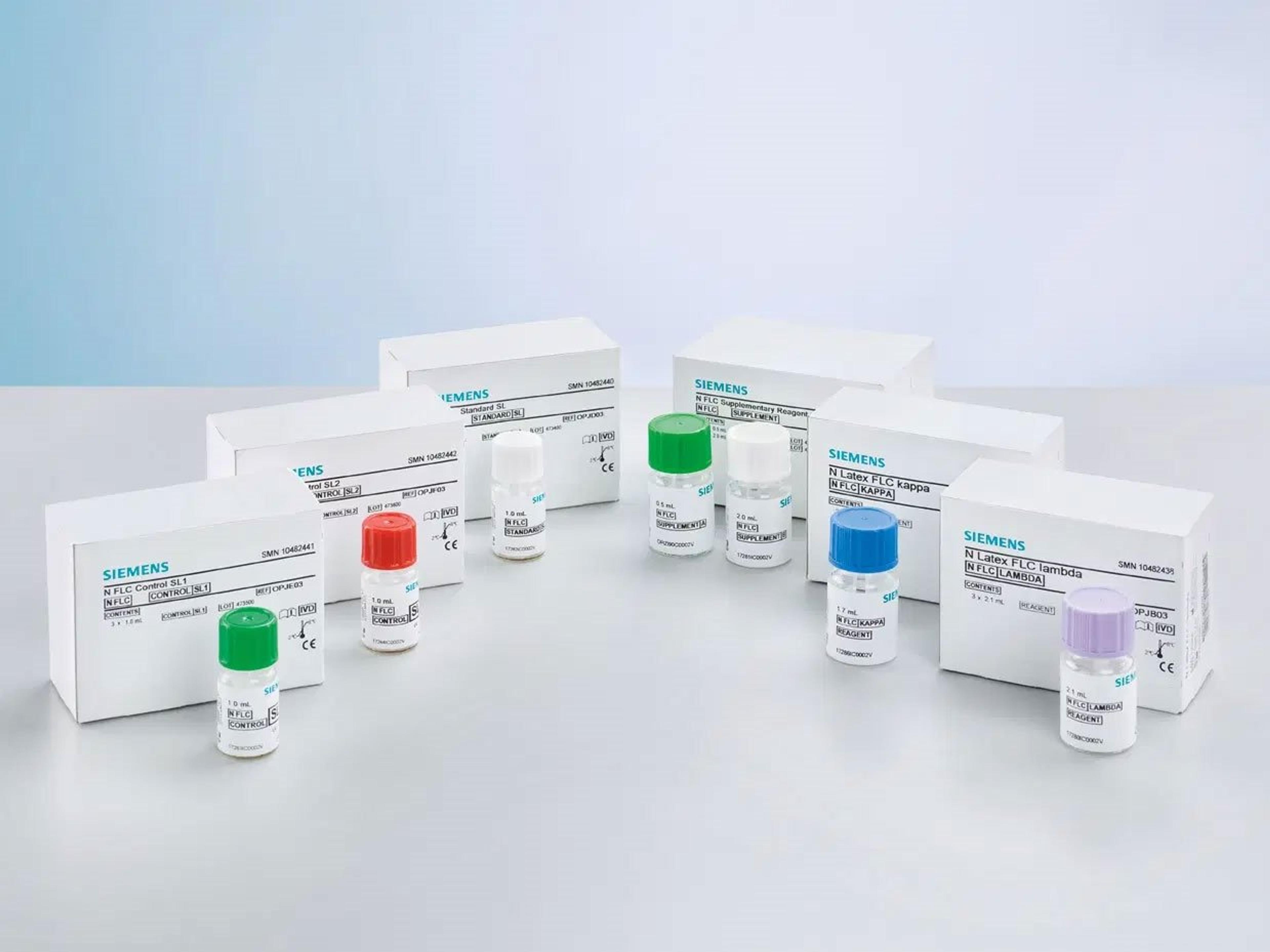
N Latex FLC kappa and N Latex FLC lambda Assays
Siemens HealthineersAdd confidence to screening and monitoring of monoclonal gammopathies.