ResourceSpectroscopy

Measuring Arsenic in Water

14 Jul 2019

In this application note, Agilent outlines an example analysis that demonstrates how the 200 AA Series is designed to significantly simplify graphite furnace method implementation through intelligent ashing and atomization optimizations.

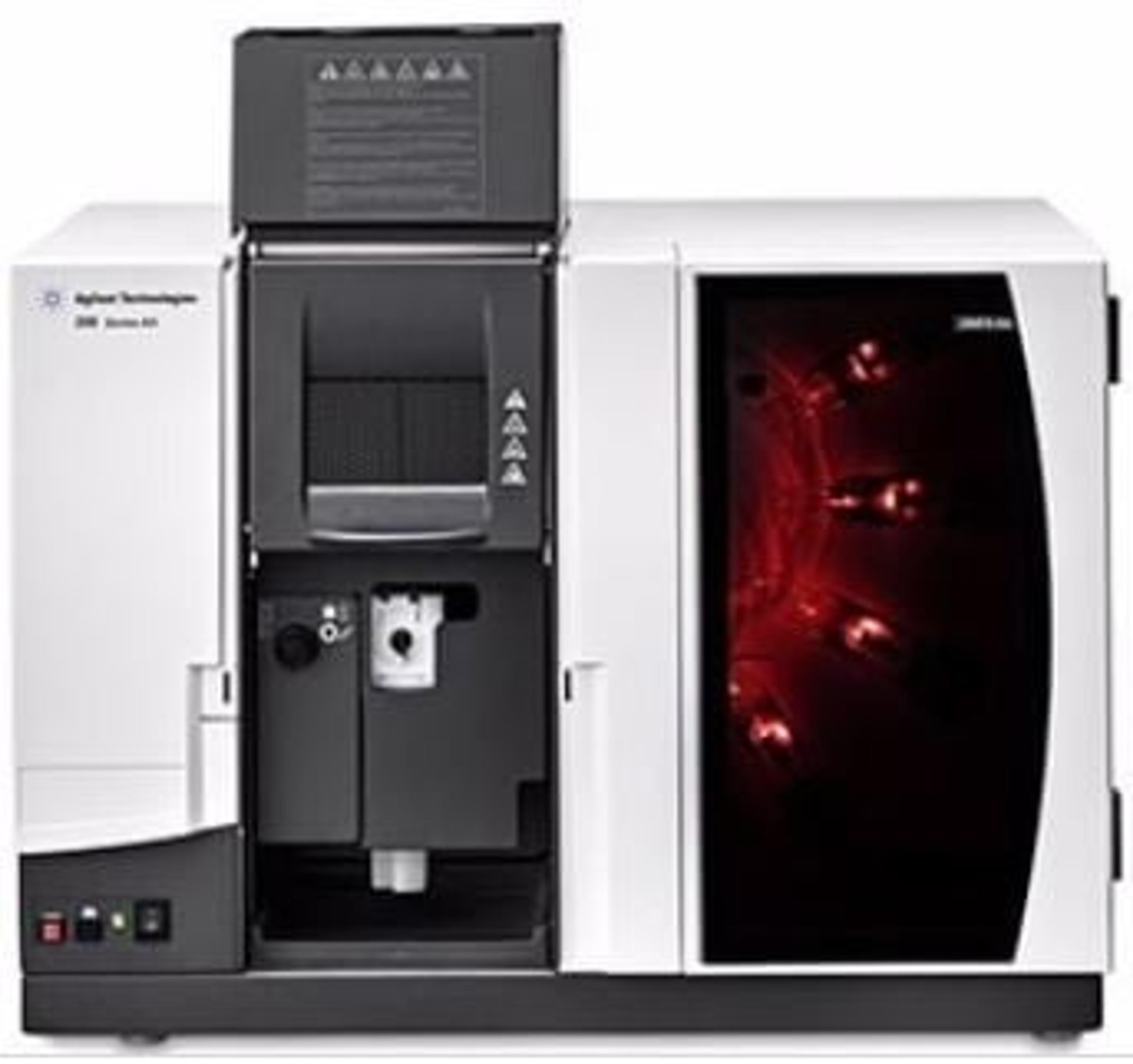
240FS AA

Agilent Technologies

The Agilent 240FS AA is a Fast Sequential atomic absorption spectrometer that can double sample throughout and dramatically reduce running costs. Able to handle multi-element suites with ease, the Agilent 240FS AA system is ideal for environmental, food, and agriculture labs. The 240FS AA features automatic lamp selection, programmable gas box, and D2 background correction.
(6)

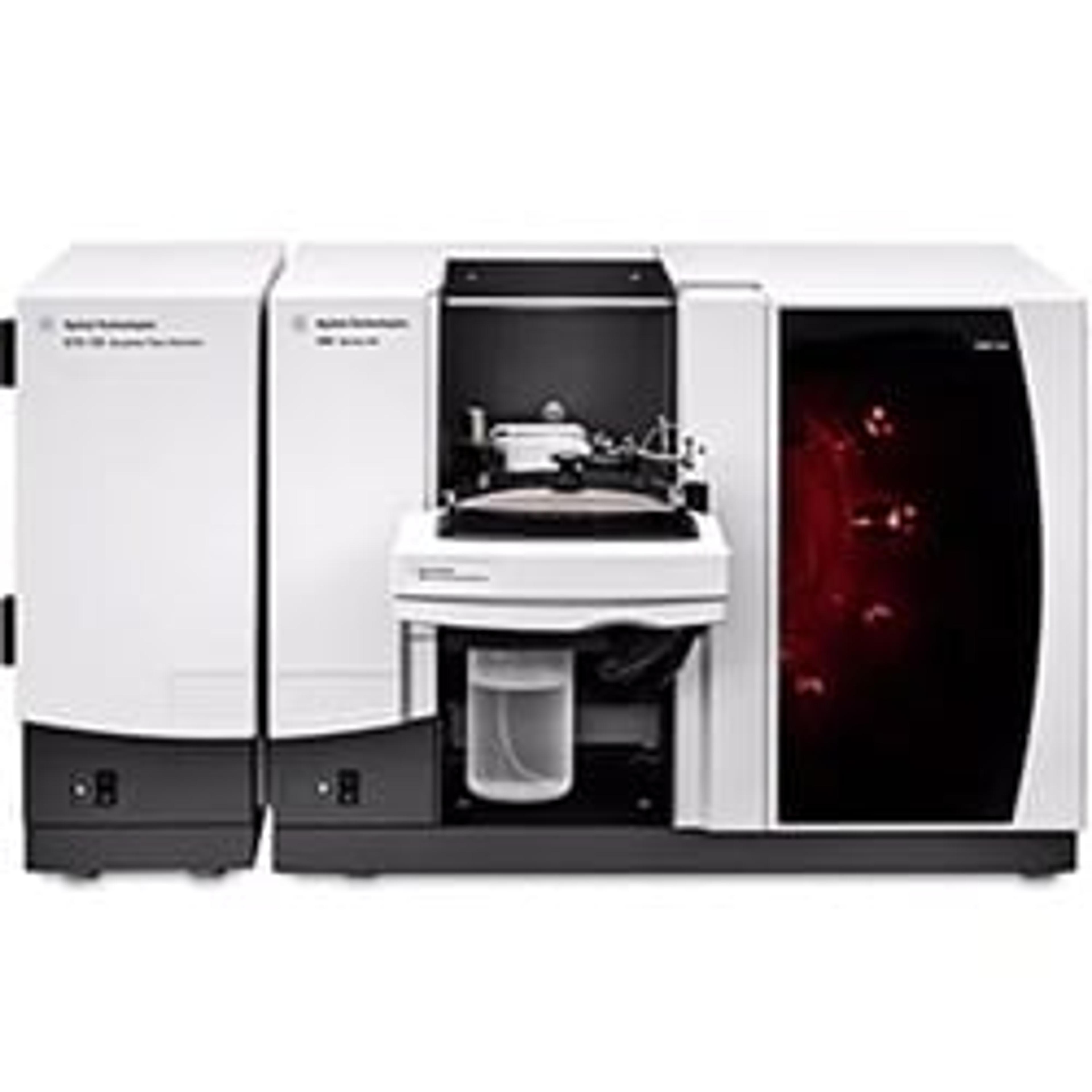
Agilent 240Z AA and 280Z AA Zeeman Atomic Absorption Spectrometers

Agilent Technologies

Based on the sensitive AC-modulated Zeeman technique, proven to give the best detection limits of any Zeeman spectrometer, the 240Z AA and 280Z AA offer the highest sensitivity, performance, simplicity of operation and industry-leading software in atomic spectroscopy. The instruments are supplied with the GTA 120 Zeeman graphite tube atomizer for superior graphite furnace performance and are controlled by our acclaimed Windows-based Worksheet software.

(12)

Agilent 280FS AA Fast Sequential Atomic Absorption Spectrometer

Agilent Technologies

The Agilent 280FS AA is a fast and productive flame AA system, featuring Fast Sequential operation combined with 8-lamp capability, premium optics, and UltrAA lamp looms for greater performance. Able to handle multi-element suites with ease, it is ideal for environmental, food, and agriculture applications as well as high-throughput labs.  

(2)

Links

Tags

Atomic Absorption / Emission SpectroscopyAtomic absorption spectroscopy (AAS) and atomic emission spectroscopy (AES) — also called optical emission spectroscopy (OES) — are used to detect the elemental constituents in samples. Both techniques involve the atomization of a sample. Atomic absorption spectrometers may use a flame or furnace to create an atomic vapor of the sample before irradiation with spectral light. Optical emission spectrometers may use a flame, inductively coupled plasma (ICP), microwave plasma (MP) or spark arcs to atomize and excite the sample. At higher excitation energies, electrons can be emitted instead of photons, which can be useful for samples that can’t be atomized and for surface analysis. Explore electron spectroscopy equipment such as Auger spectrometers and photoelectron spectrometers for surface elemental analysis of samples. Find the best atomic absorption, photoelectron and optical emission spectrometers in our peer-reviewed product directory: compare products, check customer reviews and receive pricing direct from manufacturers.Food and Beverage AnalyzersFood and Beverage Analyzers are commonly used to provide information about the chemical composition, structure and physical properties of food materials.Water PurificationThere are a number of water purification methods available to remove contamination from laboratory water. These systems include demineralization, reverse osmosis, filtration and ultrafiltration. A combination of methods is sometimes necessary to achieve purified water suitable for use in experiments.Water AnalysisAnalytical methods used to test the purity of drinking water include determining the level of contaminants abides to the level set by the Environmental Protection Agency (EPA).Water Content AnalysisWater content analysis is crucial for determining the moisture levels in food, pharmaceuticals, chemicals, and other materials. Accurate measurement ensures product quality and shelf-life. Explore water content analysis tools in our peer-reviewed product directory; compare products, check reviews, and get pricing directly from manufacturers.ToxicityToxicity is defined as the degree to which a substance can harm humans or animals. It is essential to study the toxicity of pharmaceutical products during the development process so that optimum dosage can be established for the administration of the drug.ArsenicArsenic is a toxic element that is used in the production of pesticides. Arsenic contamination of groundwater is a major issue for both drinking water and for uptake in foodstuffs such as rice.Drinking Water AnalysisAnalytical methods used to test the purity of drinking water include determining the level of contaminants abides to the level set by the Environmental Protection Agency (EPA).