ResourceSeparations

LC/MS/MS Analysis of Immunosuppressants from Whole Blood using Aeris™ Core-Shell HPLC/UHPLC Columns from Phenomenex

28 Oct 2014

Cyclosporine A, tacrolimus, sirolimus, and everolimus are four of the most commonly administered immunosuppressant drugs and play a central role in the success of tissue and organ transplants. These drugs are most typically analyzed from whole blood using LC/MS/MS. However, because of the analytical challenges posed when working with whole blood, many of the published methods rely upon complex and/or expensive extraction steps prior to use of the actual analytical column. This application note presents a rapid and effective method for the analysis of these four immunosuppressants from whole blood that uses a simple protein precipitation step followed by direct injection onto a wide-pore core-shell HPLC column (Aeris WIDEPORE 3.6 μm XB-C18). The method displays excellent accuracy and is sensitive down to the low μg/L (ng/mL) range.

Aeris Core-Shell LC Columns for Proteins and Peptides

Phenomenex Inc

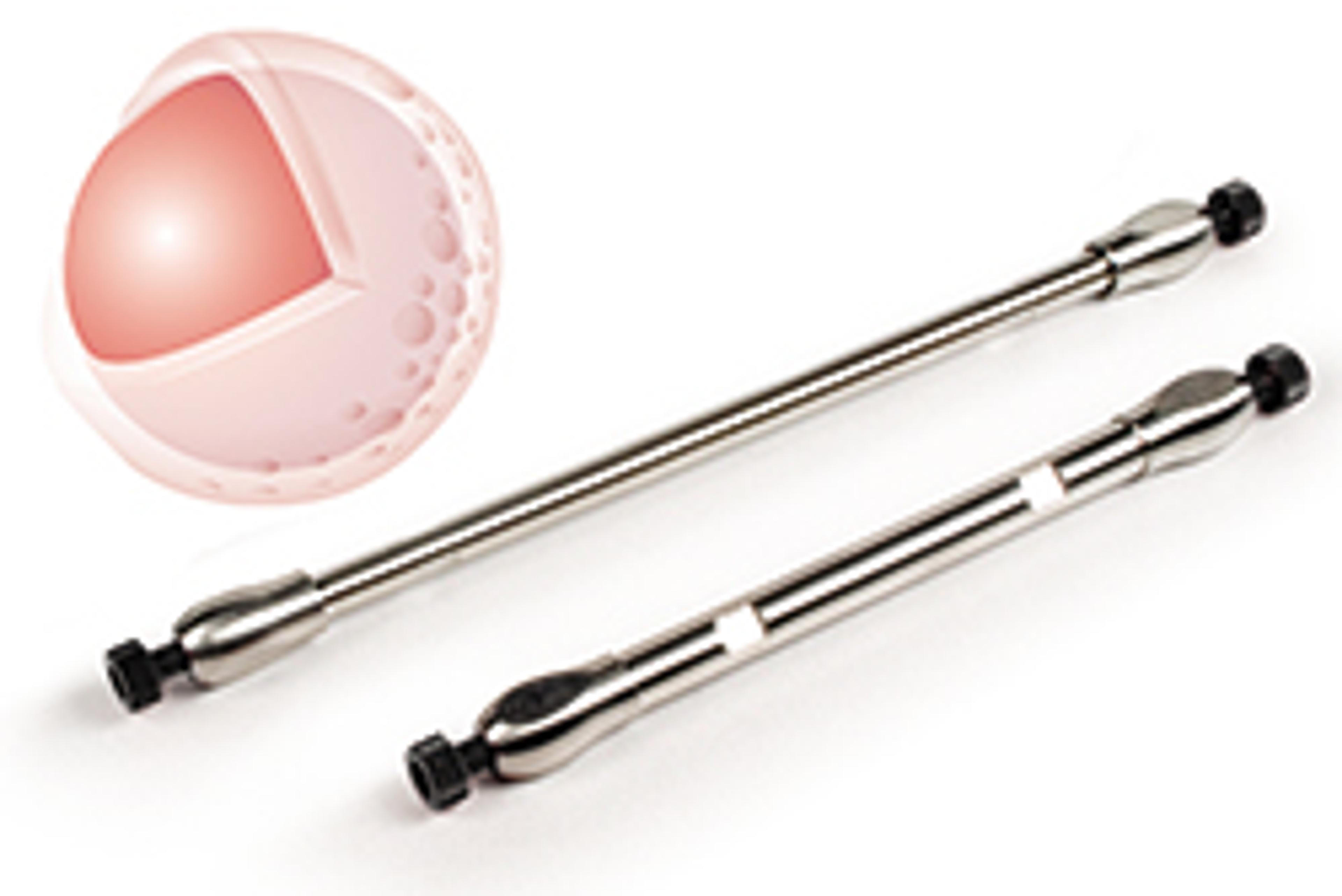
  Core-Shell Particles Precision Engineered for Protein and Peptide Separations.   Core-shell particle technology provides striking increases in peak capacity and resolution at lower backpressure, giving chromatographers the ability to achieve ultra-high performance on ANY system, HPLC or UHPLC. A uniform porous silica layer is grown around a solid, spherical silica core, providing effective retention and selectivity with improved resolution, speed, and recovery. Next, optimizing the pore size and shell thickness for intact proteins or smaller peptide fragments provides well-defined depth penetration of biomolecules leading to maximum separation power. Column Specifications: Phase: PEPTIDE XB-C18, WIDEPORE C4, WIDEPORE XB-C18, WIDEPORE XB-C8 Particle Size: 1.7, 2.6, 3.6, 5.0 µm Pore Size: 200, 100 Å Length: 50, 100, 150, 250 mm ID: 2.1, 3.0, 4.6, 10.0, 21.2 PEPTIDE XB-C18 Synthetic peptide impurity analysis Peptide mapping Identifying protein modifications - Glycosylation - Substitution - Truncation Analyzing post-translational modifications - Deamidation - Oxidation - Deletions WIDEPORE XB-C18 Proteins Hydrophilic proteins PEGylated proteins High temperature separations Alternative selectivity for peptide mapping WIDEPORE XB-C8 Large proteins Moderately hydrophobic proteins Monoclonal antibodies Glycosylated proteins High temperature separations WIDEPORE C4 Very large proteins Very hydrophobic proteins Membrane proteins Least retentive

(3)

Links

Tags

UHPLC and HPLCHigh performance liquid chromatography (HPLC) and ultra high performance liquid chromatography (UHPLC), also known as UPLC, are analytical techniques used to separate, identify and quantitate components of complex mixtures including biological samples such as proteins and lipids as well as chemical mixtures of pesticides, drugs and oils. Both techniques are liquid chromatographic methods but differ by operating pressures (HPLC < 6000 psi < UHPLC ). Components of HPLC and UHPLC systems include columns, detectors, pumps, autosamplers and column heaters. Explore a range of UHPLC and HPLC columns for your specific sample needs including reverse phase, normal phase, ion exchange, HILIC, ion exclusion and size exclusion columns. For more specialized HPLC, explore FPLC, countercurrent LC and simulated moving bed systems. Find the best UHPLC and HPLC equipment in our peer reviewed product directory: compare products, check customer reviews and receive pricing direct from manufacturers.LC-MSLC-MS (liquid chromatography-mass spectrometry) systems and equipment are used for separation and quantitative analysis of complex mixtures, combining liquid chromatography and mass spectrometry. Quantify proteins, contaminants, pesticides or screen for drug metabolites with a high level of sensitivity. LC-MS systems and equipment include reverse phase, normal phase and specialized columns integrated with various MS detectors such as time-of-flight (TOF), quadrupole, orbitrap or ion trap mass analyzers. LC-MS/MS instruments equipped with a qTOF or triple quadrupole analyzer give greater sensitivity and resolving power to your analysis. Find the best LC-MS equipment in our peer-reviewed product directory: compare products, check customer reviews and receive pricing direct from manufacturers.Solid-Phase ExtractionSolid-phase extraction (SPE) is used for clean-up, extraction and concentration of semi-volatile or non-volatile analytes from complex mixtures including blood, urine and food samples. Multiple formats are available for conducting SPE, including prepacked SPE cartridges, disks and microplates, as well as SPE sorbent powders for manual packing. SPE systems can be used to automate the process and extract multiple samples at once. Solid-phase microextraction (SPME) and supported liquid extraction (SLE) products are also available in the same formats. Find the best SPE, SLE and SPME equipment in our peer-reviewed product directory: compare products, check customer reviews and receive pricing direct from manufacturers.Blood AnalysisThe analysis of blood is vital for many areas of life sciences and forensic investigations. Blood samples can be tested for a number of different reasons such as diagnosis, glucose levels, cholesterol and drug testing.HPLC Method DevelopmentIt is important to develop and validate HPLC methods in order to identify, quantify or purify compounds of interest in the most efficient way. Effective method development ensures optimization, quality control and cost effectiveness.