
Intra-Laboratory Validation of an Alternative Column Chemistry for the LC-MS/MS Analysis of Pesticides in Fruits and Vegetables Using Method EN 15662
16 Oct 2014LC-MS/MS methods are very popular for the analysis of pesticides in food. Several methods currently exist for their extraction from a variety of different food matrices. One of the newer methods is known as the QuEChERS, this method employs dispersive solid phase extraction (SPE) for extraction and cleanup. This method is now the European Norm (EN 15662). While this method typically uses C18 HPLC columns, this application note describes an intra-laboratory comparison and validation procedure using an Ascentis® Express RP-Amide column.
Related products
Request Quote for All Products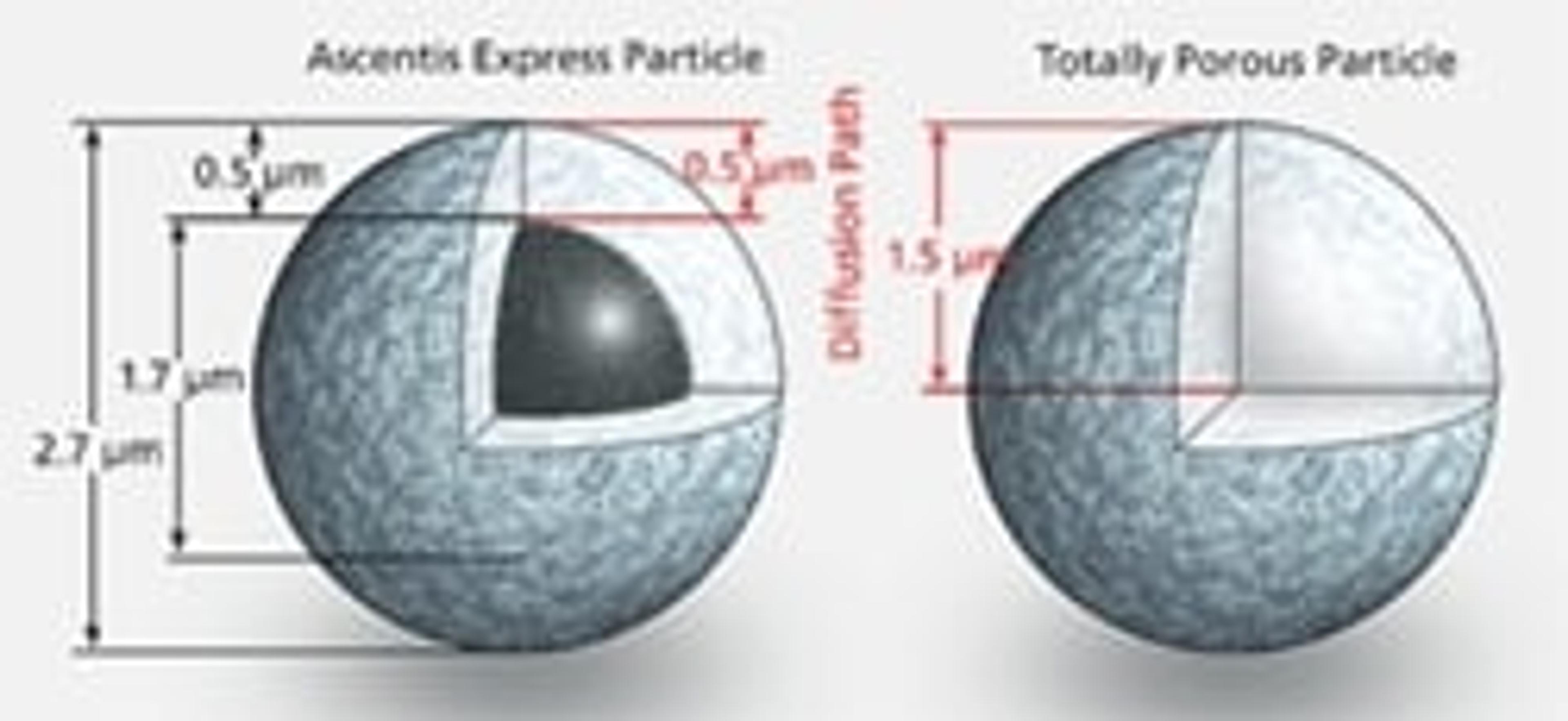
Ascentis® Express RP-Amide HPLC Columns
Sigma-Aldrich SupelcoAscentis Express RP-Amide HPLC columns are the most recent product additions to the Supelco HPLC product line. Combining an embedded polar group (EPG) stationary phase with the Fused-Core particles, Ascentis Express RP-Amide provides a host of useful benefits to the HPLC chromatographer. Ascentis Express RP-Amide is a blend of modern phase technology and innovative particle technology. The Fused-Core particle provides benefits in terms of speed, resolution, sensitivity, and ruggedness. The one-step RP-Amide bonding chemistry provides benefits in terms of selectivity, aqueous stability, and improved peak shape for bases. Read about how this product was used to analyze Riboflavin and impurities here. Benefits: Alternative reversed-phase selectivity to C18 Improved peak shape for bases 100% aqueous compatible reversed-phase column Column Details: Chemistry: RP-Amide Particle Size: 2.7, 5.0 μm Pore Size: 90 Å Length: 20, 30, 50, 75, 100, 150, 250 mm ID: 2.1, 3.0, 4.6 mm

Supel™ QuE Z-Sep QuEChERS Tubes
Sigma-Aldrich SupelcoSupel QuE Z-Sep sorbents enhance sample cleanup for complex matrices by effectively removing more fat and color from sample extracts than traditional phases for QuEChERS. By eliminating problematic matrix interferences, Z-Sep products provide more robust LC-MS and GC-MS methods. This proprietary technology can replace C18 and PSA phases in your current methods without additional method development.Supel QuE Z-Sep/C18, a combination of Discovery® DSC-18 and Z-Sep particles, is recommended for samples containing <15% fat. Supel QuE Z-Sep+, C18 and Z-Sep dual bonded to silica, is recommended for cleanup of samples containing >15% fat. Supel QuE Z-Sep is recommended for the anlysis of hydrophobic analytes in fatty matrices.Features & Benefits: Useful for pesticide residue analysis Proprietary technology, significantly diminishes interference from fatty matrices and pigments Employs “Quick Easy Cheap Effective Rugged Safe” QuEChERS methodology