Intelligent Control of Chinese Hamster Ovary (CHO) Cell Culture Using the BioFlo® 320 Bioprocess Control Station

Intelligent Control of Chinese Hamster Ovary (CHO) Cell Culture Using the BioFlo® 320 Bioprocess Control Station

18 Oct 2015

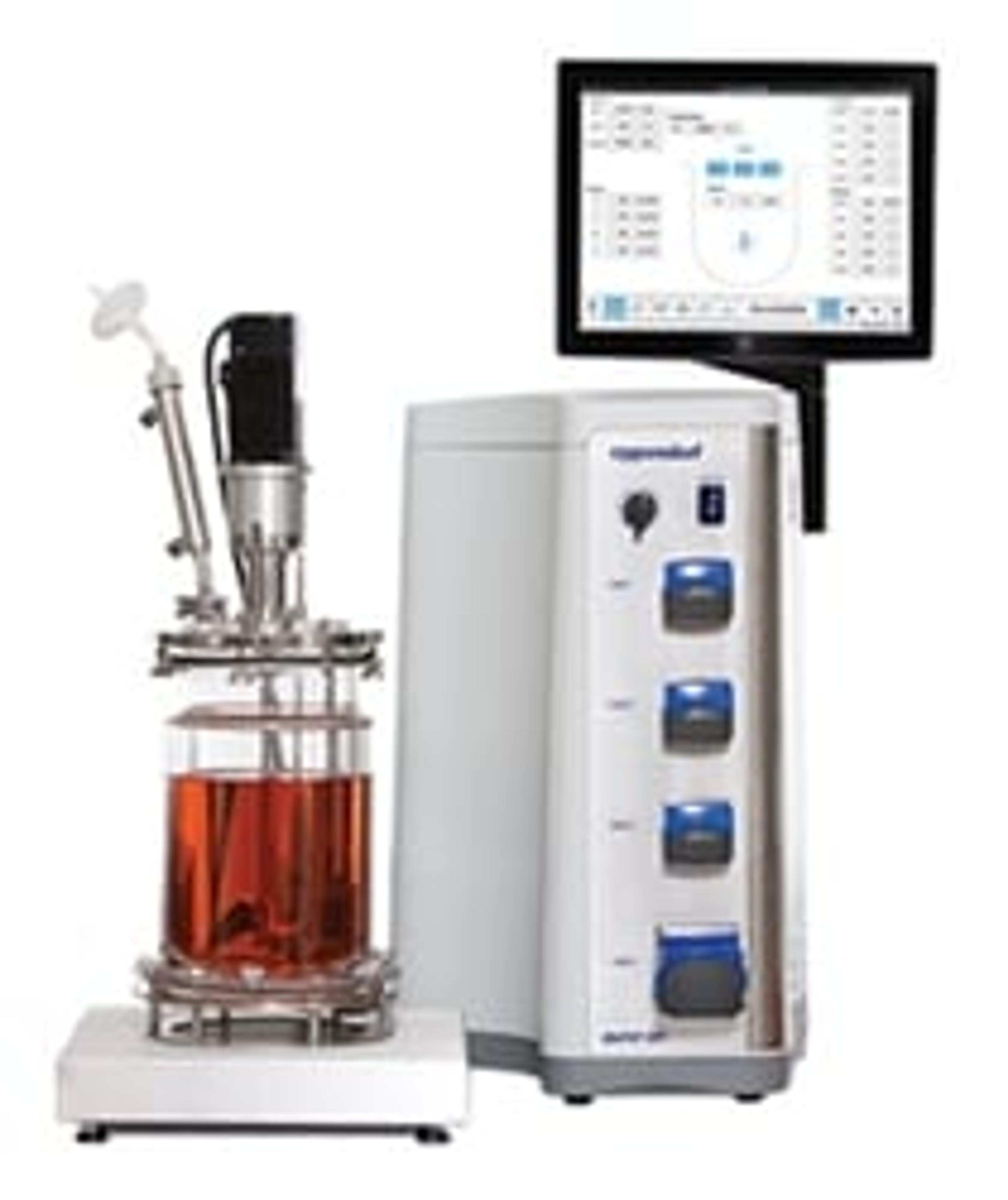
In this application note, Chinese Hamster Ovary (CHO) batch cell culture runs were conducted to highlight the versatility of the new BioFlo 320 bioprocess control station, and as such, various sensors and control strategies were employed. The BioFlo 320 combines features and benefits from the New Brunswick™ BioFlo/CelliGen® 310 benchtop, autoclavable bioreactor system and the New Brunswick CelliGen BLU bioreactor to create an all-in-one bioprocess system with unique capabilities for intelligent cell culture. The BioFlo 320 can interchangeably control industry-standard autoclavable glass vessels or BioBLU single-use vessels. In addition to increased versatility with respect to vessels, the BioFlo 320 offers the ability to seamlessly connect a wide variety of Mettler-Toledo ISM sensors.

Eppendorf BioFlo® 320

Eppendorf

 The BioFlo 320 seamlessly blends beauty and utility in one all-inclusive package. A new industrial design, flexibility between interchangeable autoclavable and single-use vessels, intelligent sensors, Ethernet connectivity, and a new software package are only a few of the features that set it apart from the competition
(2)

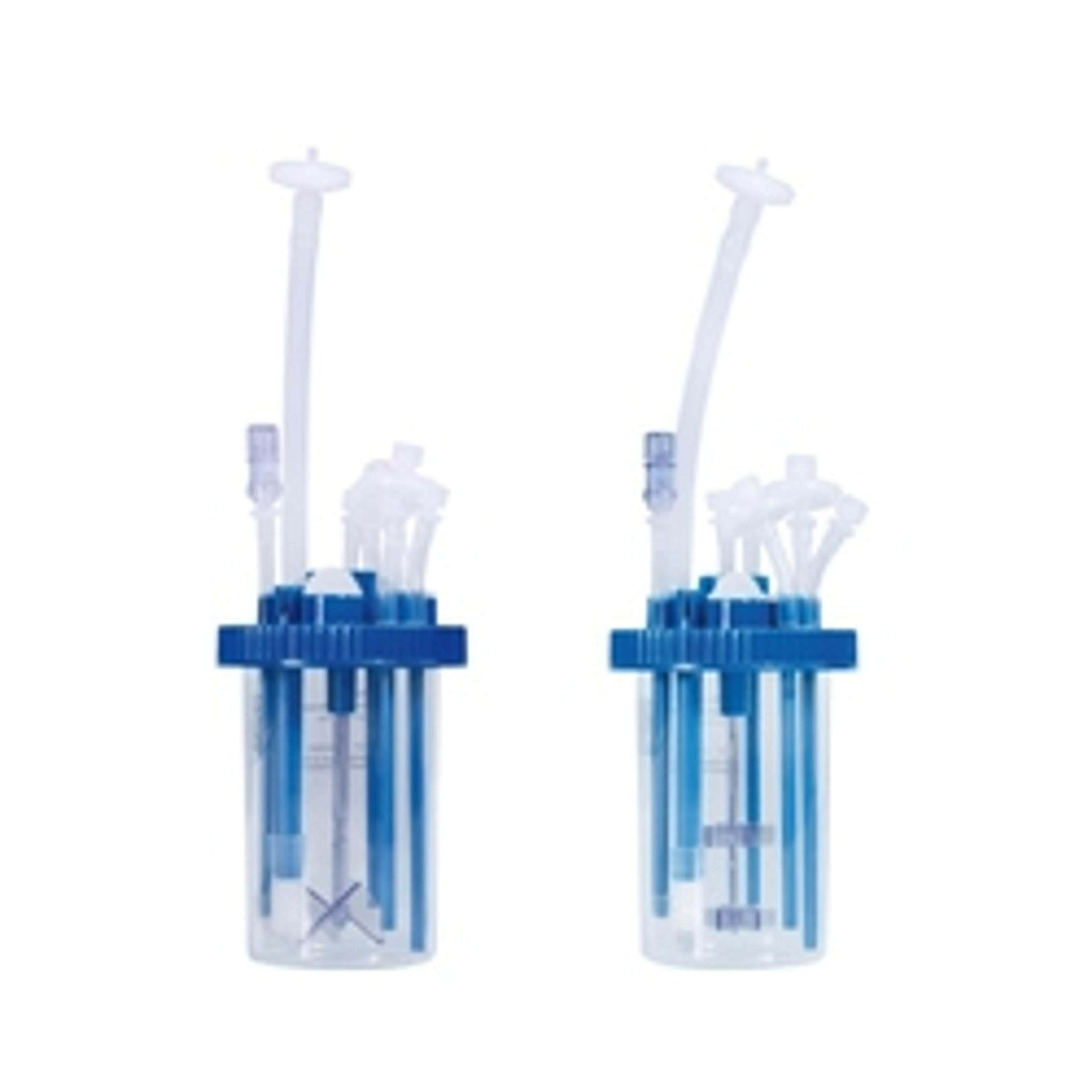
BioBLU® 0.3 Single-Use Vessels

Eppendorf

As the smallest vessel of the Eppendorf single-use bioreactor family the BioBLU 0.3 is ideally suited for use as a scale-down model. Designed for use with the DASbox Mini Bioreactor System it is able to accelerate process development in biopharmaceutical and biotechnological applications using cell cultures and microorganisms.All critical process parameters can be precisely controlled and users benefit from easy handling, minimized set-up time and the elimination of cleaning and sterilization steps. The unique liquid-free exhaust gas condenser reduces negative effects caused by change of medium osmolarity and efficiently prevents blocking of the exhaust gas filter.BioBLU® 0.3 Single-Use Vessels Features: Fully instrumented single-use mini bioreactors for accelerated process development in cell culture and microbial applications. Excellent scalability and reproducibility. Small working volumes starting at 65 mL save on cell material, media and supplements. Used with the DASbox mini bioreactor system for parallel set-up of 4, 8, 12 or more bioreactors. Liquid-free exhaust condenser with easy handling by automatic click in activation and click out deactivation mode. Magnet-coupled overhead drive reduces the risk of contamination, up- or downflow. Headplate with 2x PG 13.5 ports, 4x integrated long dip tubes, 2x integrated short dip tubes, one thermowell, DO sensor port with permeable membrane. Operating with industry standard probes for precise measurement and control of temperature, pH, DO. Vessels are delivered pre-sterilized by ß-irradiation to dose exceeding 15 kGy (DIN EN ISO 11137-2:2007). All wetted materials are USP Class VI certified. Applications: Process development in cell culture and microbiology Design of Experiments (DoE) Media optimization Clone & cell line screening, strain characterization

(0)

Links

Tags

BiosensorsBiosensors are devices used to detect an analyte using biological molecules specific to the analyte coupled to a detector. Biosensor instruments may be photometric, typically using surface plasma resonance (SPR), electrochemical or QCM (quartz crystal microbalance) biosensors. Biosensors should be selective, portable, robust and sensitive and have a fast response time. Systems may be manual or automated and usually have associated software.Cell / Tissue CultureCell culture or tissue culture is used to study the biology of cells or tissues and to isolate cellular products in an environment which can be manipulated and well defined. Accurately control your culture environment with bioreactors or culture incubators, bind your cells to a surface or together with an extracellular matrix. Distinguish cell types with differential media or proliferate cells with certain characteristics using selective media. Enrich your media with supplements such as growth factors, sera and vitamins. Find the best cell and tissue culture products, kits and equipment in our peer-reviewed product directory: compare products, check customer reviews and receive pricing direct from manufacturers.Autoclaves and SterilizersAutoclaves and sterilizers are commonly used to sterilize laboratory equipment, instruments and growth media using constant pressure and temperature. When choosing an autoclave or sterilizer consider medical or laboratory application, size, loading and sterilization method. Sterilization methods include flame (Bunsen burners), heat (steam or dry), chemical and UV.IncubatorsLaboratory incubators are used to provide a stable environment to cultivate and store samples in, giving you optimal control of temperature, humidity, oxygen and CO<sub>2</sub> levels. Incubators are necessary equipment for cell culture and microbial research. Control temperature with heated or refrigerated incubators, or the levels of CO<sub>2</sub> and oxygen with CO<sub>2</sub> incubators. Using environmental chambers, create a humid climate for testing samples. Find the best incubators in our peer-reviewed product directory: compare products, check customer reviews and receive pricing direct from manufacturers.Laboratory ManagementLaboratory management involves overseeing the operations of a lab, ensuring compliance with safety regulations, optimizing workflows, and maintaining equipment. Efficient lab management is key to ensuring accurate results and minimizing downtime. Technologies like laboratory information management systems (LIMS) and automated lab equipment are helping labs streamline operations. Browse our peer-reviewed product directory to find the best laboratory management tools, compare products, read reviews, and get pricing directly from manufacturers.BioprocessingBioprocessing is the use of biological systems for the conversion of raw materials to desired products. This includes the research, development and manufacturing stages of production and can refer to food processing, small-molecule pharmaceutical manufacture, production of recombinant protein therapeutics, or the generation of renewable energy.Cell BiologyCell biology studies the structure, function, and behavior of cells. Understanding cellular processes is essential for research in areas such as cancer biology, stem cell research, and neurobiology. Techniques like flow cytometry, microscopy, and cell culture enable researchers to explore cellular mechanisms in detail. Browse our peer-reviewed product directory to find the best cell biology tools and equipment, compare products, check customer reviews, and get pricing directly from manufacturers.CHO
Intelligent Control of Chinese Hamster Ovary (CHO) Cell Culture Using the BioFlo® 320 Bioprocess Control Station