
Implementation of N latex free light chain kappa and lambda assays into routine practice
4 Nov 2022The determination of serum FLC kappa and lambda in patients with plasma-proliferative disorders is used for the detection and monitoring of multiple myeloma and related disorders. It has been proven that FLC determination provides prognostic information and assists in monitoring therapy success. Before the launch of N Latex FLC kappa and lambda assays by Siemens Healthineers in 2011, the most widely adopted method used was the FREELITE assay. In this white paper, Siemens Healthineers presents the methodology, data analysis, and subsequent results from the evaluation of its N Latex FLC kappa and lambda assays by Royal Preston Hospital. The results showed that the N Latex FLC methods demonstrated good clinical concordance with The Binding Site FREELITE assay, with few discrepant results, and Royal Preston Hospital converted their FLC service to the N Latex FLC assays after 3 months of using both the FREELITE assay and the N Latex FLC assays.
Related products
Request Quote for All Products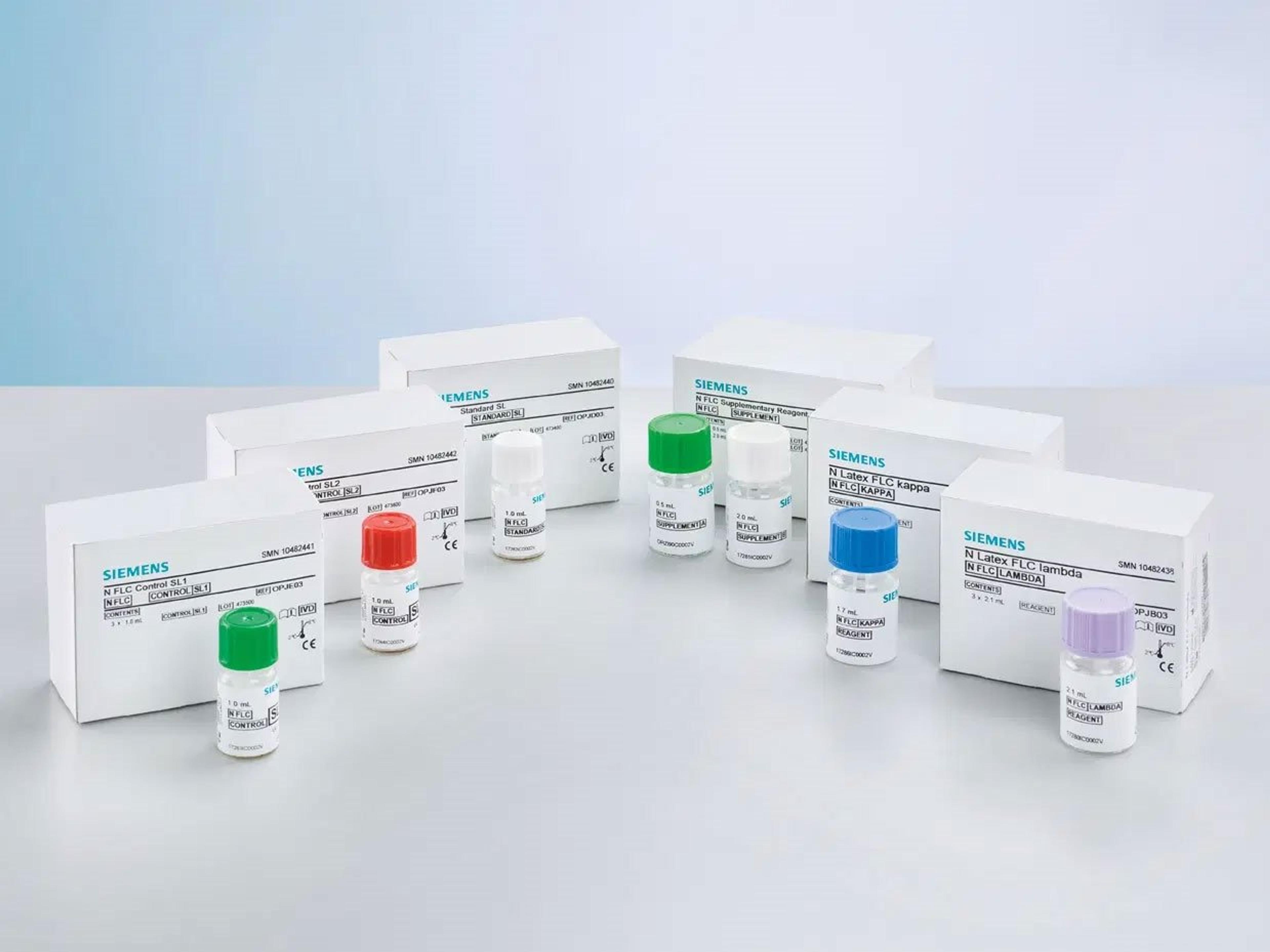
N Latex FLC kappa and N Latex FLC lambda Assays
Siemens HealthineersAdd confidence to screening and monitoring of monoclonal gammopathies.