High-Content Assay for Morphological Characterization of 3D Neuronal Networks in A Microfluidic Platform

29 Mar 2019

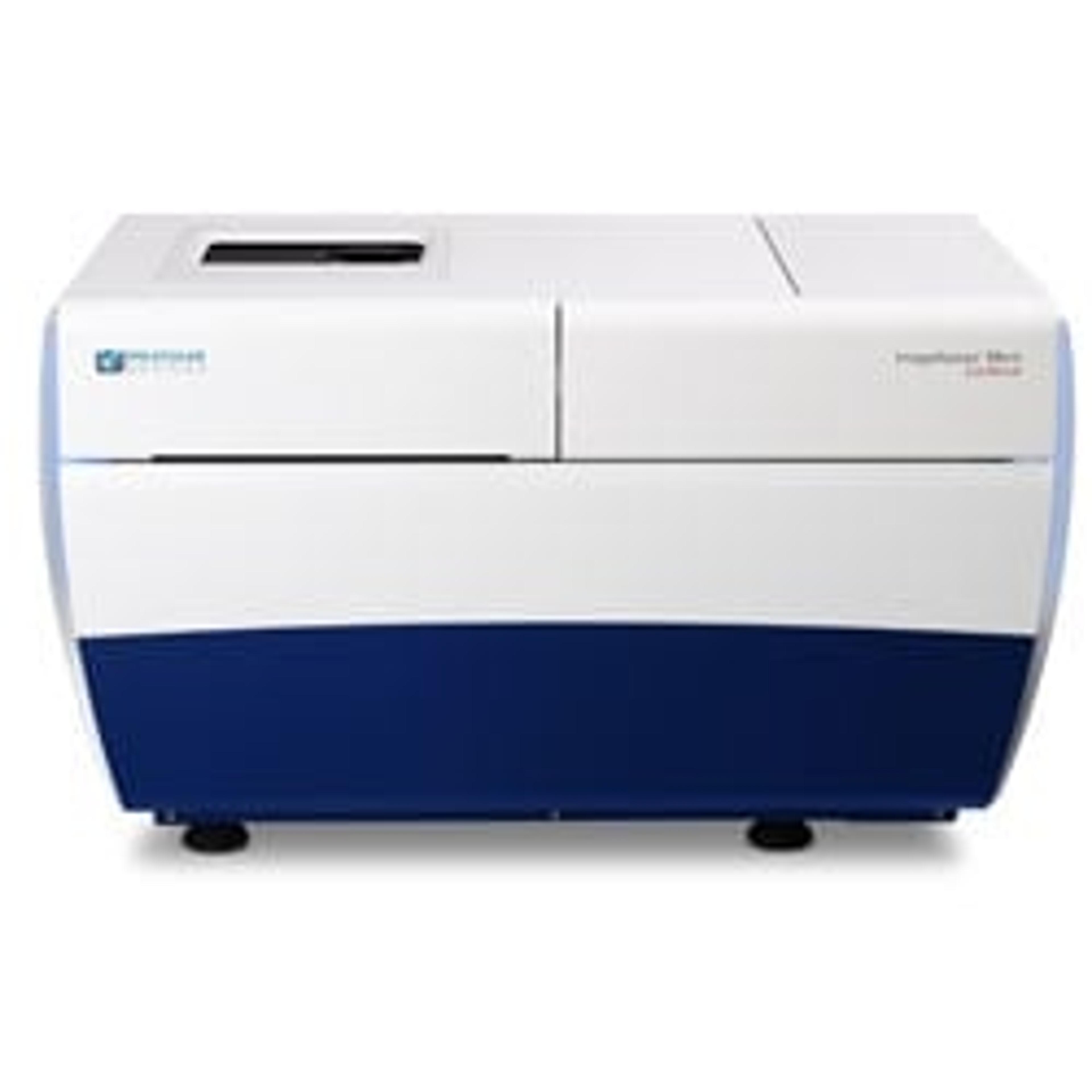
The focus of this application note is to develop a high-throughput 3D neurite outgrowth assay using iPSC-derived neurons developed in the microfluidic OrganoPlate® platform, with the goal of establishing 3D models for neurodegenerative diseases and neurotoxicology screens. The OrganoPlate® is a high-throughput platform that combines the most recent advances in 3D cell culture, Phaseguides™ and microfluidics. The OrganoPlate contains 96 tissue chips suitable for long-term culture of live cells, is amenable for screening purposes, and is compatible with standard laboratory equipment or automated systems, such as the ImageXpress® Micro Confocal High-Content Imaging System.

OrganoPlate® 3-lane

MIMETAS B.V.

The OrganoPlate 3-lane features 40 independent culture cells, each supporting adjacent in-gel culture and 2 perfusion channels, that can contain perfused tubular tissues. The 3-lane models supports apical and basal access to epithelial and endothelial tubules, allowing barrier integrity and transport assays. The lanes are 400 micron wide. Six wells of the 384-well-plate user interface connect to each microfluidic network in a 9x9 well grid, the central well provides viewing access to the microtissue.
(0)

Links

Tags

Cell / Tissue CultureCell culture or tissue culture is used to study the biology of cells or tissues and to isolate cellular products in an environment which can be manipulated and well defined. Accurately control your culture environment with bioreactors or culture incubators, bind your cells to a surface or together with an extracellular matrix. Distinguish cell types with differential media or proliferate cells with certain characteristics using selective media. Enrich your media with supplements such as growth factors, sera and vitamins. Find the best cell and tissue culture products, kits and equipment in our peer-reviewed product directory: compare products, check customer reviews and receive pricing direct from manufacturers.In Vivo Imaging Systems<i>In vivo</i> imaging systems, including pre-clinical imaging systems and medical imaging systems are used to non-invasively visualize and capture images of live animals and plants. Monitor the natural processes or diseases of your subjects using small-animal pre-clinical imaging systems, including single photon positron emission tomography (SPECT), positron emission tomography (PET), computed tomography (micro-CT), magnetic resonance imaging (MRI), X-ray radiography, ultrasound, fluorescence and bioluminescence imagers. Multimodal systems and software solutions are also available for correlative analysis of organ, tissue, cell, or molecular-level processes. Find the best in vivo imaging products in our peer-reviewed product directory: compare products, check customer reviews and receive pricing direct from manufacturers.NeuroscienceNeuroscience research investigates the neurological mechanisms underlying behavior, neurodegenerative diseases, and other brain conditions. Learn about the innovative technologies for bioimaging, electrophysiology, cell culture, chromatography and other techniques used in this field.IpscHigh ThroughputHigh throughput experiments allow the simultaneous processing of several samples. This parallelization reduces the cost per experiment and increases reproducibility and output volume of data.High Content ImagingHigh content imaging is a method combining two or more fluorescent microscopy experiments to identify substances that alter a cell’s phenotype in a desired manner. The process is adapted to multi-well plates and both the image acquisition and analysis are automated.
High-Content Assay for Morphological Characterization of 3D Neuronal Networks in A Microfluidic Platform