
Freeze drying: Basic theory & applications
16 Oct 2019Freeze drying is the most gentle process to dry various types of perishable materials. The principle of freeze drying is based on the direct transition of a substance from the solid to the gaseous state, called sublimation. Initially, the product is frozen and then dried by sublimation in an environment of reduced pressure. The low pressure enables direct changeover of the frozen solvent into vapor. In most freeze drying applications, the solvent to be removed from the product is water. However, other solvents can be used to a certain extent, such as ethanol.
Related products
Request Quote for All Products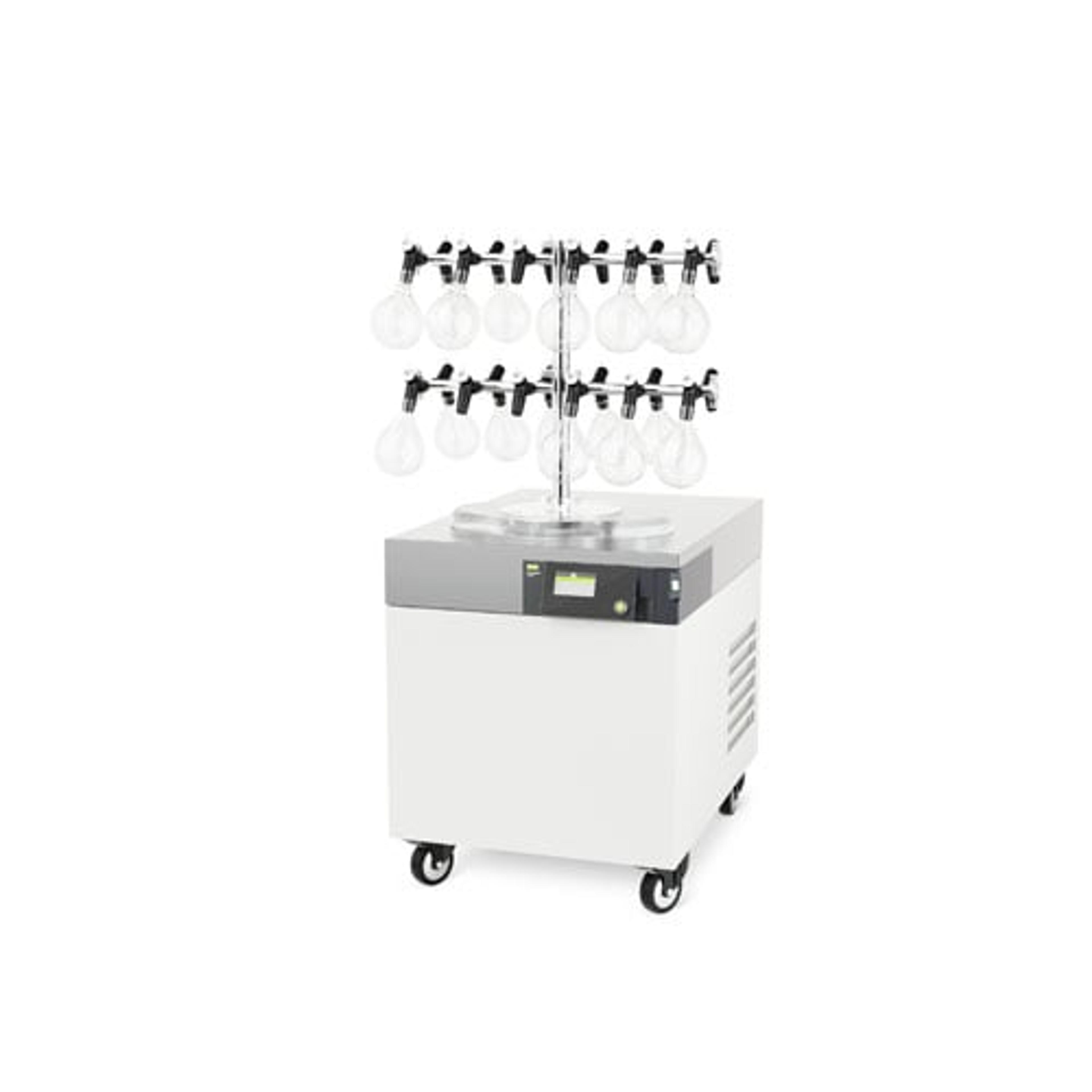
Lyovapor™ L-300
BUCHIWith Infinite-Technology™ the Lyovapor™ L-300 is the first continuous sublimation system available on the market. The instrument contains two alternating condensers that operate at -105 °C and undergo automatic hygenic cleansing. In addition, Infinite-Control™ allows entire process control of all relevant parameters via mobile devices or a stationary computer.