Development of a Scale-Down Model for rAAV Viral Vector Production Using a Sf9/BEV System

8 Apr 2017

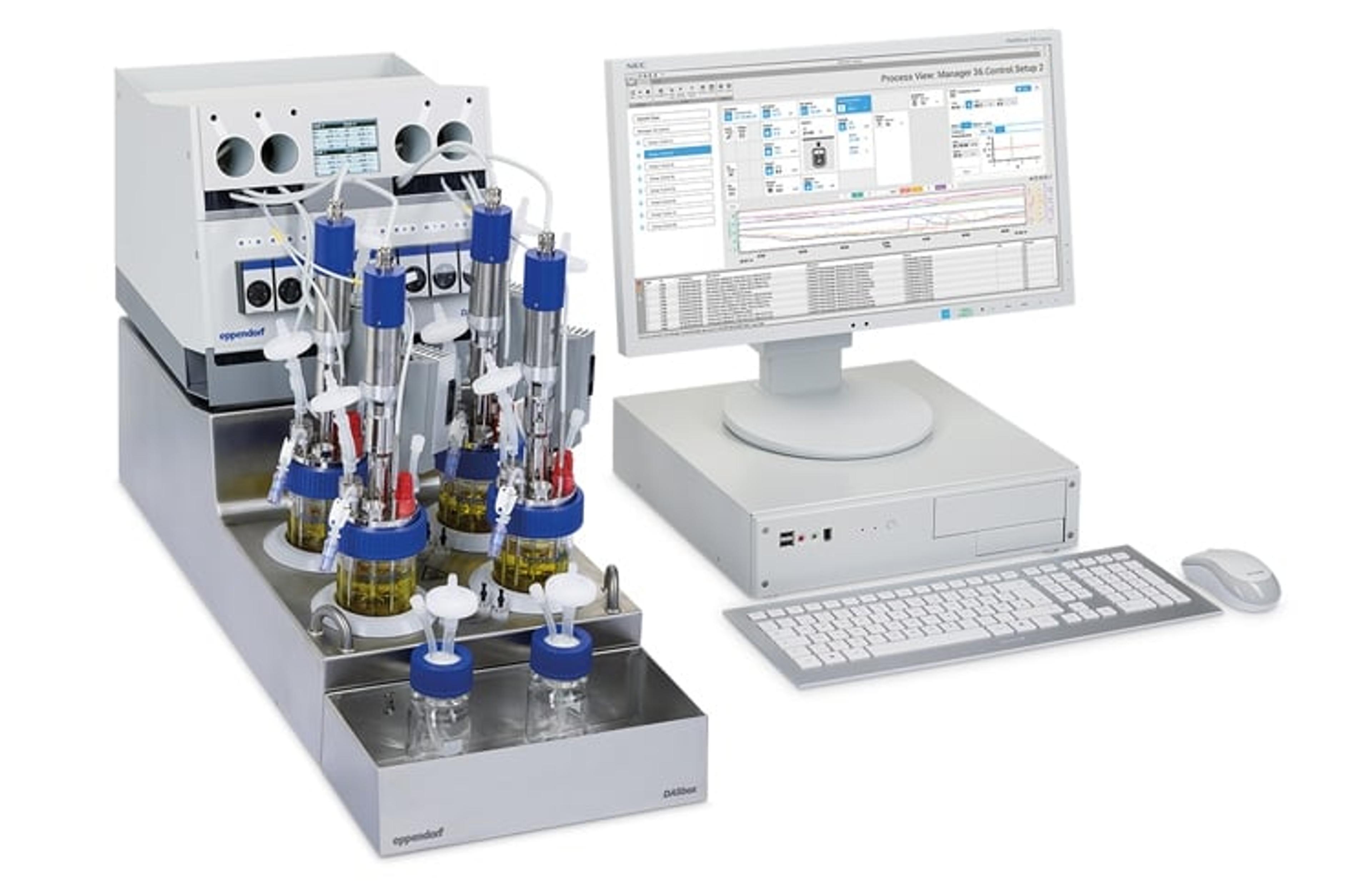
This application notes describes a study in which researchers developed a scale-down model for rAAV viral vector production in Sf9 cells using an Eppendorf DASbox® Mini Bioreactor System. Parallel experimentation in small working volumes allowed time- and cost-efficient evaluation of process performance.

DASbox® Mini Bioreactor System

Eppendorf

The DASbox is a unique mini bioreactor system suitable for microbial and cell culture as well as stem cell applications. It is designed as a 4-fold system with up to twenty-four parallel operating bioreactors. With working volumes of 60 – 250 mL the DASbox is the optimal tool for advanced process development and Design of Experiments (DoE) applications. All critical process parameters can be precisely controlled. Liquid-free temperature control and exhaust condensation satisfy users with easy handling. In addition to using industry standard glass bioreactors the DASbox can be equipped with Eppendorf BioBLU® 0.3 vessels, all fully instrumented single-use mini bioreactors. Eppendorf DASbox® Mini Bioreactor System Features: Parallel set-up of up to 24 bioreactors; Excellent scalability and reproducibility in both microbial and cell culture applications; Supports industry standard glass bioreactors (DASbox Mini Bioreactor) as well as the BioBLU 0.3 Single-Use Vessels; Small working volumes save on the amount of cell material, media and supplements required; Extremely compact system with a footprint of only 7.5 cm (3 in) benchspace per vessel; Individual temperature control with liquid-free heating and cooling (Peltier); Liquid-free Peltier exhaust condenser with easy handling by automatic slide in activation and slide out deactivation mode; LC display with key process parameters and integrated alarm function simplifies monitoring; Fully mass flow-controlled gas mixing with individual gas mixture from Air, O2, CO2 and N2, each directable either to headspace or sparger; Standard sensors for precise measurement and control of temperature, pH, DO, level and ORP (redox potential); optical pH sensors available; Precise miniature variable speed pumps, continuous flow rates down to 0.3 mL/h; Sealed magnetic overhead drives for single-use vessels and direct overhead drives for autoclavable vessels; up- or downflow selectable; Optional pull-out system for enhanced accessibility of bioreactors and control unit. Applications: Process development in cell culture and microbiology; Design of Experiments (DoE) Media optimization Clone and cell line screening, strain characterization.

(0)

Links

Tags

Cell Adhesion AssaysCell adhesion assays are used to quantitate attachment and analyze the molecular mechanisms for extracellular matrix adhesion, cell migration and sensitivity to inhibitors. Find the best cell adhesion assay equipment in our peer-reviewed product directory: compare products, check customer reviews and receive pricing direct from manufacturers.Cell / Tissue CultureCell culture or tissue culture is used to study the biology of cells or tissues and to isolate cellular products in an environment which can be manipulated and well defined. Accurately control your culture environment with bioreactors or culture incubators, bind your cells to a surface or together with an extracellular matrix. Distinguish cell types with differential media or proliferate cells with certain characteristics using selective media. Enrich your media with supplements such as growth factors, sera and vitamins. Find the best cell and tissue culture products, kits and equipment in our peer-reviewed product directory: compare products, check customer reviews and receive pricing direct from manufacturers.Genome AnalysisGenomics, the study of genomes, includes functional genomics, evolutionary genomics and comparative genomics. There are many genomic technologies such as DNA sequencing of whole genomes, computational biology and bioinformatics. DNA and nucleic acids must be isolated and concentrated from cells for analysis with kits, automated analyzers and software. Other useful technologies for studying genomics include PCR, microarrays and electrophoresis.MicrobiologyMicrobiology is the study of microorganisms including protists, prokaryotes, fungi, and, often, viruses. Microorganisms are a useful research tool as genetic vectors and, in immunology, for antibiotic susceptibility testing, cellular biology and genetics. Microorganisms commonly grow readily in incubators with microbial culture media; this can contain chromogenic supplements to differentiate between cell lines. Estimate your culture’s density of microorganisms with colony counters, or screen and select colonies for desirable clones with automated colony pickers. Additionally, equipment is available to monitor environments for the presence of microbes and identify with microbial identification instruments. Find the best microbiology products in our peer-reviewed product directory: compare products, check customer reviews and receive pricing direct from manufacturers.Sample ManagementSample management systems include sample storage devices such as freezers and plate storers, sample environment enclosures and sample organization, retrieval and sorter systems. Useful system features include high-throughput, automation, robotic arms, automated liquid handling and associated database systems. Accessories in sample management include barcode scanners, heat sealers and tubes.Cell-Based AssaysCell-based assays are used to monitor the presence, quantity and activities of a desired cellular analyte including drug molecules or biomarkers. This can reveal information on cell health (apoptosis, cytotoxicity, viability and proliferation assays), cell metabolism, cell migration and cell signaling mechanisms. Find the best cell-based assay products, kits and equipment with our peer reviewed product directory: compare products, check customer reviews and receiving pricing direct from manufacturers.Protein PurificationProtein purification is a vital step in drug discovery, therapeutics, biotech and life science research. The purification process typically involves subcellular or membrane protein extraction with cell lysis kits, separation of proteins from cell debris by filtration or spin columns, and the isolation of proteins of interest from other proteins and impurities with affinity purification (including fusion protein tags and antibody binding proteins A, G and L), immunoprecipitation or chromatographic methods, such as ion exchange, size exclusion and immobilized metal affinity chromatography. All purification methods come in multiple formats for your laboratory needs, including agarose or magnetic beads, resins, columns and filter plates. Find the best protein purification equipment in our peer-reviewed product directory: compare products, check customer reviews and receive pricing direct from manufacturers.Gene Expression and Molecular CloningMolecular cloning is a set of techniques that utilizes vectors to transfer recombinant DNA into host cells and is an essential tool for investigating the expression of genes and proteins in bacterial or mammalian cells. A variety of vectors optimized for gene cloning and expression in a range of host organisms are available, alongside competent cells for genetic replication. Here, you can explore a range of molecular tools, high-quality genomic and cDNA libraries, premade clones, transformation and transfection reagents and mutagenesis or gene expression detection assays and expression arrays. Find the best gene expression and molecular cloning products in our peer-reviewed product directory: compare products, check customer reviews and receive pricing direct from manufacturers.Robotic InstrumentsRobotic instruments can be used for high-throughput automation of many lab processes. Such processes use instruments for assays like cell based assays and ELISA, for sample preparation like shakers, centrifuges and incubators, and for analysis such as sequencing and western blot analyzers. Useful features of robotic instruments include speed, reproducibility, barcode readers, software and automation.Clinical GeneticsMolecular Genetics covers the analysis of hereditary genetic disease and chromosomal abnormalities. Genetics can be analysed using DNA, RNA, and protein microarrays, PCR, RT PCR and DNA sequencing. Genetic equipment includes genetic workstations, thermal cyclers, cooling blocks and electrophoresis products. Diagnostic kits are used for DNA / RNA extraction and purification.Protein ExpressionProtein expression is the utilization of cell machinery for the synthesis of proteins and has become a critical tool in biotherapeutic, genomic, and proteomic research. Produce recombinant proteins with expression vectors in combination with a host cell suitable for high-level protein expression. For production of toxic proteins, consider cell-free expression vectors. Create and monitor post-translational modifications with protein modification kits. Find the best protein expression products in our peer-reviewed product directory: compare products, check customer reviews and receive pricing direct from manufacturers.Gene ExpressionGene EditingGene editing is the precise alteration to an organism's DNA, with CRISPR being the most well-known technique. It is used in a wide range of applications, including the development of disease models and gene therapy, and crop improvement. Browse our peer-reviewed product directory to find the best gene editing solutions, compare products, check reviews, and get pricing directly from manufacturers.MutationMutations are changes in the DNA sequence that can lead to diseases, including cancer and genetic disorders. Analyzing mutations is crucial in diagnostics, drug development, and personalized medicine. Explore mutation detection tools in our peer-reviewed product directory; compare products, check reviews, and get pricing directly from manufacturers.VirusesViruses are microscopic pathogens that require a host cell to replicate. Understanding their structure, replication cycle, and impact on the immune system is crucial in developing effective treatments, vaccines, and diagnostic methods. Research continues to focus on emerging viral diseases and antiviral drug discovery. Explore solutions for virus research, detection, and treatment in our peer-reviewed product directory; compare products, check customer reviews, and get pricing directly from manufacturers.
Development of a Scale-Down Model for rAAV Viral Vector Production Using a Sf9/BEV System