
ResourceLife Sciences
Detection of Plant-Synthesized Nanoparticles and their Antibacterial Capacity
1 Jun 2017Metallic nanoparticles became subject of intensive research because of their potential antibiotic properties. This application note describes how the SPECTROstar® Nano can quickly confirm Ag and ZnO nanoparticle formation and their inhibitory effect on the diarrhea-causing bacteria Vibrio cholerae and enterotoxic Escherichia coli (ETEC).
Related products
Request Quote for All Products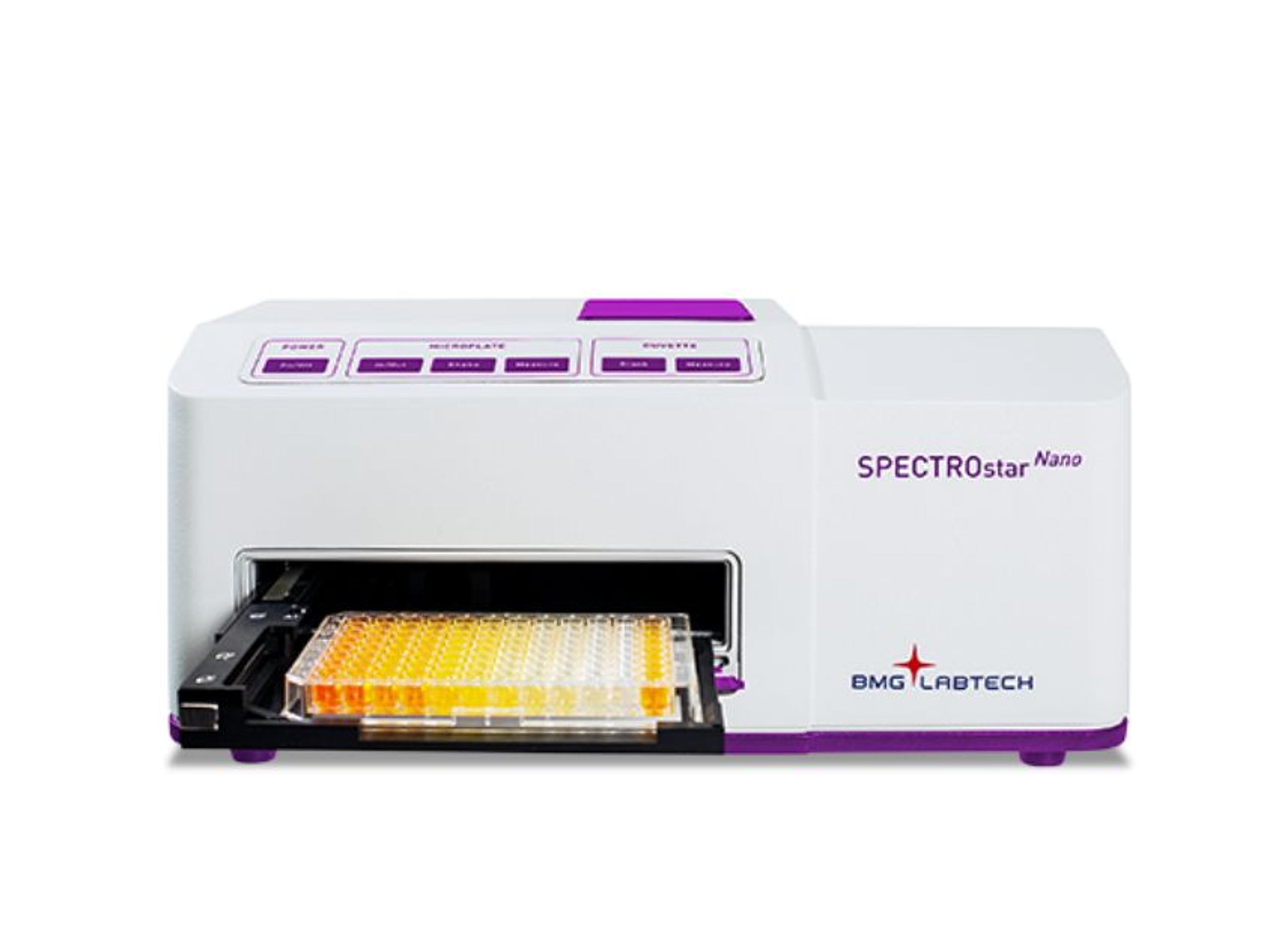
Links
Tags
Microplate Readers / DetectorsMicroplate readers are used to automate the detection and analysis of labeled or label-free components in microplates during assays or live-cell monitoring. Microplate readers are generally distinguished by their mode of detection. Types include absorbance, luminescence, fluorescence intensity, fluorescence polarization, TRF / FRET and multimode microplate readers. Microplate readers deliver a high throughput of samples by reading multiple wells simultaneously, with the 96-well format the most commonly used. As a result, microplate readers are often used in the drug discovery, bioassays, research and pharmaceutical industries for screening applications. Microplate loading can also be automated, with robotic microplate stackers to increase throughput. Find the best microplate readers in our peer-reviewed product directory: compare products, check customer reviews and receive pricing direct from manufacturers.MicrobiologyMicrobiology is the study of microorganisms including protists, prokaryotes, fungi, and, often, viruses. Microorganisms are a useful research tool as genetic vectors and, in immunology, for antibiotic susceptibility testing, cellular biology and genetics. Microorganisms commonly grow readily in incubators with microbial culture media; this can contain chromogenic supplements to differentiate between cell lines. Estimate your culture’s density of microorganisms with colony counters, or screen and select colonies for desirable clones with automated colony pickers. Additionally, equipment is available to monitor environments for the presence of microbes and identify with microbial identification instruments. Find the best microbiology products in our peer-reviewed product directory: compare products, check customer reviews and receive pricing direct from manufacturers.Escherichia coliPlant SciencePlant science studies the biology of plants, including genetics, physiology, ecology, and biotechnology. Research in this field is essential for improving crop yields, disease resistance, and sustainability. Explore plant science tools in our peer-reviewed product directory; compare products, check reviews, and get pricing directly from manufacturers.BacteriaBacteria are microorganisms that play critical roles in the environment, human health, and biotechnology. Understanding bacterial genetics, growth, and metabolism is essential for developing antibiotics, vaccines, and improving industrial processes. Browse our peer-reviewed product directory to find the best bacterial research tools, compare products, check reviews, and get pricing directly from manufacturers.AntibioticsAntibiotics are substances that kill or inhibit the growth of microorganisms, such as bacteria and fungi. They are essential in the treatment of infections and in preventing disease spread. Explore antibiotics research and diagnostic tools in our peer-reviewed product directory; compare products, check reviews, and get pricing directly from manufacturers.NanoparticlesNanoparticles are between 1-100nm in size. Nanoparticles can be used for a wide variety of applications including biomedical, catalysis and electronics.Engineered NanoparticlesAntibiotic ResistanceAntibiotic resistance poses a significant threat to public health driving innovation and change through antibiotic stewardship efforts. Ongoing research and diagnostic efforts focus on new treatments and detection methods. Explore antibiotic resistance research and diagnostic tools in our peer-reviewed product directory; compare products, check reviews, and get pricing directly from manufacturers.