
ResourceLife Sciences
Depicting the cellular architecture of the tumor microenvironment by integrating hyperplex immunofluorescence and automated image analysis
13 Oct 2022The tumor microenvironment (TME) is emerging as an important factor that shapes the dynamic of tumor growth, heterogeneity, and response to therapies. In this application eBook, Indica Labs focuses on the phenotyping of cells across different tumor types on a tissue microarray (TMA) with an immuno-oncology panel encompassing 20 biomarkers. They interrogated their TME with the use of the COMET™ automated staining and imaging system, and HALO® and HALO AI image analysis platforms.
Related products
Request Quote for All Products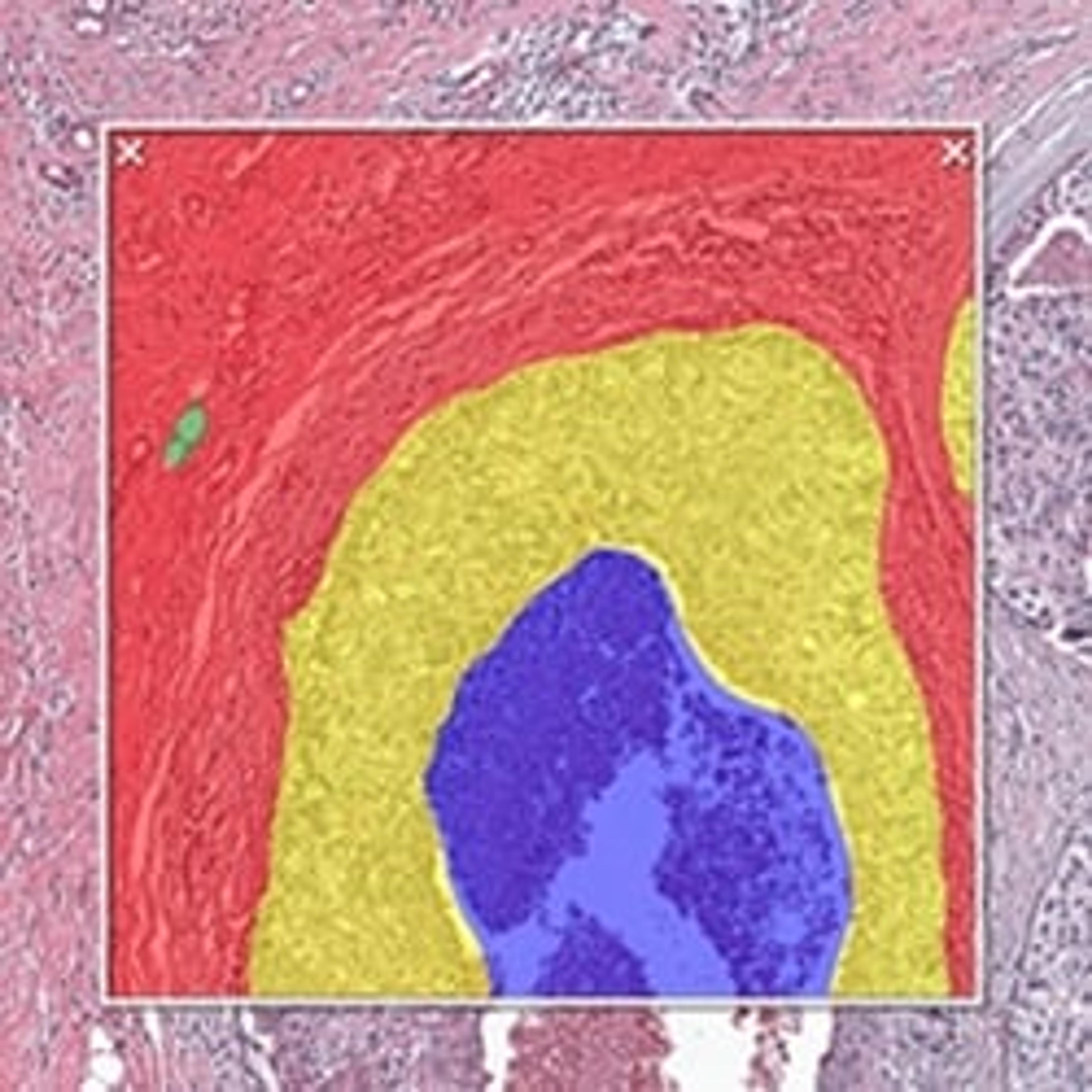
HALO® Image Analysis Platform
Indica LabsHALO provides easy-to-use, spatially-resolved cell and area-based image analysis for digital pathology and whole tissue images.
Tags
Cell / Tissue CultureCell culture or tissue culture is used to study the biology of cells or tissues and to isolate cellular products in an environment which can be manipulated and well defined. Accurately control your culture environment with bioreactors or culture incubators, bind your cells to a surface or together with an extracellular matrix. Distinguish cell types with differential media or proliferate cells with certain characteristics using selective media. Enrich your media with supplements such as growth factors, sera and vitamins. Find the best cell and tissue culture products, kits and equipment in our peer-reviewed product directory: compare products, check customer reviews and receive pricing direct from manufacturers.BiomarkersBiomarkers are biological markers which can be measured and evaluated to indicate a biological state. The use of biomarkers in research and diagnosis can indicate a normal or disease state or drug response of cells / tissues. Biomarkers include genetic markers, cell surface markers such as antigens, antibodies or receptors and secreted molecules such as cytokines. An assay system is required for identification of biomarkers. :Artificial Intelligence / Machine LearningArtificial intelligence (AI) and machine learning (ML) are transformative technologies used to analyze complex data, identify patterns, and make data-driven predictions across diverse scientific fields. Automate the analysis of large or complex data sets using AI algorithms and leverage machine learning models to improve diagnostics, accelerate drug discovery, and refine experimental design. Discover the best AI/ML software, platforms, and analytical tools in our peer-reviewed product directory: compare features, read customer reviews, and request pricing directly from manufacturers.MicrobiologyMicrobiology is the study of microorganisms including protists, prokaryotes, fungi, and, often, viruses. Microorganisms are a useful research tool as genetic vectors and, in immunology, for antibiotic susceptibility testing, cellular biology and genetics. Microorganisms commonly grow readily in incubators with microbial culture media; this can contain chromogenic supplements to differentiate between cell lines. Estimate your culture’s density of microorganisms with colony counters, or screen and select colonies for desirable clones with automated colony pickers. Additionally, equipment is available to monitor environments for the presence of microbes and identify with microbial identification instruments. Find the best microbiology products in our peer-reviewed product directory: compare products, check customer reviews and receive pricing direct from manufacturers.Cancer CellsCancer cells are abnormal cells that divide uncontrollably, leading to the formation of tumors and the spread of cancer. Studying cancer cells is crucial for developing new treatments and understanding tumor biology. Explore cancer cell research products in our peer-reviewed product directory; compare products, check reviews, and get pricing directly from manufacturers.ImmunologyImmunology is the branch of medical science that covers the study of all aspects of the immune system of multicellular organisms.ImagingImaging techniques are essential for obtaining visual representations of samples to understand structures, processes, and function in biological, chemical, and physical research. These tools range from traditional light microscopy to advanced imaging modalities like MRI and electron microscopy, providing researchers with valuable data for diagnostics, drug discovery, and material analysis. Explore imaging solutions in our peer-reviewed product directory to compare products, check reviews, and get pricing directly from manufacturers.TumorsTumor research focuses on understanding abnormal cell growth that leads to cancer. Identifying biomarkers, studying tumor microenvironments, and developing targeted therapies are critical for advancing cancer treatment. Early detection and personalized treatment options are key to improving outcomes for patients. Browse our peer-reviewed product directory to explore tools for tumor research, diagnostics, and cancer therapies; compare products, read customer reviews, and get pricing directly from manufacturers.Cancer ResearchAlthough cancer is often referred to as a single condition, it actually consists of more than 100 different diseases. Microscopy, mass spectrometry, high throughput sequencing and flow cytometry are some of the most common techniques employed in cancer research labs.