ResourceSpectroscopy

Biopharmaceutical characterization: Improve predictive screening

25 May 2021

Due to their large size and complex structures, characterizing biotherapeutics requires robust and demanding analytical techniques. Traditional methods can fail to deliver on either the sensitivity required or the speed desired to accelerate the drug development pipeline.

In this eBook, we look at how you can achieve deeper characterization of biotherapeutic proteins using light scattering techniques. We detail how this technique can be applied at almost every stage of the drug development pipeline, and present approaches for different types of biotherapeutics.

Download the guide to learn how this technology can help you:

  • Identify insulin oligomeric states
  • Characterize monoclonal antibodies and antibody-drug conjugates (ADCs)
  • Characterize self-associating antibody solutions
  • Quantify insulin self-association
  • Measure colloidal and thermal stability
  • Assess drug candidate suitability

DAWN™

Waters | Wyatt Technology

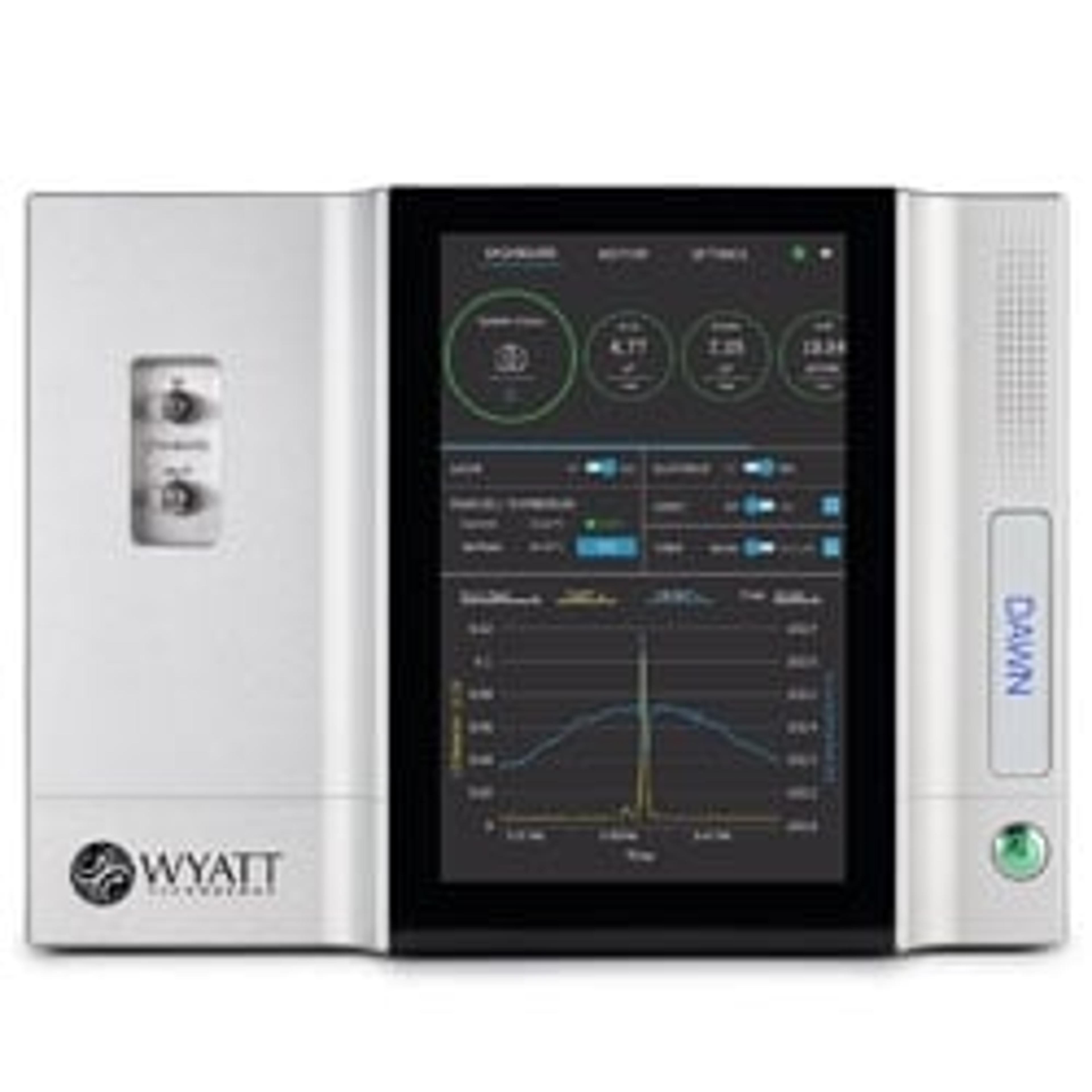
The DAWN is the premier Multi-Angle static Light Scattering (MALS) detector for absolute characterization of the molar mass and size of macromolecules and nanoparticles in solution, offering the highest sensitivity and widest range of molecular weight, size, concentration and optional features.

(124)

Links

Tags

Size Exclusion ChromatographySize exclusion chromatography (SEC) is a liquid chromatographic technique used to separate and identify molecules based on their size, including polymers, proteins, nanoparticles & nucleic acid. SEC is further subdivided into gel filtration chromatography (GFC) and gel permeation chromatography (GPC) when an aqueous or organic mobile phase is used respectively. HPLC-based SEC systems and columns are available for analytical separation alongside SEC spin columns or filters to prep samples for many protocols. Find the best size exclusion chromatography equipment in our peer-reviewed product directory: compare products, check customer reviews and receive pricing direct from manufacturers.Fluorescence SpectroscopyFluorometers and spectrofluorometers (also called fluorescence spectrometers) are used to measure the intensity and wavelength of fluorescent light emitted from a sample after excitation by illumination. Spectrofluorometers utilize monochromators to select the desired wavelengths, whereas filter fluorometers employ a set of filters. Spectrofluorometers for measuring steady-state fluorescence and lifetime fluorescence (or time-resolved fluorescence) are available, as well as fluorescence microscopes and microplate readers. Find the best fluorescence spectroscopy products in our peer-reviewed product directory: compare products, check customer reviews and receive pricing direct from manufacturers.AntibodiesAntibodies are used in techniques such as confocal and fluorescence microscopy, flow cytometry, ELISA, ELISPOT, immunohistochemistry, western blotting and immunopreciptation. Select specific antigen reactivity, high specific affinity, low non-specific binding, monoclonal or polyclonal, primary or secondary antibodies and associated conjugates such as an enzyme or dye for visualization.Microplate Readers / DetectorsMicroplate readers are used to automate the detection and analysis of labeled or label-free components in microplates during assays or live-cell monitoring. Microplate readers are generally distinguished by their mode of detection. Types include absorbance, luminescence, fluorescence intensity, fluorescence polarization, TRF / FRET and multimode microplate readers. Microplate readers deliver a high throughput of samples by reading multiple wells simultaneously, with the 96-well format the most commonly used. As a result, microplate readers are often used in the drug discovery, bioassays, research and pharmaceutical industries for screening applications. Microplate loading can also be automated, with robotic microplate stackers to increase throughput. Find the best microplate readers in our peer-reviewed product directory: compare products, check customer reviews and receive pricing direct from manufacturers.Protein QuantificationThe detection and quantification of proteins in a sample is vital across life sciences, pharmaceutical research and clinical diagnostics, and a variety of equipment is available to scientists to simplify the workflow. Proteins of interest can be easily labeled and detected on light-based detection instruments. Immunoassay kits allow you to identify a specific protein of interest and protein detection beads or antibody microarrays allow you to identify multiple specific proteins at once. Protein interactions and enzyme activity can also be monitored with protein-protein interaction assays. Additionally, the biophysical characterization of proteins is made easy with biokinetic analyzers. Find the best protein detection and quantification products in our peer-reviewed product directory: compare products, check customer reviews and receive pricing direct from manufacturers.Monoclonal AntibodiesMonoclonal antibodies (mAbs) are lab-made molecules that can bind to specific antigens on cells, making them highly effective in treating cancers, autoimmune diseases, and infections. These targeted therapies are transforming the treatment landscape for many conditions. Browse our peer-reviewed product directory to find monoclonal antibodies for research and clinical applications; compare products, check reviews, and get pricing directly from manufacturers.AggregationBiopharmaceuticalsBiopharmaceuticals are proteins and other compounds (such as nucleic acids) produced by living organisms that have uses as therapeutics or for in vivo diagnostics. The most well known example of a biopharmaceutical product, and the first to be approved for therapeutic use, was recombinant human insulin.Protein InteractionsProtein interactions are essential for understanding cellular processes, as proteins work together to carry out biological functions. Studying protein interactions can provide insights into disease mechanisms, drug development, and cell signaling pathways. Explore the best tools for protein interaction research in our peer-reviewed product directory; compare products, check reviews, and get pricing directly from manufacturers.Antibody Drug ConjugatesTherapeutic AntibodiesTherapeutic antibodies are antibodies engineered for use in treating diseases. They can be designed to target specific antigens, blocking harmful interactions or modulating immune responses. Therapeutic antibodies are critical in treating conditions like cancer, autoimmune disorders, and infectious diseases. Explore the best therapeutic antibody products in our peer-reviewed product directory; compare options, check reviews, and get pricing directly from manufacturers.BiotherapeuticsBiotherapeutics are proteins and other compounds (such as nucleic acids) produced by living organisms that have uses as therapeutics or in <i>in vivo</i> diagnostics. The most well-known example of a biotherapeutic product, and the first to be approved for therapeutic use, was recombinant human insulin.Drug DiscoveryDrug discovery is the process of identifying potential new medications, involving stages such as target identification, compound screening, and preclinical development. It relies on cutting-edge technologies like high-throughput screening, artificial intelligence, and molecular modeling to accelerate the identification of drug candidates. Drug discovery plays a pivotal role in developing new therapies for diseases ranging from cancer to rare genetic disorders. Browse our peer-reviewed product directory to find the latest drug discovery technologies, compare options, check customer feedback, and get pricing directly from manufacturers.Recombinant ProteinsDrug DevelopmentDrug development refers to the process of bringing a new drug to market.