Automating an ELISA assay for the characterization of antibody functionality

12 Jun 2023

In this application note, BRANDTECH® Scientific describes how Jackson lmmunoResearch Laboratories recognized the need to monitor antibody performance throughout the production process. Previously, antibody characterization was conducted using a time-consuming, complex, and physically demanding method, which limited testing to the final step. This resulted in missed opportunities for improving product quality and manufacturing efficiencies. To address this issue, Jackson lmmunoResearch's Quality Assurance department developed an automated assay using the BRANDTECH Liquid Handling Station.

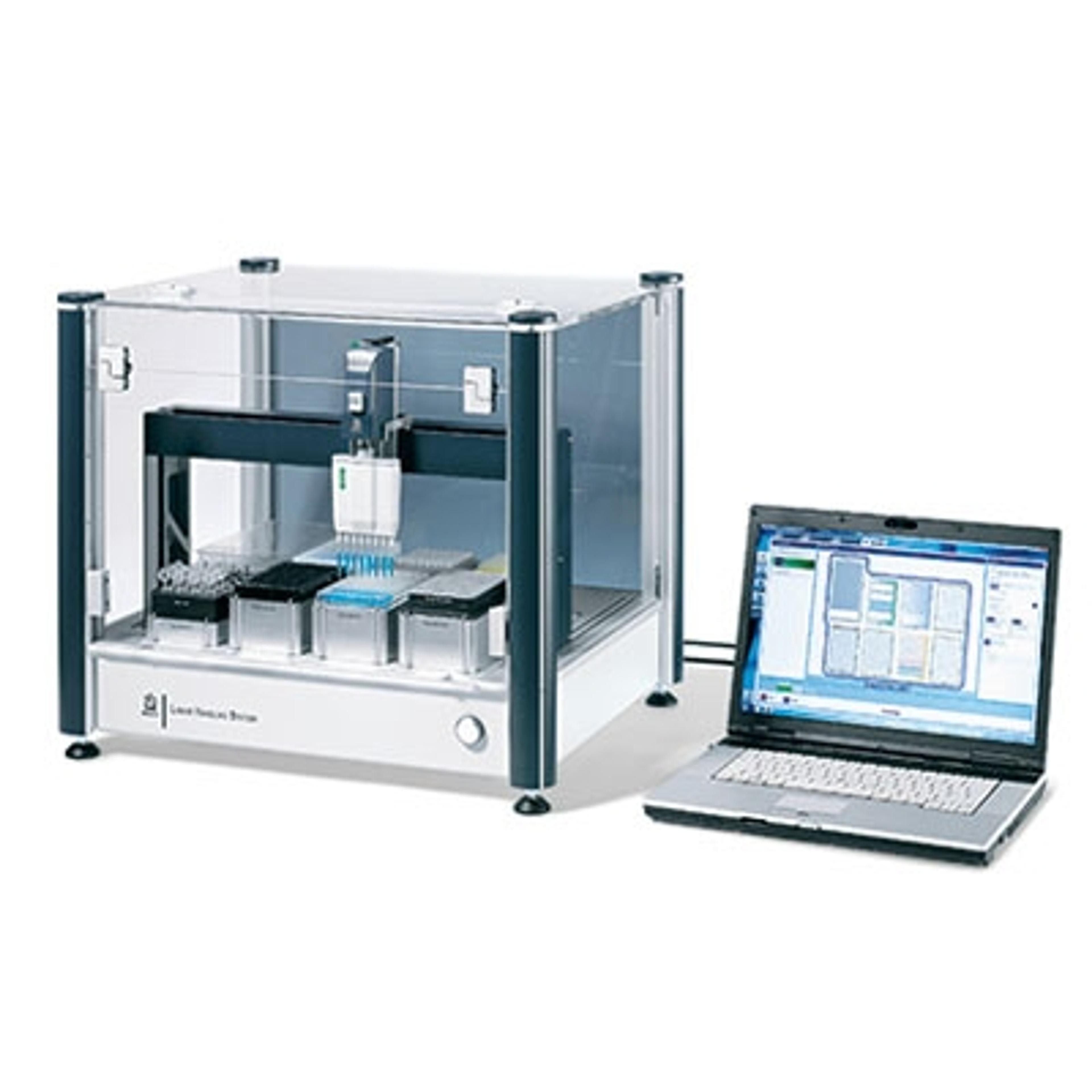
Liquid Handling Station

BRANDTECH® Scientific, Inc.

The BRAND Liquid Handling Station pipetting robot handles routine tasks at high speed and with the highest precision. The LHS closes the gap between electronic pipettes and highly complex, expensive pipetting robots. It is a quiet and compact instrument with a unique front door allowing it be set up in tight quarters. The instrument has 7 working positions and 5 available liquid ends with single channel volumes up to 1000uL and multichannel volumes up to 300uL. The system has the flexibility to move liquids between reservoirs, tubes, and plates. Adapters and racks bring the consumables to an even height, reducing unnecessary vertical movements to save time during pipetting. Applications: Preparation of ‘assay ready’ plates PCR, qPCR, and ELISA Set-up Serial dilutions Microplate Replication and Reformatting DNA Normalization Cherry Picking Cell Cultures General Liquid Transfers

(0)

Links

Tags

ELISAEnzyme-linked immunosorbent assays (ELISA), also known as enzyme immunoassays (EIA), are used for the detection and quantification of proteins, peptides and antibodies in a sample. ELISA often comes in kit format, with pre-selected antibody pairs to detect specific proteins or biomarkers of diseases such as diabetes and obesity, or cardiovascular and neurological disorders. Detection is made possible with chemiluminescent, fluorescent or colorimetric substrates and detection instruments such as microplate / ELISA readers. Other kits available include: Enzyme-linked immunospot (ELISPOT) assays for the quantification of protein-producing cells and chemiluminescent immunoassays (CLIA) kits. Find the best ELISA kits and products in our peer-reviewed product directory: compare products, check customer reviews and receive pricing direct from manufacturers.AntibodiesAntibodies are used in techniques such as confocal and fluorescence microscopy, flow cytometry, ELISA, ELISPOT, immunohistochemistry, western blotting and immunopreciptation. Select specific antigen reactivity, high specific affinity, low non-specific binding, monoclonal or polyclonal, primary or secondary antibodies and associated conjugates such as an enzyme or dye for visualization.ImmunologyImmunological techniques measure and characterize immune responses. Immunology kits and analysis systems often use techniques such as ELISA, radioimmunoassay (RIA) and immunodiffusion assays, Immunohistochemistry, and flow cytometry. Immunologists use equipment such as flow Cytometers, plate readers, plate washers and fluorescent microscopes.Quality ControlQuality control is needed in all production processes. Quality control is a monitoring procedure or set of procedures that are put in place to ensure that a manufactured product adheres to a defined set of quality criteria. AutomationAutomation in laboratories and manufacturing processes enhances efficiency, precision, and scalability by reducing the need for manual intervention. It plays a critical role in improving productivity, minimizing human error, and accelerating workflows in fields like diagnostics, drug development, and industrial testing. Automation technologies include robotic systems, automated liquid handlers, and process control systems that streamline complex tasks and ensure consistent, reproducible results. Explore our peer-reviewed product directory to discover the best automation solutions, compare options, read user reviews, and get prices directly from manufacturers.Clinical AutomationClinical laboratory automation refers to the use of automated systems in clinical laboratories to increase efficiency, reduce human error, and improve patient care. From sample analysis to total laboratory automation, this plays a critical role in modern diagnostics and laboratory workflows. Explore clinical automation solutions in our peer-reviewed product directory; compare products, check reviews, and get pricing directly from manufacturers.Liquid HandlingLiquid handling involves the precise transfer, mixing, and dispensing of liquids in laboratory settings. It is essential for accurate and consistent results in biological, chemical, and pharmaceutical research. Automated liquid handling systems improve efficiency and reduce human error in sample preparation and analysis. Explore liquid handling tools in our peer-reviewed product directory; compare products, read customer reviews, and get pricing directly from manufacturers.ELISA