
ResourceSeparations
Automated μSPE cleanup for GC-MS or LC-MS analysis of pesticides and environmental contaminants
28 Mar 2021Automated workflows help laboratories perform reliable, high-throughput GC-MS and LC-MS analysis of pesticides. The μSPE clean-up uses a cartridge replacing dSPE, empowering reliable, high-throughput sample processing with minimized labor input and instrument maintenance.
Related products
Request Quote for All Products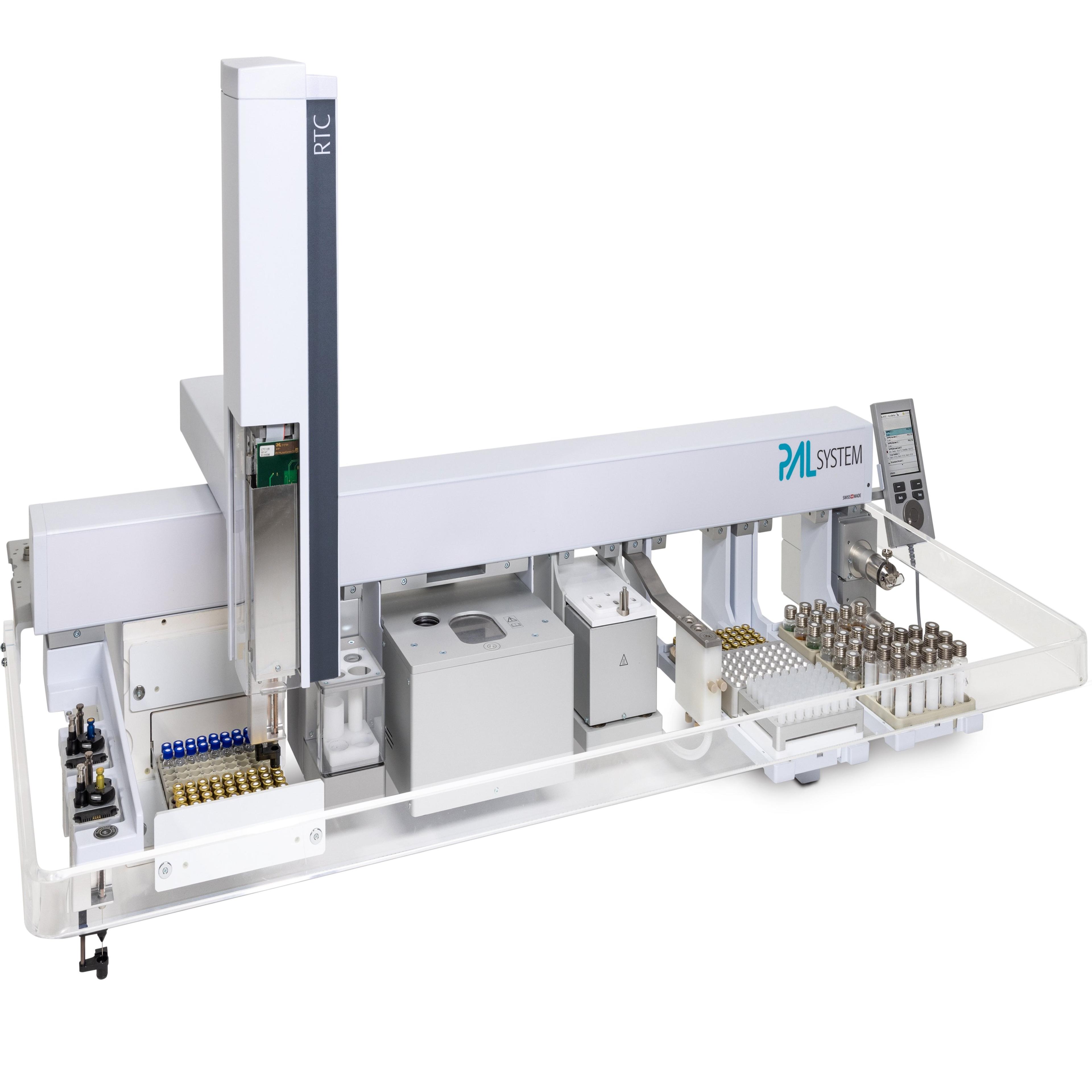
PAL RTC
CTC Analytics AGThe PAL RTC with robotic tool change maximizes productivity in analytical and clinical labs.
Links
Tags
LC-MSLC-MS (liquid chromatography-mass spectrometry) systems and equipment are used for separation and quantitative analysis of complex mixtures, combining liquid chromatography and mass spectrometry. Quantify proteins, contaminants, pesticides or screen for drug metabolites with a high level of sensitivity. LC-MS systems and equipment include reverse phase, normal phase and specialized columns integrated with various MS detectors such as time-of-flight (TOF), quadrupole, orbitrap or ion trap mass analyzers. LC-MS/MS instruments equipped with a qTOF or triple quadrupole analyzer give greater sensitivity and resolving power to your analysis. Find the best LC-MS equipment in our peer-reviewed product directory: compare products, check customer reviews and receive pricing direct from manufacturers.Mass SpectrometryMass spectrometry (MS) is a powerful analytical technique used to identify and quantify molecules based on the mass-to-charge ratio of gas-phase ions. It provides detailed information about the structure, composition, and properties of compounds and is widely used across fields such as environmental monitoring, materials science, drug discovery and development, food and beverage testing, and wider chemical research. Key MS techniques include tandem mass spectrometry (MS/MS), liquid chromatography–mass spectrometry (LS-MS) and inductively coupled plasma (ICP-MS). Choosing from these wide range of techniques and technologies can be a daunting task, so keep up to date with scientific applications, performance expectations, and customer reviews here all in one place. Visit our product directory to receive quotes direct from the manufacturer.
Food and Beverage AnalyzersFood and Beverage Analyzers are commonly used to provide information about the chemical composition, structure and physical properties of food materials.GC-MS GC-MS (gas chromatography-mass spectrometry) instruments and equipment are used to separate, quantify and identify mixtures of small and volatile compounds, such as polycyclic aromatics, fatty acids and alcohols. Often used in drug detection, forensic investigation and environmental analysis for pesticides and contaminants, GC-MS is a powerful addition to your lab’s analytical capabilities. GC-MS/MS instruments equipped with a qTOF or triple quadrupole analyzers can give greater sensitivity and resolution to your analysis. Find the best GC-MS instruments and equipment in our peer-reviewed product directory: compare products, check customer reviews and receive pricing direct from manufacturers.QuEChERSThe QuEChERS (Quick, Easy, Cheap, Effective, Rugged, and Safe) method is a streamlined approach that is used to extract multi-residue target compounds from food samples. It is most commonly used by analytical chemists studying pesticide residues in food.AutomationAutomation in laboratories and manufacturing processes enhances efficiency, precision, and scalability by reducing the need for manual intervention. It plays a critical role in improving productivity, minimizing human error, and accelerating workflows in fields like diagnostics, drug development, and industrial testing. Automation technologies include robotic systems, automated liquid handlers, and process control systems that streamline complex tasks and ensure consistent, reproducible results. Explore our peer-reviewed product directory to discover the best automation solutions, compare options, read user reviews, and get prices directly from manufacturers.Food ContaminationFood contamination refers to the presence of harmful substances or pathogens in food, posing risks to human health. Contaminants can be biological, chemical, or physical, and their detection is crucial for ensuring food safety. Advanced testing methods like PCR, chromatography, and spectroscopy are used to identify contaminants in food products. Browse our peer-reviewed product directory to find the best solutions for food contamination detection, compare products, check reviews, and get pricing directly from manufacturers.Liquid HandlingLiquid handling involves the precise transfer, mixing, and dispensing of liquids in laboratory settings. It is essential for accurate and consistent results in biological, chemical, and pharmaceutical research. Automated liquid handling systems improve efficiency and reduce human error in sample preparation and analysis. Explore liquid handling tools in our peer-reviewed product directory; compare products, read customer reviews, and get pricing directly from manufacturers.GC-MSGas Chromatography-Mass Spectrometry (GC-MS) combines the separation power of gas chromatography with the detection capabilities of mass spectrometry, allowing for the analysis of complex mixtures. It is widely used in environmental, forensic, and pharmaceutical analysis. Explore GC-MS systems in our peer-reviewed product directory; compare products, check reviews, and get pricing directly from manufacturers.LC-MSLiquid Chromatography-Mass Spectrometry (LCMS) is a powerful analytical technique that combines the separation power of liquid chromatography with the detection capabilities of mass spectrometry. It is widely used for qualitative and quantitative analysis of complex mixtures in pharmaceuticals, proteomics, and environmental studies. Browse our peer-reviewed product directory to find the best LCMS systems, compare products, check reviews, and get pricing directly from manufacturers.