
ResourceSpectroscopy
Analysis of metallic impurities in specialty semiconductor gases using gas exchange device (GED)-ICP-MS
1 Nov 2022In this application note, the GED_LAB was integrated with the Agilent 8900 Triple Quadrupole ICP-MS (ICP-QQQ) for the analysis of HF and Cl2 gases. Using the Agilent Software Developer’s Kit for ICP-MS MassHunter, IAS developed software to fully control the GED-MSAG-ICP-MS workflow from the GED software.
Related products
Request Quote for All Products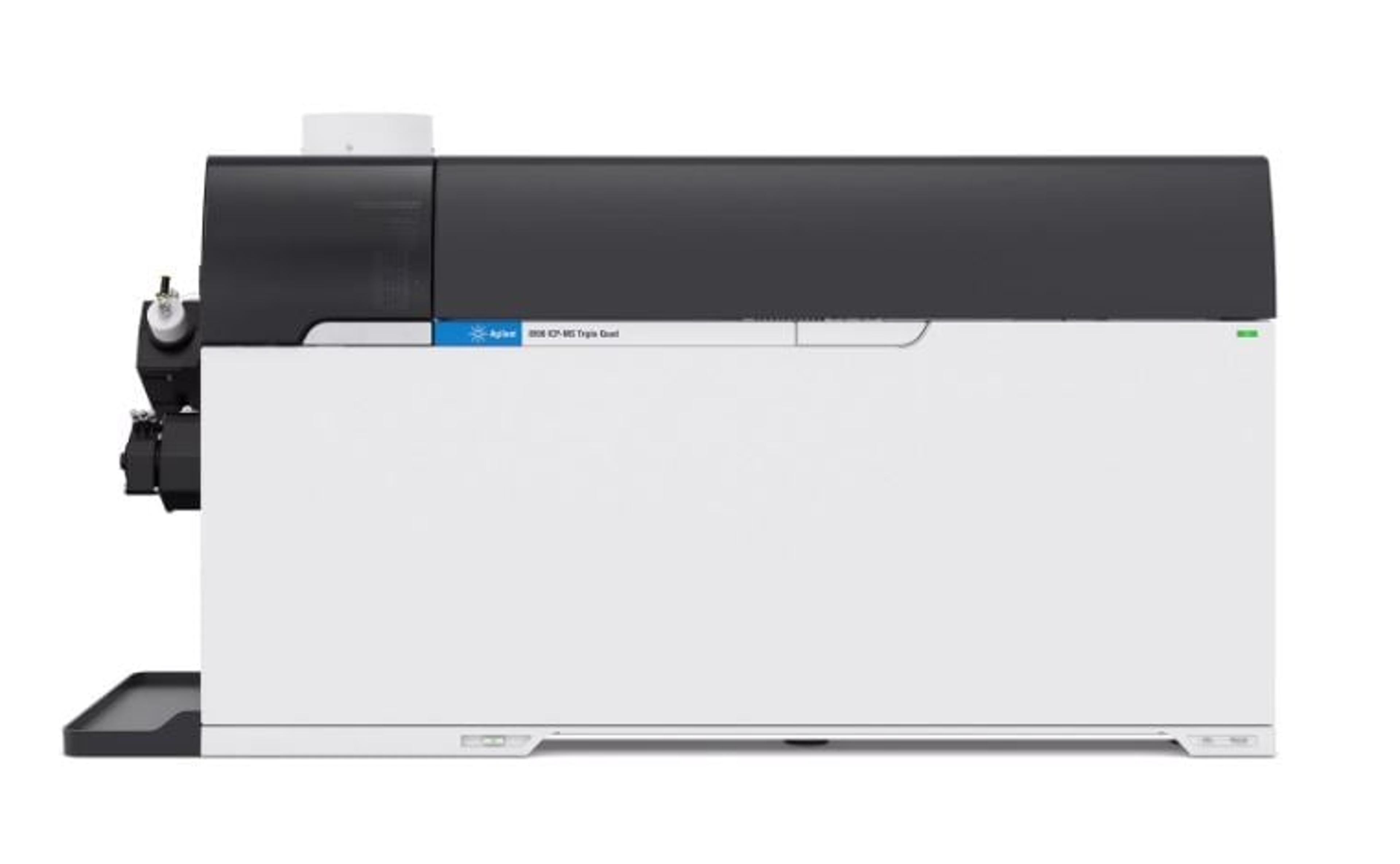
8900 Triple Quadrupole ICP-MS
Agilent TechnologiesThe Agilent 8900 triple quadrupole ICP-MS (ICP-QQQ) is the world’s most successful and widely used tandem ICP mass spectrometer. Available in a range of configurations to cover applications from routine contract analysis to advanced research and high-purity materials analysis, the Agilent 8900 ICP-QQQ redefines ICP-MS performance, delivering results you can trust.
Links
Tags
Atomic Absorption / Emission SpectroscopyAtomic absorption spectroscopy (AAS) and atomic emission spectroscopy (AES) — also called optical emission spectroscopy (OES) — are used to detect the elemental constituents in samples. Both techniques involve the atomization of a sample. Atomic absorption spectrometers may use a flame or furnace to create an atomic vapor of the sample before irradiation with spectral light. Optical emission spectrometers may use a flame, inductively coupled plasma (ICP), microwave plasma (MP) or spark arcs to atomize and excite the sample. At higher excitation energies, electrons can be emitted instead of photons, which can be useful for samples that can’t be atomized and for surface analysis. Explore electron spectroscopy equipment such as Auger spectrometers and photoelectron spectrometers for surface elemental analysis of samples. Find the best atomic absorption, photoelectron and optical emission spectrometers in our peer-reviewed product directory: compare products, check customer reviews and receive pricing direct from manufacturers.Gas AnalysisGas analysis is used to measure the composition of gases in various environments, such as industrial processes, air quality monitoring, and environmental studies. Techniques like gas chromatography and mass spectrometry are commonly used. Explore gas analysis tools in our peer-reviewed product directory; compare products, check reviews, and get pricing directly from manufacturers.ICP-MSInductively Coupled Plasma Mass Spectrometry (ICP-MS) is a powerful analytical technique used to determine the concentrations of elements and their isotopes in a variety of samples, including water, soil, and biological tissues. It involves ionizing elements in the samples with extremely high-temperature Argon (Ar) plasma and then using a mass spectrometer to measure the number of ions based on their mass-to-charge ratio (m/z). Explore ICP-MS systems in our peer-reviewed product directory; compare products, check reviews, and get pricing directly from manufacturers.Semiconductors