
Add consistency to monoclonal gammopathy testing: N latex FLC kappa and lambda assays
4 Nov 2022In recent years, the diagnosis of monoclonal gammopathies, wherein patients can be asymptomatic or present with a wide range of manifestations, such as light chain amyloidosis or fast-progressing multiple myeloma requiring aggressive therapy, has focused on detecting increased levels of either free light chain (FLC) kappa or lambda. The shift to this method of diagnosis from the detection of elevated complete immunoglobulin levels was a result of many gammopathies displaying no increased expression of immunoglobulins, instead showing increased levels of FLC kappa or lambda. In these conditions, the resulting phenotype was an abnormally low or high FLC kappa/lambda ratio. In this white paper, Siemens Healthineers presents its N Latex FLC kappa and lambda assays and show how they can be used to add consistency to monoclonal gammopathy testing.
Related products
Request Quote for All Products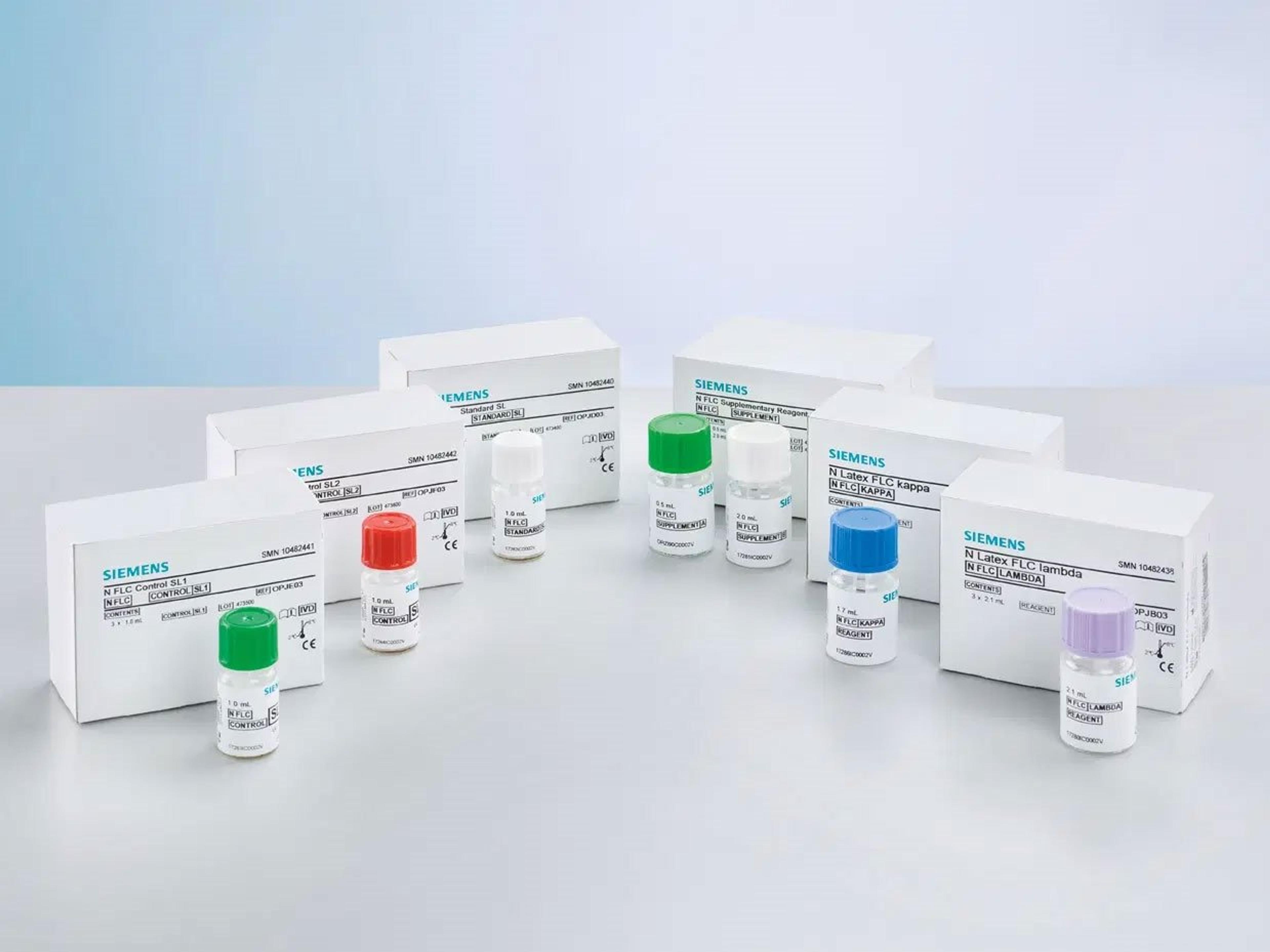
N Latex FLC kappa and N Latex FLC lambda Assays
Siemens HealthineersAdd confidence to screening and monitoring of monoclonal gammopathies.