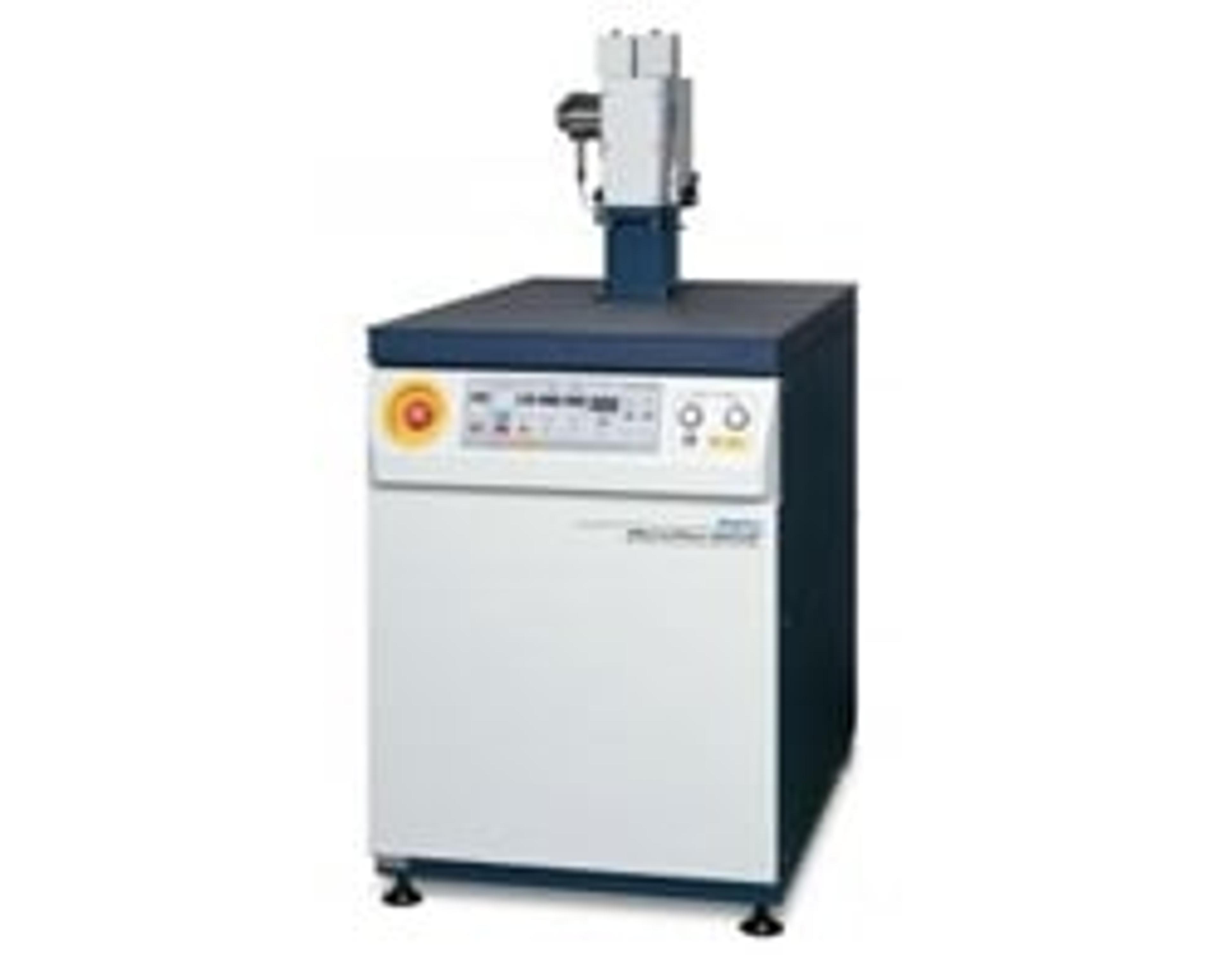
MicroMax-007 HF
The MicroMax™ 007 HF is the most widely used home lab X-ray source for protein crystallography. The original MicroMax™ 007 introduced the world to the concept of a sub-100 micron focal spot size along the increased brilliance that can be more effectively used to illuminate small crystals. The current HF version increases the power loading by 50% over the original model providing an X-ray source that rivals second generation s…


The supplier does not provide quotations for this product through SelectScience. You can search for similar products in our Product Directory.
The MicroMax™ 007 HF is the most widely used home lab X-ray source for protein crystallography.
The original MicroMax™ 007 introduced the world to the concept of a sub-100 micron focal spot size along the increased brilliance that can be more effectively used to illuminate small crystals. The current HF version increases the power loading by 50% over the original model providing an X-ray source that rivals second generation synchrotron sources - but with better beam stability and, of course, easy access.
Productivity can be measured in many ways but the up-time of a system is perhaps one of the most important issues. Unlike competing products, the MicroMax-007 HF was designed with up-time in mind. Filament changes are quick and painless with Rigaku microfocus generators. Superior Rigaku engineering has reduced this service headache to a 45 minute maintenance routine of simply changing a cartridge.
Featuring a robust direct-drive anode, the MicroMax-007 HF compact tower assembly contains both the vacuum chamber and turbo-molecular pump for fast pump downs.
MicroMax-007 HF Features:
- Smallest focal spot size available on a rotating anode generator (70 μm diameter circle)
- 1.2 kW power in a small beam provides greater flux density and less background for small samples
- Unique pre-aligned and pre-crystallized filament cartridges minimize maintenance
- Anode head can easily be moved and positioned for optimal experimental configuration
- Choice of anode materials: Cu, Cr, Mo, and Co
- Two ports for optimal use of instrument investment
- Extended anode and filament lifetimes