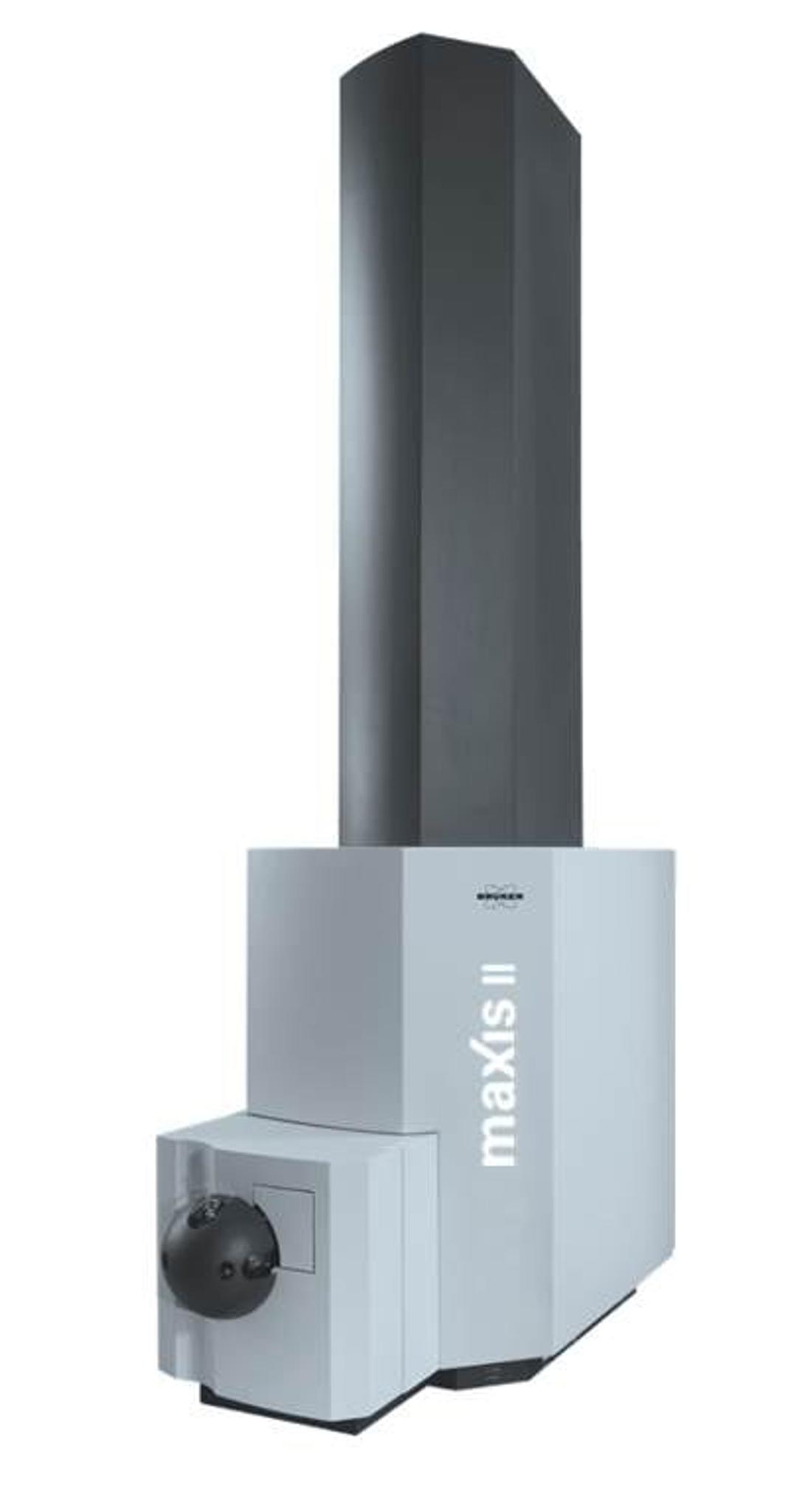
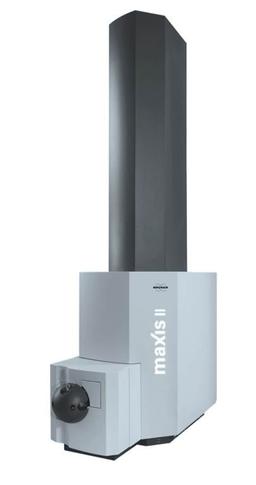
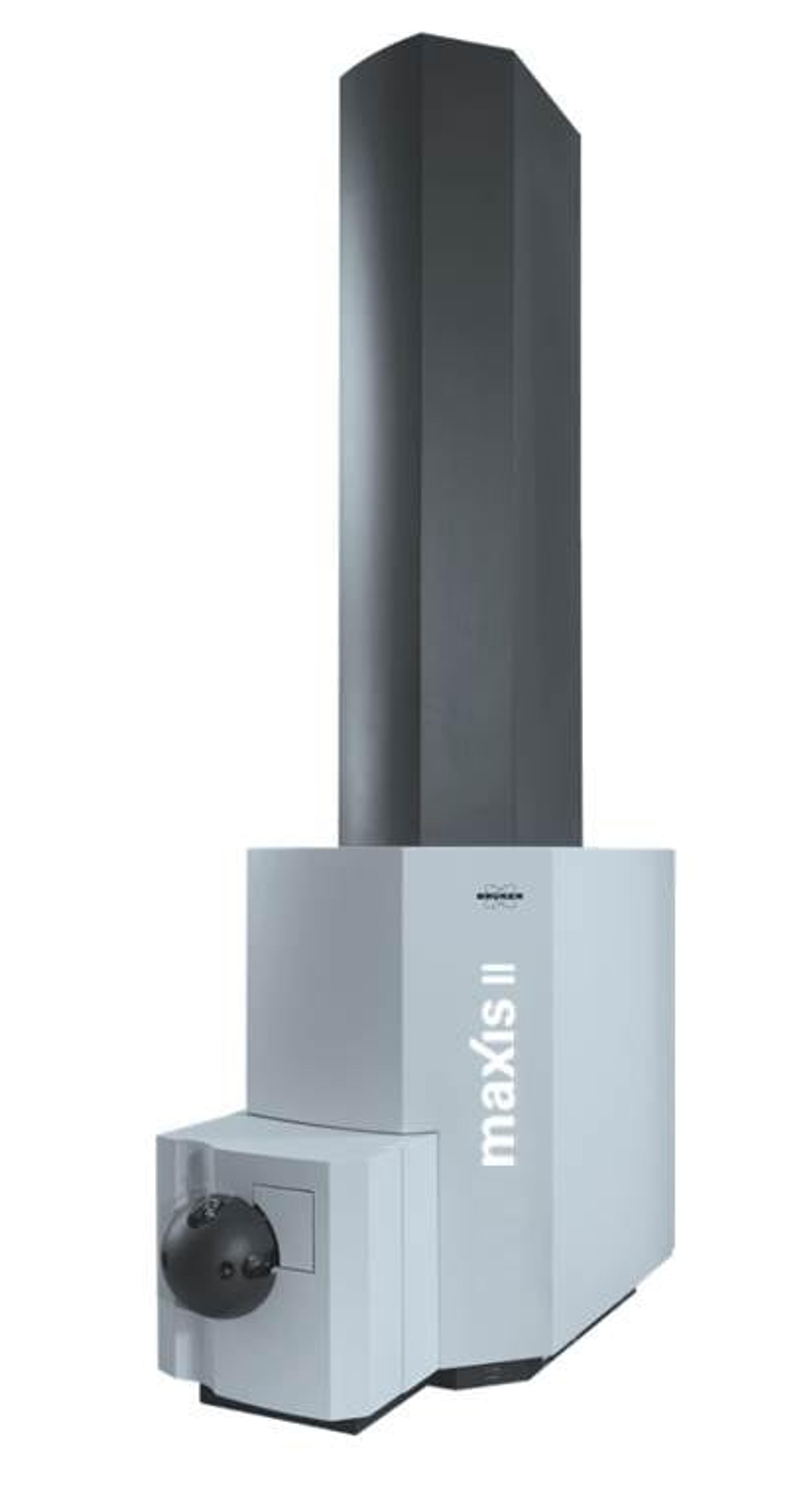
maXis II
High performance, versatility and ease-of-use in a compact design for efficient mass spectrometry analysis.
The supplier does not provide quotations for this product through SelectScience. You can search for similar products in our Product Directory.
Great results.
Analysis
Very useful.
Review Date: 2 Feb 2021 | Bruker Daltonics
Great results from this robust and easy to use instrument.
Analyzing metabolites in tissue and biological fluids
The maXis is a relatively simple instrument to use. The software is straight forward and once properly maintained response variations between samples, and from day to day, are relatively low. The service from Bruker has always been prompt and professional.
Review Date: 31 Oct 2017 | Bruker Daltonics
The maXis™ Q-TOF enables advances in personalized diagnostics
Translational medicine and personalized healthcare
To achieve major advancements in glycopeptide and intact protein analysis, Bruker was my clear choice. The maXis™ Q-TOF and amaZon speed ion trap LC-MS instruments, in combination with Bruker’s software such as ProteinScape and GlycoQuest, offered solutions to translate our biomarker research in disease mechanisms into novel personalized diagnostics.
Review Date: 26 Oct 2017 | Bruker Daltonics
Very robust and sensitive
metabolomics, identification of unknowns in environmental and food samples, multi-contaminants scree
Yes, it enhanced our work tremendously. We have been able to develop a wide-scope target screening method and the identification capabilities for unknowns or suspect compounds enhanced very much. It is very easy to use and very robust instrument. I would recommend it definitely.
Review Date: 6 Mar 2017 | Bruker Daltonics
Good value for money and fulffils the need of various work groups!
Metabolomics and Proteomics
The instrument is well designed for variety of applications ranging from small to large molecule applications. Equipped with ESI and nano ESI booster, can be coupled to fast UPLCs and nano-LC depending upon the type of application with ease. With resolution 80k and mass accuracy <1ppm, the system offer confidence and reliability in analysis with robustness. With the QTOF design comes with powerful MSMS feature thus prove to be useful for people doing whether natural product structure elucidation or PMF protein sequencing. Released in 2015, that makes it among the most updated system in market of its kind. although not a QQQ but can offer decent 5x dynamic range thus great for quantification for any application you throw at it!
Review Date: 10 Feb 2017 | Bruker Daltonics
- High Definition Collision Cell for record-breaking FSR of > 80,000
- 5 orders of magnitude dynamic range achieved at UHPLC speeds from 50 GBit/sec sampling technology for efficient trace analysis of complex matrices
- Intelligent self-optimizing MSMS routines for expert-level results in a single LC run with plug & play acquisition and optional electron transfer dissociation.
Rapid Detection of Deamidation in Monoclonal Antibodies using Ultrahigh-Resolution QTOF Mass Spectrometry
Characterizing the heterogeneity occurring in therapeutic antibodies (mAbs) is a fundamental task of all product development and commercialization phases. Asn deamidation is a particularly important source of heterogeneity, however, challenging to detect on intact proteins and is currently characterized with bottom-up approaches. This scientific poster describes the production of a model system for deamidation of biologics, applied on a partially deamidated antibody light chain (LC).
Increasing Transfer Efficiency in Native Mass Spectrometry of Supermolecular Protein Complexes with a Modified Duel-Funnel QTOF
This poster describes the native mass spectrometry results obtained with a minor modification of an ultra high resolution UHR-QTOF associated to an improved data processing procedure.
Native and Subunit Analysis of an Antibody Drug Conjugate Model with Ultra-High Resolution Quadrupole Time-of-Flight Mass Spectrometry
This case study describes the utilization of the maXis HD UHR-QTOF to characterize key attri¬butes of an ADC model. The analysis is performed on the intact molecule by native MS for drug to antibody ratio determination and at the subunit level for linker degradation monitoring.
Automated Antibody Verification for Lead Discovery
In this application note, automated characterization of monoclonal antibodies as therapeutic agents in the pharmaceutical industry is discussed. Several steps within the antibody lead discovery and optimization process require the expression, purification and analytical characterization of the respective antibodies or antibody fragments. Automation of these processes at each stage during the therapeutic pipeline improves high throughput capabilities.
Webinar Highlights - Eliminating False Positives and Negatives: Correctly Report Results the First Time
Learn how to improve your data acquisition in high-resolution mass spectroscopy
Analysis of Biosimilars and Biobetters using the maXis UHR-qTOF: A Complementary Approach
Written by Jason S. Wood, Ph.D. Bruker Daltonics