Webinar Highlights: Maximize Your Laboratory Safety: Best Practices for Your Lab Work

Read highlights from this indispensable webinar

9 Jun 2016

Lynsey Forsyth
Post Doc / Research Fellow

Expert insights

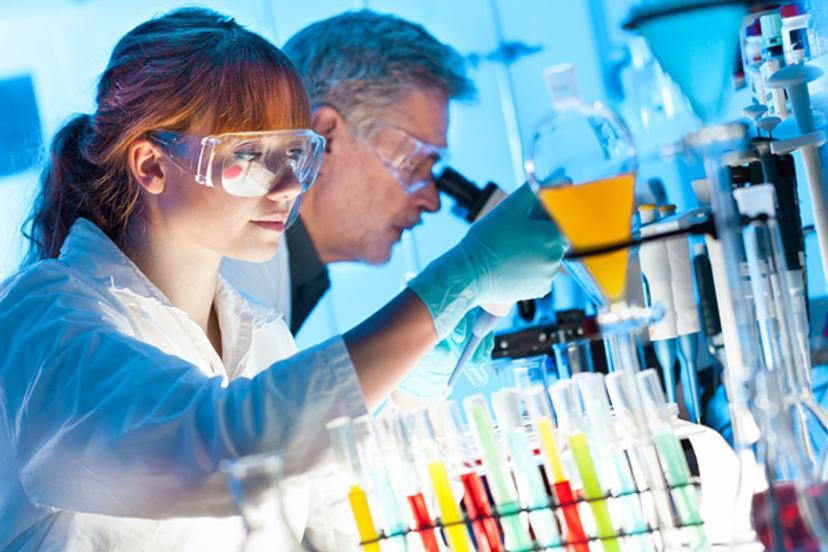
Image: TwoScientists-Matej Kastelic/Shutterstock

Laboratory safety is critically important to ensure the health and well-being of staff, safely maximize workload and to satisfy any relevant legal responsibilities. Are you confident that all the necessary guidelines and regulations are being followed effectively in your workplace?

In this webinar, Herbert Heidfeldt, Consultant for Environment, Health & Safety at Darmstadt, Germany, discussed laboratory safety best practices and presented some good examples. Read on for the highlights of the Q&A session, including additional questions answered offline. If you missed it, watch the full webinar here.

Q: What is the best way to move chemicals between floors, if not using a lift?

A: Depending on the size of the container, the Merck safety bucket could be used. More information on safety accessories can be found here.

Q: We have no written information on the safety responsibility roles in our laboratory. Are these really necessary?

A: Yes, they are. The employer is accountable for safety and needs to provide written delegation of these responsibilities to ensure a safe working environment.

Q: We have some very old bottles, with very old labels, is it still safe to use these chemicals?

A: Labs need good housekeeping practices, with organized records of receipt and expiry of chemicals, to ensure safety and maximize lab space. If you do not have this, you should dispose of the chemicals according to regulations.

Q: We have very limited storage space for dangerous materials. Can we temporarily store them in fume hoods or normal cupboards?

A: Temporary should mean no longer than the working day. At other times materials must be stored according to the local regulation and legislation. Labs should avoid the long-term storage of unused chemicals, ordering only what they need in the short-term and being well organized to maximize space.

Q: What would you recommend for laboratories that have only one emergency exit rather than the recommended two?

A: It is important to ensure that the sole exit route remains unobstructed and is clear from combustible materials and ignition sources. Staff should be trained with full evacuation drills.

Q: Our lab equipment is not very modern and no improvements are planned. How would you improve safety in this situation?

A: Appropriate risk assessments and maintenance checks must be made regularly and all staff must be fully trained in safe usage of the equipment.

Q: How can we store flammable solvents, such as methanol, in bulk? Could we use an air conditioned room?

A: No, flammable solvents must be stored according to the existing regulations, using a certified safety cabinet.

Q: What is the recommended safe distance between electrical points and gas connections? Are there any safety concerns if the laboratory wall is constructed from gypsum board?

A: This will depend upon the type of gas and the electrical voltage. We recommend that you contact a specialist.

Q: I noticed that there is no dedicated section in ISO 15189 for health and safety, do you know if auditors look at health and safety aspects of the laboratory during inspections?

A: International Organization for Standardization (ISO) ISO 15189 is a voluntary quality management system. Occupational Health and Safety (OHS) is based on the United Nations human and working rights standards that are most regulated by country specific regulations and legislation. Therefore, ISO infractions represent non-conformity, whilst OHS infractions represent non-compliance in inspections.

Q: How should we handle laboratory chemical waste? Can all chemicals be stored in waste bottles or does this depend on the concentration?

A: Although they have been designated as used material or waste, their properties remain the same. So the safety data sheet (SDS) must be consulted for disposal advice in accordance with local legislation.

Q: If there is fire and it occurs in room containing animals, what should we do?

A: The animal welfare officer has responsibility for the use of animals in research. Please contact the relevant responsible person in your organization for the correct procedures.

Q: Do all chemicals need to be stored according to control banding in the lab? How do you address this issue when there is a lack of space?

A: Chemicals should be separated according to their chemical properties, start with the most dangerous chemicals and follow storage instructions in the safety data sheet. You may also be able to increase your space through good housekeeping and external storage of chemicals that are used infrequently.

Q: What is the recommended separation distance between two materials that must be stored separately?

A: Refer to the chemical SDS and the relevant Merck StoreCard.

Q: How can we perform a risk assessment of a vacuum oven?

A: You should contact the manufacturer for their recommendations and your safety officer for in-house requirements.

Q: Can I have a copy of the presentation slides?

Please refer to the on-demand version of the webinar and the Napo website.

Find out more about laboratory safety tools and products and download Merck StoreCard information.

Please note this content is not applicable to readers from North America.

Links

Tags

AutosamplersAutosamplers are automated sample loaders used with a number of separation and analytical techniques. HPLC autosamplers use automated partial or full-loop injection systems and place samples in vials or microplates for analysis. Autosamplers can also be used for elemental analysis. Features to consider include repeatability, syringe capacity, footprint and temperature controls.  Capillary ElectrophoresisCapillary electrophoresis (CE) is used to separate molecules based on charge, size and hydrophobicity. Pressure, voltage or a vacuum is used to introduce the sample to fused silica capillaries. Fluorescence, UV/Vis, UV or diode array detectors are used to visualize components. Types of CE systems include capillary electrochromatography (CEC), capillary zone electrophoresis and capillary gel electrophoresis. Find the best capillary electrophoresis equipment in our peer-reviewed product directory: compare products, check customer reviews and receive pricing direct from manufacturers.Atomic Absorption / Emission SpectroscopyAtomic absorption spectroscopy (AAS) and atomic emission spectroscopy (AES) — also called optical emission spectroscopy (OES) — are used to detect the elemental constituents in samples. Both techniques involve the atomization of a sample. Atomic absorption spectrometers may use a flame or furnace to create an atomic vapor of the sample before irradiation with spectral light. Optical emission spectrometers may use a flame, inductively coupled plasma (ICP), microwave plasma (MP) or spark arcs to atomize and excite the sample. At higher excitation energies, electrons can be emitted instead of photons, which can be useful for samples that can’t be atomized and for surface analysis. Explore electron spectroscopy equipment such as Auger spectrometers and photoelectron spectrometers for surface elemental analysis of samples. Find the best atomic absorption, photoelectron and optical emission spectrometers in our peer-reviewed product directory: compare products, check customer reviews and receive pricing direct from manufacturers.AntibodiesAntibodies are used in techniques such as confocal and fluorescence microscopy, flow cytometry, ELISA, ELISPOT, immunohistochemistry, western blotting and immunopreciptation. Select specific antigen reactivity, high specific affinity, low non-specific binding, monoclonal or polyclonal, primary or secondary antibodies and associated conjugates such as an enzyme or dye for visualization.Labware and Lab SuppliesLabware and lab supplies include various forms of glassware, plasticware, reagents and personal protective equipment (PPE) and are used across all scientific laboratories, enabling daily tasks to be performed. Explore a range of flasks and beakers, petri dishes, carboys and storage bottles. Labware such as condensers, desiccators and burettes are also available for more specific tasks. Find the best labware and lab supplies in our peer-reviewed product directory: compare products, check customer reviews and receive pricing direct from manufacturers.Chem / BioinformaticsCheminformatics and bioinformatics are computational techniques used in chemistry and biology, respectively, for data acquisition, processing and storage. Cheminformatics focuses on compound information, whereas bioinformatics is mainly applied to analysis and modeling of genomics, genetic and sequencing information. Hardware and software is available for data acquisition, analysis, management and storage.ADME-ToxicologyADME-toxicology (ADME-Tox) studies are used in pharmacology and pharmacokinetics to assess the activity/toxicity of drugs <i>in vivo</i> or <i>in vitro</i>. Find bioassays for absorption, distribution, metabolism, and excretion of drug molecules including cytotoxicity, transporter/permeability, metabolism and activity assays as well as hepatocytes and cell lines for ADME. Find the best ADME-toxicology products in our peer-reviewed product directory: compare products, check customer reviews and receive pricing direct from manufacturers.Assay AssemblyAssay Assembly is technique used in drug discovery to develop assays to test the cytotoxicity, genotoxicity, or other activities of a compound on a cell. Assay assembly requires chip assembly, a delivery system and a detection and analysis method. Beneficial features of assay kits or automated systems include high-throughput, high speed and sensitivity and low signal to noise ratio.Blood TransfusionBlood Transfusion involves giving donor blood to a recipient patient. Screening is essential to avoid transfusion reactions. Blood banks use immunohematological techniques to determine rh and ABO blood group, and screen for antibodies using specific antisera. Blood Banks use Direct Coombs Tests (DCT) and Indirect Coombs Tests (IAT) to detect hemolysis and Haemolytic Disease of the Newborn (HDN).Biopharmaceutical AdvancesBiopharmaceutical advances follow the development of pharmaceuticals derived from biotechnology, also known as biotechnology medicines. Biopharmaceuticals may be produced from cell lines, plants, or microbial cells. Important considerations of biopharmaceutical use include application, cost, production process and purification.Clinical TrialsClinical Trials, an essential part of drug discovery process, assess the safety and effectiveness of a new medication or device in the pharmaceutical industry. Clinical Trials are a phased process (Phase 0, Phase I, Phase II, Phase III and Phase IV) which begins after initial preclinical testing.Automation Supplies / AccessoriesAutomated accessories and consumables make lab processes fast, efficient and reliable. Useful automation accessories include microplate sealers, label printers and reagent reservoirs.Food and Beverage ProcessingFood and Beverage Processing involves the preparation of food products for further analysis. Typical instrumentation includes blanchers, color sorters, cookers, grinders, and refrigeration. These are used to replicate the processes commonly used in the commercial preparation of food and beverages.BiochemistryBiochemistry (or clinical chemistry) involves the analysis of bodily fluids using chemical tests. Techniques used include HPLC, chromatography, spectroscopy, mass spectrometry, immunochemical, electrophoresis, turbidometric / spectrophotometric assay, MRI and ISE analysis. Tests are often carried out on plasma or serum but urine (urinalysis) and fecal specimens are also processed.Compound AnalysisCompound analysis is used to discover specific compounds that could be promising candidates for pharmaceutical use. This potential is identified when compounds have the desired effect, such as interaction with a target protein, during high throughput screening.