We celebrate women in science with a playlist of our top trending video interviews

Meet the women who are making a critical impact in the fields of food science, nanomedicine, and healthcare

8 Mar 2022

Blake Forman
Content Creator

Editorial article

To celebrate International Women’s Day, we have pulled together a playlist of top interviews with female scientists from The Scientists' Channel, our independent video platform for scientists and clinical experts around the world to share their work.

The role of polyploid giant cancer cells in disease

Dr. Michelle Dawson, Brown University

Dr. Michelle Dawson, Brown University, shares her research on cell metabolism and interactions. Dawson further explains how deepening our understanding of how polyploid giant cancer cells (PGCC) interact is vital in determining how they give rise to invasive cancers.

Watch video

Personalized nanomedicine: Advanced targeted therapy to treat rare disease
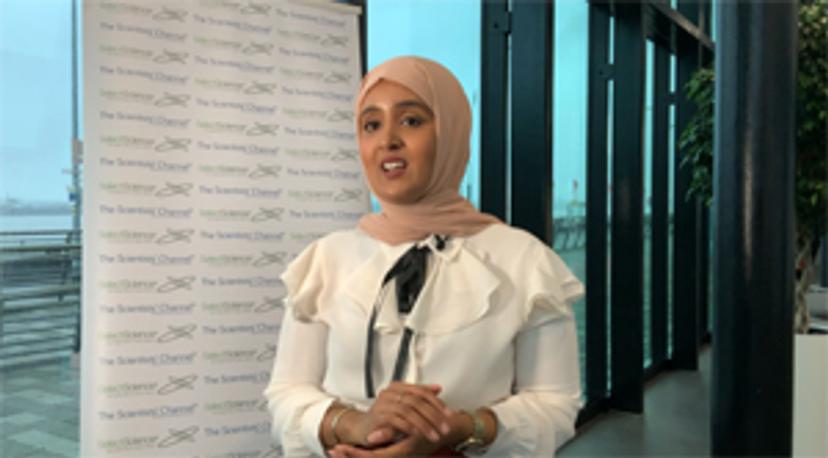
Dr. Nura Mohamed, research associate at Qatar University

Dr. Nura Mohamed, research associate at Qatar University, discusses how she is applying nanomedicine to improve the detection and treatment strategy of pulmonary arterial hypertension. Mohamed highlights why scientific collaboration is necessary in order to identify appropriate nanoparticle properties.

Watch video

Why is analyzing highly polar pesticides in food and the environment so hard?

Ann-Kathrin Wachtler, food scientist at CVUA Stuttgart

Ann-Kathrin Wachtler, food chemist at CVUA Stuttgart Official Institute for Food Control, explores the challenges associated with analyzing very high numbers of samples for highly polar pesticides and other compounds.

Watch video

Combating the threat of antimicrobial resistance: The promising rapid tests for antimicrobial susceptibility

Dr. Tiziana Di Martino, chief medical officer at Q-linea

Dr. Tiziana Di Martino, chief medical officer at Q-linea, explores the benefits of rapid antimicrobial susceptibility testing (AST) technology and shares how a minimum inhibitory concentration result is utilized within clinical practice to help guide patient treatments.

Watch video

Machine learning in healthcare: How the principles of consumer-focused AI could save lives

Prof. Regina Barzilay, faculty lead for artificial intelligence at MIT Jameel Clinic

Prof. Regina Barzilay, faculty lead for artificial intelligence at MIT Jameel Clinic, describes how she is using machine learning to take on some of the major challenges in healthcare such as clinical diagnostics, improving care outcomes, and drug discovery.

Watch video

Visit The Scientists' Channel to watch new videos and stay up to date on the latest research>>

Thermo Scientific™ Vanquish™ Flex Binary UHPLC System

Thermo Fisher Scientific

The Thermo Scientific™ Vanquish™ Flex Binary UHPLC system is biocompatible with a state-of-the-art binary high-pressure pump and state-of-the-art binary solvent blending. This ultra high performance liquid chromatography system shares all Vanquish values, such as a design focused on uptime, robustness and reliability.

(2)

Links

Tags

LC-MSLC-MS (liquid chromatography-mass spectrometry) systems and equipment are used for separation and quantitative analysis of complex mixtures, combining liquid chromatography and mass spectrometry. Quantify proteins, contaminants, pesticides or screen for drug metabolites with a high level of sensitivity. LC-MS systems and equipment include reverse phase, normal phase and specialized columns integrated with various MS detectors such as time-of-flight (TOF), quadrupole, orbitrap or ion trap mass analyzers. LC-MS/MS instruments equipped with a qTOF or triple quadrupole analyzer give greater sensitivity and resolving power to your analysis. Find the best LC-MS equipment in our peer-reviewed product directory: compare products, check customer reviews and receive pricing direct from manufacturers.Cell / Tissue CultureCell culture or tissue culture is used to study the biology of cells or tissues and to isolate cellular products in an environment which can be manipulated and well defined. Accurately control your culture environment with bioreactors or culture incubators, bind your cells to a surface or together with an extracellular matrix. Distinguish cell types with differential media or proliferate cells with certain characteristics using selective media. Enrich your media with supplements such as growth factors, sera and vitamins. Find the best cell and tissue culture products, kits and equipment in our peer-reviewed product directory: compare products, check customer reviews and receive pricing direct from manufacturers.Sample ManagementSample management systems include sample storage devices such as freezers and plate storers, sample environment enclosures and sample organization, retrieval and sorter systems. Useful system features include high-throughput, automation, robotic arms, automated liquid handling and associated database systems. Accessories in sample management include barcode scanners, heat sealers and tubes.Cellular PathologyCellular Pathology deals with the microscopic analysis of tissue samples and cells. Sample preparation and processing includes fixation, staining, sectioning and slide mounting, using equipment such microtomes and cryostats. In choosing immunohistochemistry and immunocytochemistry kits, consider chromogens, staining method, antibodies, microscopes and imaging.Cell-Based AssaysCell-based assays are used to monitor the presence, quantity and activities of a desired cellular analyte including drug molecules or biomarkers. This can reveal information on cell health (apoptosis, cytotoxicity, viability and proliferation assays), cell metabolism, cell migration and cell signaling mechanisms. Find the best cell-based assay products, kits and equipment with our peer reviewed product directory: compare products, check customer reviews and receiving pricing direct from manufacturers.Point-of-CarePoint-of-Care Testing (POCT) or Near Patient Testing (NPT) products are available for urine, blood and other clinical chemistry analyses. POCT includes: blood glucose testing, blood gas and electrolytes analysis, rapid coagulation testing (PT / INR), rapid cardiac markers diagnostics, drugs of abuse screening, urine strips testing, pregnancy testing, fecal occult blood analysis, food pathogens screening, hemoglobin diagnostics, infectious disease testing and cholesterol screening.Solid-Phase ExtractionSolid-phase extraction (SPE) is used for clean-up, extraction and concentration of semi-volatile or non-volatile analytes from complex mixtures including blood, urine and food samples. Multiple formats are available for conducting SPE, including prepacked SPE cartridges, disks and microplates, as well as SPE sorbent powders for manual packing. SPE systems can be used to automate the process and extract multiple samples at once. Solid-phase microextraction (SPME) and supported liquid extraction (SLE) products are also available in the same formats. Find the best SPE, SLE and SPME equipment in our peer-reviewed product directory: compare products, check customer reviews and receive pricing direct from manufacturers.BiomarkersBiomarkers are biological markers which can be measured and evaluated to indicate a biological state. The use of biomarkers in research and diagnosis can indicate a normal or disease state or drug response of cells / tissues. Biomarkers include genetic markers, cell surface markers such as antigens, antibodies or receptors and secreted molecules such as cytokines. An assay system is required for identification of biomarkers. :Clinical ChemistryBiochemistry (or clinical chemistry) involves the analysis of bodily fluids using chemical tests. Techniques used include HPLC, chromatography, spectroscopy, mass spectrometry, immunochemical, electrophoresis, turbidometric / spectrophotometric assay, MRI and ISE analysis. Tests are often carried out on plasma or serum but urine (urinalysis) and fecal specimens are also processed.Clinical MicrobiologyMicrobiology is the study of microorganisms including protists, prokaryotes, fungi, and, often, viruses. Microorganisms are a useful research tool as genetic vectors and, in immunology, for antibiotic susceptibility testing, cellular biology and genetics. Microorganisms commonly grow readily in incubators with microbial culture media; this can contain chromogenic supplements to differentiate between cell lines. Estimate your culture’s density of microorganisms with colony counters, or screen and select colonies for desirable clones with automated colony pickers. Additionally, equipment is available to monitor environments for the presence of microbes and identify with microbial identification instruments. Find the best microbiology products in our peer-reviewed product directory: compare products, check customer reviews and receive pricing direct from manufacturers.Food and Beverage AnalyzersFood and Beverage Analyzers are commonly used to provide information about the chemical composition, structure and physical properties of food materials.RegulatoryPharmaceutical regulations impact on all areas of drug development, manufacture and control and supply. Services are provided from the early stages of drug development and clinical trials through to dossier submission, approval and marketing. Regulatory also includes submission of analytical studies from the pharmaceutical product and safety. NanotechnologyNanotechnology, or nanotech, is an engineering technique using molecular scale functional systems. Applications of nanotechnology include medicine and medical devices, electronics, air and water purification, food science and energy production.AntimicrobialsFood SafetyFood safety describes the prevention of food-borne illnesses. Contamination with a variety of pathogens can be prevented with adequate temperature control, hygiene and labeling. Food samples can be tested using GC/MS, HPLC, SPE, and qPCR to ensure their adherence to regulations.