Waters Showcases ACQUITY UPLC/MS Tools for Increasing Lab Efficiency at AACC 2012

28 Jul 2011
bridget bridget
Laboratory Director

Product news

Waters Corporation today unveiled new technology solutions for increasing clinical laboratory efficiencies including the first CE Marked LC/MS/MS integrated solution for the quantification of everolimus (Certican®).

Being displayed in Waters booth #3136 are these exciting new products.

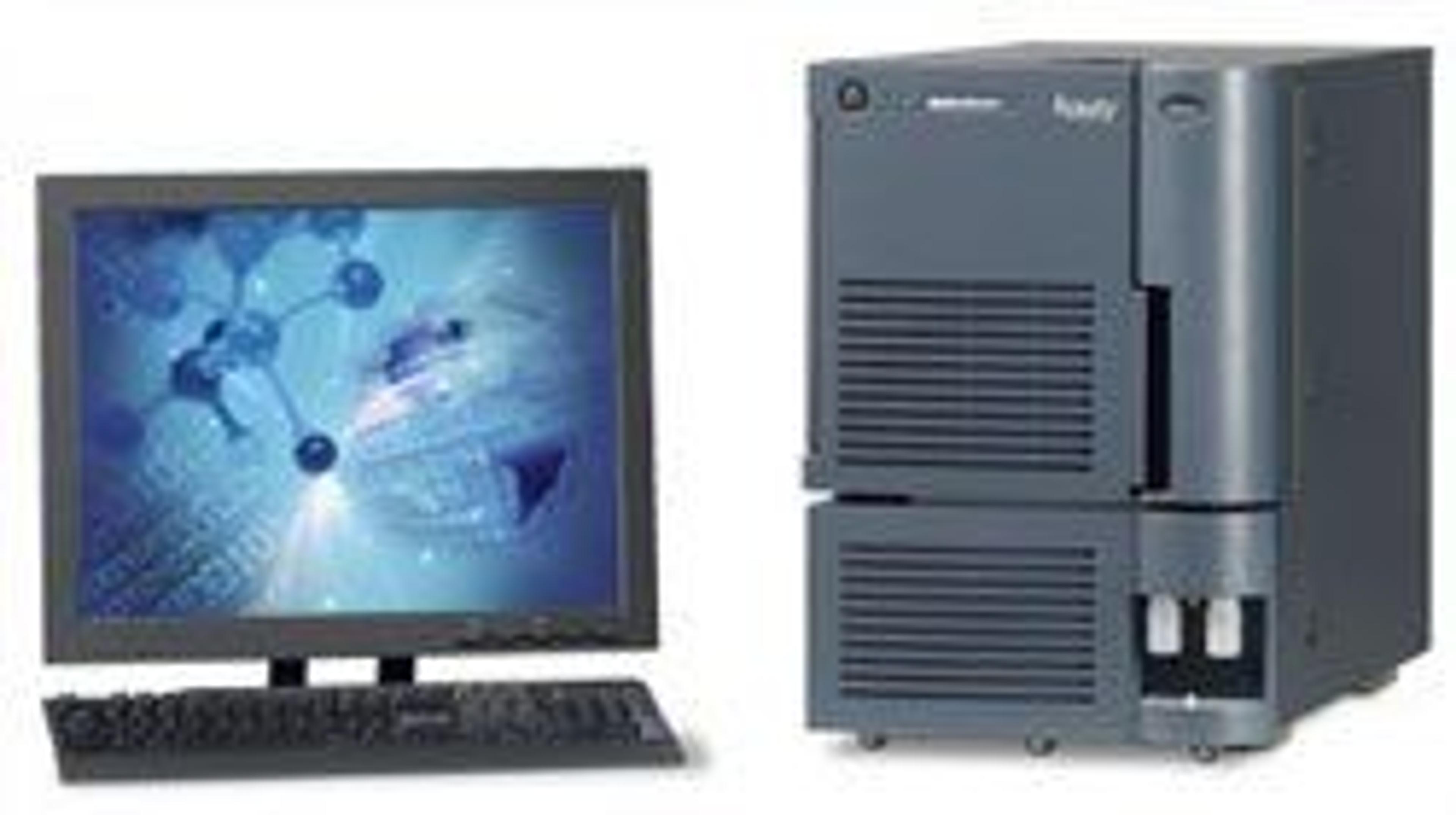
MassTrak™ Online Solid Phase Extraction Analyzer providing automated sample clean-up, concentration, and extraction complemented by Waters® ACQUITY® TQD tandem quadrupole mass spectrometer for high-sensitivity quantitative analysis.
MassTrak Immunosuppressants XE Kit – CE marked in accordance with the IVD Directive 98/79/EC for the quantification of tacrolimus (FK506;Prograf®) in liver and kidney transplant patients and everolimus (Certican®)

Educational Workshops

This year, Waters is sponsoring two scientific workshops which are designed to further the education of laboratory technicians, scientists, and chemists responsible for developing, implementing, and maintaining robust clinical assays. Each workshop features presentations from leading practitioners in the field of clinical chemistry.

•Good Method Development and Validation Practices for Liquid Chromatography – Mass Spectrometry (LC-MS), Tuesday, July 26, 6 – 7:30 p.m., Hyatt Regency Atlanta, Regency Ballroom VII. Featured presenters: John W. Honour, Ph.D., University College London Hospitals, London, UK; Kimberly Napoli Eaton, Ph.D., Laboratory Director, Andor Laboratories, LLC, Durham, NC; and Graham Carter, DEQAS Organiser, Imperial College Healthcare NHS Trust, Charing Cross Hospital, London, UK. Attendees at this workshop may be eligible to receive ACCENT® educational credit hours.

•Implementing LC/MS/MS in the Clinical Laboratory, Wednesday, July 27, 6 – 7:30 p.m., Hyatt Regency Atlanta, Centennial Ballroom III. Featured presenters: Elizabeth L. Frank, Ph.D. DABCC, Associate Professor of Pathology, University of Utah Health Science Center, Salt Lake City, UT; Shannon Harmond, Ph.D., Director – Clinical Chemistry Laboratory, Children’s Memorial Hospital, Chicago, IL; Paul J. Jannetto, Ph.D., DABCC, Associate Professor of Pathology, Medical College of Wisconsin, Milwaukee, WI.
Scientific Posters

Waters scientists and customers will be presenting several scientific posters at AACC including:

•Everolimus Measurement: Evaluating the Waters MassTrak Immunosuppressant XE Kit for use with LC/MS/MS
•Development of a Rapid Quantitative/Semi-Quantitative LC/MS/MS Method to Monitor Opioids and Glucuronide Metabolites
•Measurement of 25-Hydroxyvitamin D3 and C3-epi-25-Hydroxyvitamin D3 Using UPLC/MS/MS in Pediatric and Adult Populations
•Evaluation of LC/MS/MS Scrambling Ratios for Deuterium-Labeled Vitamin D Metabolites, Steroids and Other Compounds of Clinical Significance
•Development of an LC/MS/MS Method for 1,25 Dihydroxy Vitamin D for Use in the Clinical Laboratory
Links

Tags

AutosamplersAutosamplers are automated sample loaders used with a number of separation and analytical techniques. HPLC autosamplers use automated partial or full-loop injection systems and place samples in vials or microplates for analysis. Autosamplers can also be used for elemental analysis. Features to consider include repeatability, syringe capacity, footprint and temperature controls.  UHPLC and HPLCHigh performance liquid chromatography (HPLC) and ultra high performance liquid chromatography (UHPLC), also known as UPLC, are analytical techniques used to separate, identify and quantitate components of complex mixtures including biological samples such as proteins and lipids as well as chemical mixtures of pesticides, drugs and oils. Both techniques are liquid chromatographic methods but differ by operating pressures (HPLC < 6000 psi < UHPLC ). Components of HPLC and UHPLC systems include columns, detectors, pumps, autosamplers and column heaters. Explore a range of UHPLC and HPLC columns for your specific sample needs including reverse phase, normal phase, ion exchange, HILIC, ion exclusion and size exclusion columns. For more specialized HPLC, explore FPLC, countercurrent LC and simulated moving bed systems. Find the best UHPLC and HPLC equipment in our peer reviewed product directory: compare products, check customer reviews and receive pricing direct from manufacturers.Ion ChromatographyIon chromatography, also known as ion exchange chromatography, is a high-performance liquid chromatographic technique used for the separation and identification of ions or polar molecules in a sample, including proteins, nucleotides and amino acids. Equipment includes ion exchange columns, ion exclusion columns, ion chromatography systems, pumps, and detectors. Find the best ion chromatography equipment in our peer-reviewed product directory: compare products, check customer reviews and receive pricing direct from manufacturers.Sample PreparationSample preparation can improve the quality and speed of separation techniques. Products to assist sample preparation include filtration equipment, evaporators, membranes and sieves.LC-MSLC-MS (liquid chromatography-mass spectrometry) systems and equipment are used for separation and quantitative analysis of complex mixtures, combining liquid chromatography and mass spectrometry. Quantify proteins, contaminants, pesticides or screen for drug metabolites with a high level of sensitivity. LC-MS systems and equipment include reverse phase, normal phase and specialized columns integrated with various MS detectors such as time-of-flight (TOF), quadrupole, orbitrap or ion trap mass analyzers. LC-MS/MS instruments equipped with a qTOF or triple quadrupole analyzer give greater sensitivity and resolving power to your analysis. Find the best LC-MS equipment in our peer-reviewed product directory: compare products, check customer reviews and receive pricing direct from manufacturers.Mass SpectrometryMass spectrometry (MS) is a powerful analytical technique used to identify and quantify molecules based on the mass-to-charge ratio of gas-phase ions. It provides detailed information about the structure, composition, and properties of compounds and is widely used across fields such as environmental monitoring, materials science, drug discovery and development, food and beverage testing, and wider chemical research. Key MS techniques include tandem mass spectrometry (MS/MS), liquid chromatography–mass spectrometry (LS-MS) and inductively coupled plasma (ICP-MS). Choosing from these wide range of techniques and technologies can be a daunting task, so keep up to date with scientific applications, performance expectations, and customer reviews here all in one place. Visit our product directory to receive quotes direct from the manufacturer. Combinatorial ChemistryCombinatorial chemistry, also known as combichem, is a technique used in drug discovery to create libraries of structurally related compounds. A library is generated by synthesis with a chemical reactor system or by computer-based modeling of compound combinations. When undertaking combinatorial chemistry consider reagents, buffers, resins and standards.Lab-on-a-ChipLab-on-a-chip (LOC) technology uses microfluidic chips, such as microarrays, to perform biochemical assays on a small scale. Benefits of lab-on-a-chip include the small volume of sample required as well as the speed of analysis. In selecting lab-on-a-chip devices consider the assay, cost, reliability, sensitivity and signal to noise ratio.High-Throughput ScreeningHigh-throughput screening (HTS) is an automated drug discovery technique for identification of active compounds against a compound library. Use HTS readers and integrated assay preparation / analysis workstations to screen your compounds. Identify active compounds against various HTS libraries, including membranes, proteins and peptides and HTS cell lines. Find the best high-throughput screening products in our peer-reviewed product directory: compare products, check customer reviews and receive pricing direct from manufacturers.Preparative ChromatographyPreparative chromatography equipment is used for purification purposes, separating and collecting compounds eluted from a mixture which can then be subsequently used for further purposes. This can be done in large quantities or small. Preparative chromatography systems are usually low to medium pressure liquid chromatographs that are semi-automated. Explore a range of preparative columns and fraction collectors. Find the best preparative chromatography equipment in our peer-reviewed product directory: compare products, check customer reviews and receive pricing direct from manufacturers.ADME-ToxicologyADME-toxicology (ADME-Tox) studies are used in pharmacology and pharmacokinetics to assess the activity/toxicity of drugs <i>in vivo</i> or <i>in vitro</i>. Find bioassays for absorption, distribution, metabolism, and excretion of drug molecules including cytotoxicity, transporter/permeability, metabolism and activity assays as well as hepatocytes and cell lines for ADME. Find the best ADME-toxicology products in our peer-reviewed product directory: compare products, check customer reviews and receive pricing direct from manufacturers.NanoLCNano LC is a nano scale liquid chromatography technique typically used for proteomic applications. The nano refers to the very low flow rate of the mobile phase in the system. The advantage of nanoLC is its high sensitivity. Often the system is integrated with a mass spectrometer in nano LC-MS or nano LC-MS/MS. When using nanoLC equipment consider column choice, software and accurate and precise flow rate control.Assay AssemblyAssay Assembly is technique used in drug discovery to develop assays to test the cytotoxicity, genotoxicity, or other activities of a compound on a cell. Assay assembly requires chip assembly, a delivery system and a detection and analysis method. Beneficial features of assay kits or automated systems include high-throughput, high speed and sensitivity and low signal to noise ratio.Medicinal ChemistryMedicinal chemistry is a broad discipline encompassing the design, identification, synthesis and development of chemicals in drug discovery. It includes a number of techniques covering structural biology, synthetic chemistry and molecular biology. Technologies used in medicinal chemistry include ADME, lab-on-a-chip, high content screening and assay assembly.Microarray AnalysisMicroarrays, also known as biochips, are used for the detection and analysis of multiple genes, proteins, antibodies, or biomarkers on a single microchip. This can reveal information on protein or gene expression, single nucleotide polymorphism (SNP), copy number variation (CNV), epigenetics and patient health in clinical diagnostic tests. Discover a range of microarray scanners and prefabricated antibody, protein, RNA and DNA microarrays for your analysis or consider creating your own custom microarrays with a microarray printer. Find the best microarray products in our peer-reviewed product directory: compare products, check customer reviews and receive pricing direct from manufacturers.