
Waters Redefines MS Performance With the ionKey/MS System
5 Mar 2014
Product news
Waters Corporation has introduced the new Waters® ionKey/MS™ System, a new approach for getting exceptional sensitivity, robustness and ease-of-use out of mass spectrometry for applications as far-ranging as bioanalyses and pharmacokinetic studies to food safety and environmental analyses. Intended for use with Waters ACQUITY® UPLC® M-Class System and Xevo® TQ-S Mass Spectrometer, the Waters ionKey/MS System physically integrates a UPLC separation into the mass spectrometer producing a significant improvement in sensitivity, enabling scientists to achieve unparalleled separation and detection of compounds. Waters introduced the ionKey/MS System at the Pittcon Conference and Exposition March 2 – 6. Waters is making the ionKey/MS System immediately available to scientists on a worldwide basis.
“ionKey/MS will change how the world thinks about LC/MS. With ionKey/MS we are enabling any scientist to operate the most sensitive LC/MS analysis on the market, eliminating many variables and simplifying the user experience,” said Ian King Ph.D., Vice President, Separations Technology, Waters Division. “This can have a big impact by reducing training requirements and standardizing operations. With the ionKey/MS we have made it possible for scientists to reduce solvent and sample sizes. This results in more environmentally, ethically and economically –sound operation by lowering costs and solvent waste and reducing the amount of sample needed for analysis.”
In addition to the enhanced sensitivity, scientists praise the plug and play nature of ionKey/MS. Scientists no longer have to contend with delicate fittings and columns and concern themselves with extra column dispersion and the inevitable variability and band broadening that comes with it.
One scientist who has seen what the ionKey/MS System can do is Rand Jenkins, Ph.D. and Scientific Director of PPD Laboratories (www.ppd.com), a global contract research organization specializing in drug discovery, development, life cycle management and laboratory services. "I strongly believe that systems combining ease of use and optimum microflow performance, exemplified by Waters ionKey/MS, will be the next wave in both routine and advanced LC/MS analysis."
Using the ionKey/MS System’s iKey Microfluidic Separation Device
The ionKey/MS System’s iKey Microfluidic Separation Device, which is about the size of a smart phone, contains the fluidic connections, electronics, ESI interface, column heater, eCord™ Intelligent Chip Technology and the 1.7 micron UPLC grade particles packed inside a 150 micron I.D. channel to perform hundreds upon hundreds of UPLC separations reproducibly and reliably without a degradation in performance. The Waters iKey separation device is designed so that all it takes is a few seconds for a scientist to insert it into the source of the mass spectrometer and with the turn of a key, make the fluidic and electric connections and lock it into place. Besides storing the iKey device’s dimensions, chemistry type, serial no., manufacturing and QC history, the unique eCord chip captures and records information such as operator name, instrument name, sample set name, date of first and last injection, total number of injections, observed back pressures and operating temperatures – useage data that is tied to the individual iKey device and is accessed with Waters Empower® Chromatography Data Software and MassLynx® Mass Spectrometry Software.
At this scale of chromatography, the savings in solvent approaches 90% and the ease-of-use that ionKey/MS System brings to the laboratory is a true game-changer.
Initially, Waters is offering several 1.7 μm UPLC grade particles for the ionKey/MS System available in 5 cm and/or 10 cm pathlengths. They are:
• C18 BEH (Bridged Ethyl Hybrid) 300 Å
• CSH (Charged Surface Hybrid)
• C18 BEH 130 Å
At Pittcon, Jim Murphy, Principal Consulting Chemist, Waters Corporation will give an oral presentation on the development of the ionKey/MS System on Tuesday at 9:10 a.m. in Room S503a. His talk titled The Development of and Applications for a Ceramic Microfluidic UHPLC System is part of the Session titled Liquid Chromatography in Microfluidics: A Workhorse Tool is Going Small Scale.
Related products
Request Quote for All Products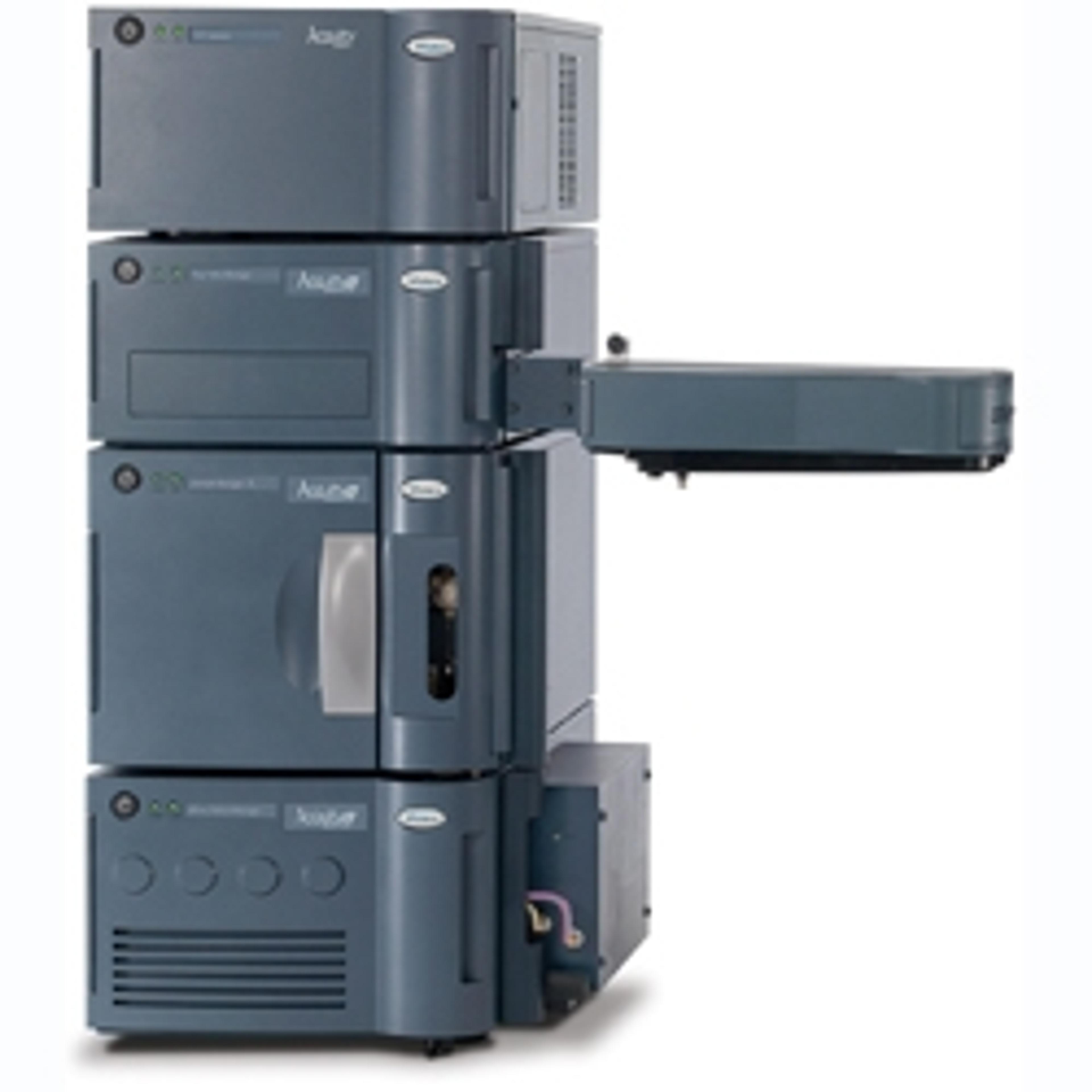
ACQUITY UPLC M-Class System
WatersThe analysis you’ve always desired for nano- to microscale separations The ACQUITY UPLC M-Class System delivers the most robust, reliable, and highest quality nano- to microscale UPLC separations to every laboratory performing LC/MS analyses. With unprecedented usability, the ACQUITY UPLC M-Class System enables laboratories to succeed in analyzing compounds that are severely limited in amount or availability, even amid a complex matrix over several orders of magnitude. Confidently achieve your laboratory goals with high-efficiency ACQUITY UPLC M-Class Columns ranging from 75 µm to 1 mm I.D. by using complementary mass spectrometry to support our full range of column I.D.’s, or run 300 µm to 1 mm I.D. columns with optical detection.The system also offers a range of flexible configurations for HDX technology, UV detection, and 2D analysis.ACQUITY UPLC M-Class System Features: Highest sensitivity - UPLC separations yield increased analyte concentration for higher UV and MS signal responses Maximum chromatographic resolution - New 15k psi-capable ACQUITY UPLC M-Class Columns deliver sub-2-µm particle performance Faster nano- and microscale separations - Increased operating pressures yield maximum flexibility for higher throughput analyses Higher resolution with longer columns - Increased pressure enables more separation power Confidence in sample analysis - New non-reactive wetted surfaces throughout the fluidic path minimize absorptive losses Increased solvent compataibility - Improved range of solvent blends precisely metered for gradient fidelity Increased sample capacity - Sample organizer compatibility allows you to store a wide variety of plates and vials in the system for longer, unattended operation UV compatibility - UV flow cells compatible with 300 µm to 1.0 mm I.D. columns to augment your UPLC/MS analysis Scalability - With flow rates from 200 nl/min to 100 µL/min, achieve the best chromatographic performance, from 75 µm to 1.0 mm I.D. columns covering a 170-fold range of column sizes Increased flexiblity - More value configurations enable a variety of applications, icnreased throughput, and maximized peak capacity
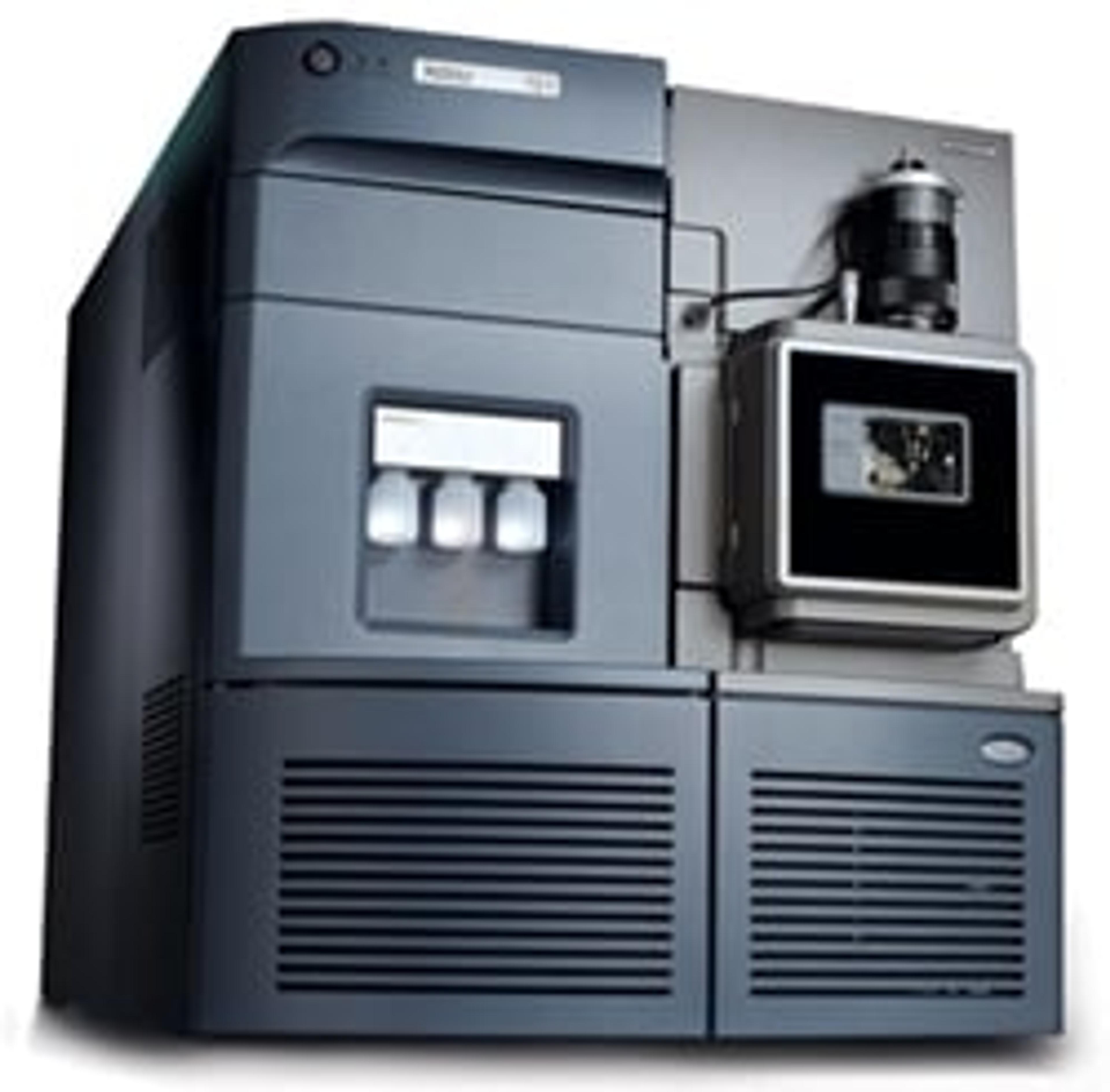
Xevo TQ-S
WatersXevo TQ-S tandem quadrupole mass spectrometer - designed for the most demanding quantitative UPLC/MS/MS applications. The ultimate in tandem quadrupole performance allows you to achieve unrivalled sensitivity and robustness, available to everyone due to the accessibility of the Xevo platform. The Xevo TQ-S gives you class leading sensitivity and robustness, qualitative information when you need it most and accelerated method development for sensitive and robust methods. Reducing complexity, increasing ease of use, and ensuring the correct result every time.