
Waters Introduces New Synapt G2 with Greater Power, Versatility and Speed Than Any Other High-End Mass Spectrometer
31 May 2009Product news
Waters Corporation announced today the introduction of a powerful next-generation, high performance, mass spectrometer, the Waters SYNAPT G2 System. Taking qualitative and quantitative quadrupole time-of-flight mass spectrometry to new heights, the SYNAPT G2 system features new QuanTof and enhanced High Definition MS technologies intended to accelerate scientists toward their research goals.
The SYNAPT G2 System provides researchers with intuitive operation, application flexibility, and a totally new level of performance for biopharmaceutical, metabolite identification, metabonomics, proteomics, biomarker studies, and food and environmental applications. Waters introduced the SYNAPT G2 System at the 57th American Society for Mass Spectrometry (ASMS) Conference on Mass Spectrometry and Allied Topics in Philadelphia, PA.
The SYNAPT G2 System is capable of outstanding qualitative and quantitative performance for both MS and the elevated data acquisition rates of SYNAPT G2 HDMS analysis. For scientists this means performance in excess of 40,000 FWHM resolution, class-leading sensitivity, a data acquisition rate of 20 spectra/second, exact mass (1 ppm RMS) information and a dynamic range of up to five orders of magnitude. When paired with Waters ACQUITY UltraPerformance LC (UPLC) technology, Waters SYNAPT G2 Mass Spectrometer makes maximum use of the power and speed of UPLC outclassing all other LC/MS and LC/MS/MS systems.
Waters is expecting to deliver the first SYNAPT G2 units during the fourth quarter of 2009.
With the SYNAPT G2 System, scientists can make new discoveries and sound decisions based on the comprehensive, accurate and precise data that they can obtain from highly complex samples in just a single analytical run and at unprecedented speed.
Says Professor James Scrivens of the University of Warwick, "Incremental improvements in instrument performance are important drivers for advancing MS-based studies, but it's the combination of SYNAPT G2's high resolution oa-TOF technology, wide quantitative dynamic range and enhanced (high-efficiency) ion mobility resolution that is truly game-changing."
"The launch of SYNAPT G2 is a significant event because it represents both a major leap forward in MS technology ... and a huge new opportunity for the worldwide research community attempting to solve fundamental problems at the molecular level," says Brian Smith, Vice President, Mass Spectrometry Business Operations, Waters Division. He continued, "We're confident that the SYNAPT G2 will displace generic QTof and electrostatic ion trap systems as the de facto choice in high-end MS instrumentation."
Game-Changing Performance by Design
The SYNAPT G2 System features new QuanTof technology that combines an innovative high field pusher and dual stage reflectron with a novel ion detection system in an optimised, folded, TOF geometry. Together these features provide a new dimension of high resolution, exact mass and quantitative performance uniquely available at acquisition rates that are compatible with UPLC separations. No longer do scientists have to compromise mass resolution when they want chromatographic resolution and the benefits of high speed, selectivity, and specificity.
QuanTof's high field pusher and dual-stage reflectron reduces ion turnaround times associated with pre-push kinetic energy spread while its dual-stage reflectron improves focusing of high energy ions. As a result QuanTof technology provides the highest levels of comprehensive TOF performance available.
SYNAPT G2's novel ion detection system combines an ultra-fast electron multiplier with hybrid ADC detector electronics to provide outstanding qualitative and quantitative performance for both MS for the elevated data acquisition rates of HDMS analysis.
Integrated second-generation Triwave Technology, the ion mobility resolving power of the Synapt G2, is up to four times higher than the original SYNAPT system. This means scientists can separate similar sample components based on size, charge, mass, and shape - better than ever before and identify sample components that might have remained invisible to them until now. Moreover, QuanTof technology provides facile exact mass measurement and enhanced dynamic range for IMS/MS experiments, resulting in the highest coverage and confidence for novel discovery analyses.
With new DriftScope Mobility Environment Software (v2.1), the Synapt G2 comprehensively detects components, reveals new or subtle features in the data, and provides more efficient data processing workflows such as the measurement of a compound's collisional cross section (shape). With this capability scientists can make new discoveries while significantly reducing the time required to deliver business and research-critical information.
Engineered to Simplify the Process of Producing Analytical Results
The SYNAPT G2 incorporates the design philosophy of Engineered Simplicity that is a hallmark of Waters benchtop Xevo mass spectrometers and the first time Waters has introduced the design components into a versatile high-end research-grade mass spectrometry platform. These features - including IntelliStart technology which calibrates and prepares the instrument for operation while continually monitoring its performance - automate set-up procedures, minimize the opportunity for human error, and make the mass spectrometer more 'accessible' to those who may be new to mass spectrometry yet who need to generate high-quality results consistently.
Versatility and Flexibility
Finally, Waters offers a choice of UPLC inlet technologies and universal ion sources for the SYNAPT G2 System to maximize the number of experimental options and research applications. These comprise the nanoACQUITY UPLC? and TRIZAIC UPLC inlets and ion sources including: electrospray (ESI), nanoflow ESI, atmospheric chemical ionization (APCi), combined ESI/APCi (ESCi), atmospheric solids analysis probe (ASAP), and atmospheric pressure gas chromatography (APGC). The same ion source options are also compatible with the Waters Xevo TQ and Xevo QTof mass spectrometers.
The interchangeable design of the APGC source for the SYNAPT G2 System allows scientists to perform GC/MS and LC/MS experiments on the same instrument. No longer do laboratories have to dedicate separate mass spectrometers for either LC/MS/MS or GC/MS/MS work.
Waters also offers a high performance, exchangeable MALDI source for the SYNAPT G2 system with broad applications. For example, by combining MALDI with ion mobility separations, Waters High Definition Imaging MALDI (HDI MALDI) solution enables researchers to better determine the localization of metabolites and active drug compounds in tissue samples.
Waters offers a variety of general-purpose and specialized Applications Managers for its MassLynx MS software that allows the Synapt G2 to perform a multitude of tasks including screening, deconvolution, identification, target quantification, qualitative and quantitative profiling and characterization - and transform acquired data into useable results.
The Platform for Today. The Springboard for Tomorrow.
The Synapt G2 product family offers laboratories a choice of systems configured for the research needs of today as well as the future. In addition to the Synapt G2 with full HDMS capabilities, scientists have a choice of HDMS-ready products including the Synapt G2 MS and MALDI Synapt G2 MS that can be upgraded on site to maximize the full potential of second-generation HDMS functionality.
A Tradition of Innovation in Time-of-Flight Mass Spectrometry
Waters put quadrupole time-of-flight technology on the map in 1996 with the introduction of the first commercially-available Q-Tof system. With the introduction of the SYNAPT HDMS System in 2006, Waters incorporated new ion mobility technology into a quadrupole time-of-flight mass spectrometer for the very first time. At Pittcon '07 the system was awarded the Editors Gold Award for best new product. It is now being employed by some of the world's most prestigious universities and research institutes including the University of Cambridge, Imperial College London, Oxford University, University of Warwick, University of Leeds, University of California Davis, University of California Los Angeles, Duke University, Northeastern University, Rockefeller University, Van Andel Institute, and Vanderbilt University.
The Synapt G2 system demonstrates the commitment of Waters to always expand the research benefits of mass spectrometry.
Related products
Request Quote for All Products
Ultra Performance LC (UPLC)
WatersMaking more informed decisions in less time is a universal asset in today's laboratory. Ultra Performance LC™ (UPLC™ ), a new category of separation science pioneered by Waters, will eliminate significant time and cost per sample from your analytical process—while improving the quality of your results. With UPLC technology you benefit from: more data, faster unparalleled sensitivity greater efficiency and confidence in results Waters ACQUITY UPLC™ and nanoACQUITY UPLC™ Systems use unique small particles, very low system volumes and greater throughput to detect more peaks with faster run times. Ultra Performance LC not only advances what you can accomplish with liquid chromatography analysis. Mass spectrometry’s low dispersion, high-speed detection requirements significantly benefit from the performance characteristics of UPLC.

ACQUITY UPLC System
WatersWaters ACQUITY UPLC - Dramatic Improvements in Speed, Sensitivity and Resolution Whether you work in methods development or quality assurance, in drug discovery and development or testing for safety in food supplies, you seek a productivity edge. With the ACQUITY UPLC® System, now you can get more information in a single, short run than you've ever seen with HPLC. Waters ACQUITY UPLC System UltraPerformance LC® (UPLC®) technology starts with unique 1.7 μm small-particle chemistries. Chromatographers no longer need to choose between speed and resolution–with UPLC you get both. Instrument Designed for Chemistry; Chemistry Designed for the Instrument The ACQUITY UPLC System has been holistically designed to match the performance needs of our innovative column chemistries with robust hardware, easy-to-use software and specialized support services. Small, pressure-tolerant particles High-pressure fluidic modules Minimized system volume Negligible carryover Reduced cycle times Fast response detectors Integrated system software and diagnostics With UPLC you have the ability to work more efficiently with higher speed, sensitivity and resolution at a much wider range of linear velocities, flow rates and backpressures to obtain superior results. The Waters ACQUITY UPLC System's high-pressure fluidics optimizes flow rates to make the most of small particle technology. The ACQUITY UPLC System's sample-handling design is designed to ensure exceptionally low carryover and reduced cycle time. And when interfaced with the Sample Organizer, it increases unattended sample capacity by ten times. High-speed detectors, both optical and mass, contribute to increased sensitivity and help manage the heightened speed and resolution requirements of UPLC. ACQUITY UPLC Systems are easily controlled, diagnosed, and monitored via a graphical system console interface. The console offers: Quick and easy access to critical instrument parameters Simple system start-up, elegant system status monitoring and predictive performance indicators to ensure maximum productivity Data management capabilities that are supported by both MassLynx™ and Empower™ software The ACQUITY UPLC System is also supported by Intelligent Device Management technology with our Connections® INSIGHT™ service, providing instrument diagnostics.
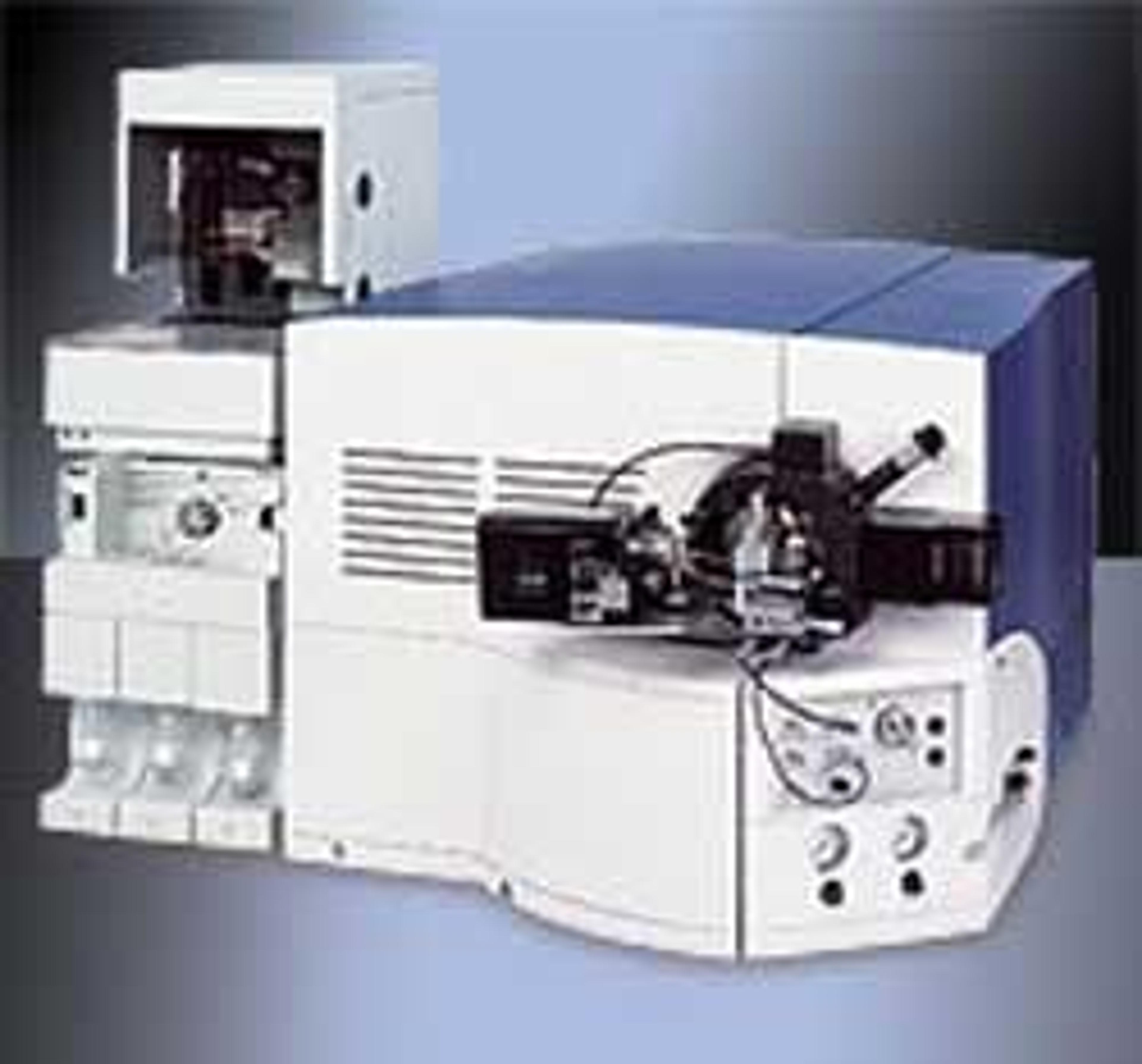
Q-Tof micro
WatersThe Q-Tof micro™ is a high resolution oa-TOF mass spectrometer that provides automated exact mass measurements in an easy-to-use benchtop instrument. It also features a quadrupole mass filter and collision cell for MS/MS analyses, making for a powerful combination that delivers simple exact mass measurement of fragment ions to yield increased confidence in structural elucidation and databank search results. The high-quality data delivered by the Q-Tof micro can provide information on elemental composition and structural characteristics, as well as excellent specificity for identifying your compounds in complex matrices. Key Features: •Optional LockSpray™ and NanoLockSpray™ ZSpray™ sources for reliable exact mass measurement •Data Directed Analysis (DDA™) to detect of compounds of interest for automated switching from MS to MS/MS •High resolution of 5,000 FWHM for resolving nominally isobaric ions •Extended linear dynamic range for quantitative analysis •oa-TOF analyzer with a wide acquisition range of up to 20,000 m/z