Waters’ Centers of Innovation Program Recognizes Forensic Chemistry Laboratory at the University of Copenhagen

Laboratory applies analytical chemistry to solve drug-related crimes

11 Mar 2016
Alex Waite
Editorial Assistant

Industry news

At a ceremony at the University of Copenhagen, Waters Corporation officially welcomed the University’s Forensic Chemistry Laboratory within the Department of Forensic Medicine into the Waters Centers of Innovation Program.

The laboratory, headed by Professor Kristian Linnet, provides essential drug analysis services to law enforcement and medical examiners who are investigating suicides, suspicious deaths caused by drug overdoses or poisonings, and drug-related crimes. Test results obtained on samples collected at a crime scene or from autopsies - blood, urine, tissue, saliva and hair – are crucial in solving crimes or the causes of accidental or deliberate death.

“We expect a fruitful collaboration on developing new forensic methods based on mass spectrometry which is an exciting, rapidly developing field,” said Niels Morling, Professor, MD, DMSc, Head of the Department of Forensic Medicine, Faculty of Health and Medical Sciences, University of Copenhagen, Denmark.

Dr. Petur Weihe Dalsgaard is a research scientist in the Forensic Chemistry Laboratory. He and his fellow scientists are experts in the development of new analytical methods based on mass spectrometry. In his remarks complimenting the work of Dr. Dalsgaard and his colleagues, Eric Fotheringham, Director - Waters Centers of Innovation Program said, “We couldn’t be more pleased to have the University of Copenhagen and Dr. Dalsgaard participate in our program. Due to popular television series like Making a Murderer and CSI, forensic science is very much in the public eye today. It’s a fascinating science and one that skilled scientists like Petur and his team bring to crime scene investigations every day.”

On a global scale, the social and economic costs of illegal drug use and addiction are hard to come by. Estimates vary, but one thing is for certain: despite hundreds of billions of euros and dollars spent annually in lost productivity and for healthcare and drug enforcement costs, the problem remains.

“The illegal drug trade imposes tremendous costs on society. Lives are ruined and the financial cost to society is enormous. We see the effects every day,” Dr. Dalsgaard said. “Our mission is to quickly provide law enforcement with the best available expertise, along with accurate and unassailable test results that answer some very tough questions.”

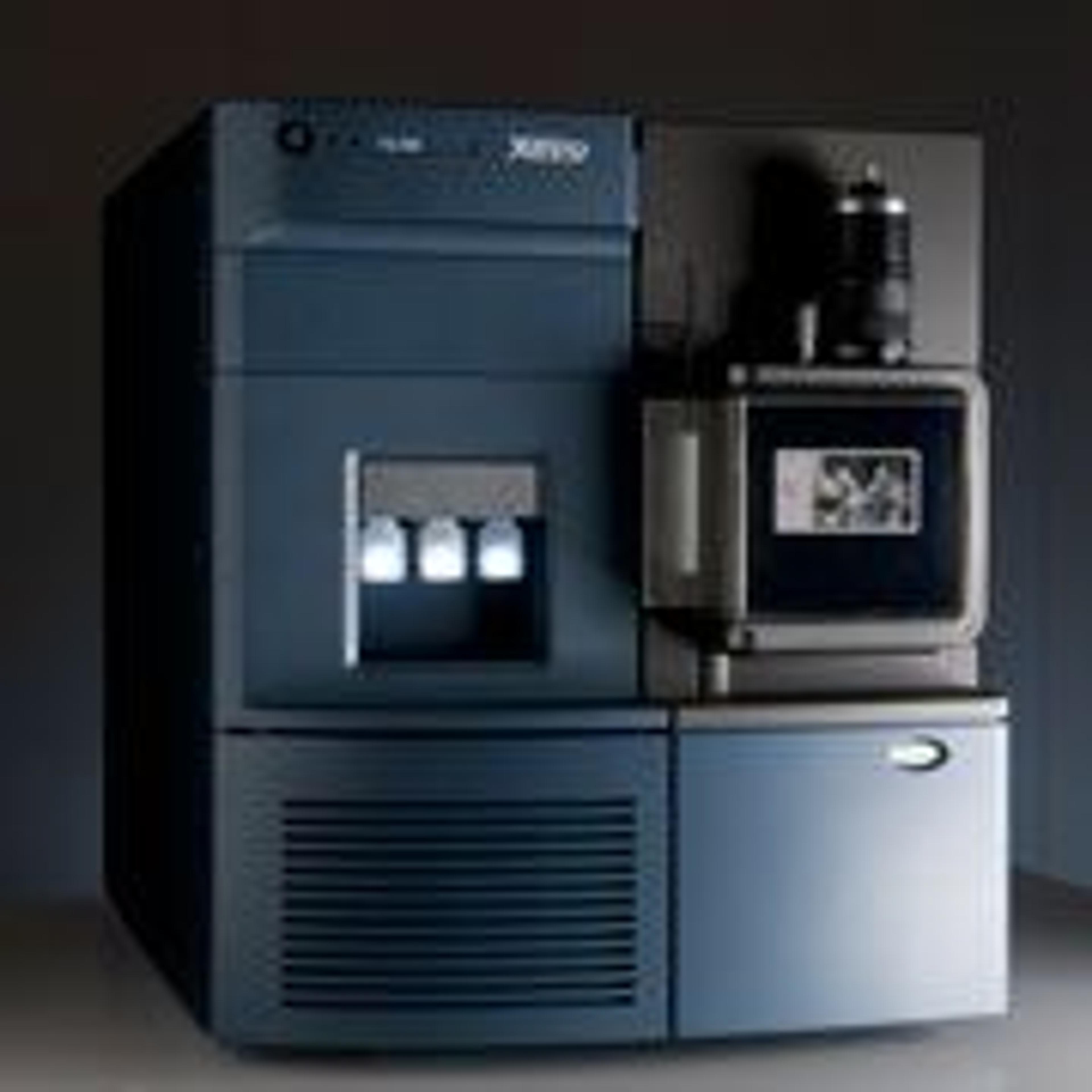
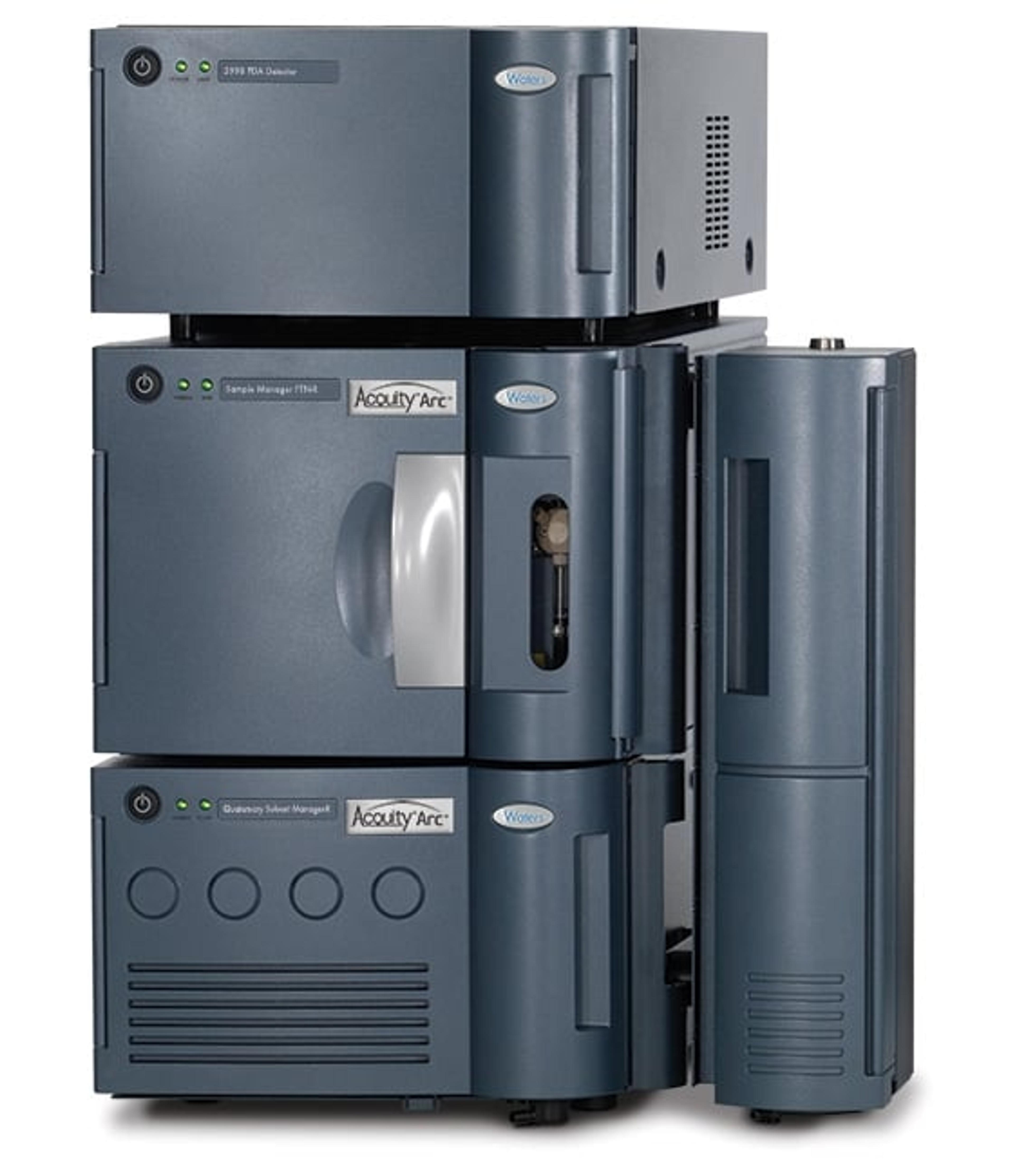
For his work Dr. Dalsgaard employs the Waters® ACQUITY® UltraPerformance LC® combined with Xevo® quadrupole time-of-flight mass spectrometers to measure as many as 3,000 individual compounds in a single analysis. These include individual drug compounds from a number of categories including amphetamines, benzodiazepines, cannabinoids, cocaine, methadone and opiates.

In a ceremony held on campus, Waters officially saluted the work of Dr. Dalsgaard and the Section of Forensic Chemistry with a forensic science symposium organized in part and sponsored by the Waters Centers of Innovation Program.
Links

Tags

UHPLC and HPLCHigh performance liquid chromatography (HPLC) and ultra high performance liquid chromatography (UHPLC), also known as UPLC, are analytical techniques used to separate, identify and quantitate components of complex mixtures including biological samples such as proteins and lipids as well as chemical mixtures of pesticides, drugs and oils. Both techniques are liquid chromatographic methods but differ by operating pressures (HPLC < 6000 psi < UHPLC ). Components of HPLC and UHPLC systems include columns, detectors, pumps, autosamplers and column heaters. Explore a range of UHPLC and HPLC columns for your specific sample needs including reverse phase, normal phase, ion exchange, HILIC, ion exclusion and size exclusion columns. For more specialized HPLC, explore FPLC, countercurrent LC and simulated moving bed systems. Find the best UHPLC and HPLC equipment in our peer reviewed product directory: compare products, check customer reviews and receive pricing direct from manufacturers.Mass SpectrometryMass spectrometry (MS) is a powerful analytical technique used to identify and quantify molecules based on the mass-to-charge ratio of gas-phase ions. It provides detailed information about the structure, composition, and properties of compounds and is widely used across fields such as environmental monitoring, materials science, drug discovery and development, food and beverage testing, and wider chemical research. Key MS techniques include tandem mass spectrometry (MS/MS), liquid chromatography–mass spectrometry (LS-MS) and inductively coupled plasma (ICP-MS). Choosing from these wide range of techniques and technologies can be a daunting task, so keep up to date with scientific applications, performance expectations, and customer reviews here all in one place. Visit our product directory to receive quotes direct from the manufacturer. Sample ManagementSample management systems include sample storage devices such as freezers and plate storers, sample environment enclosures and sample organization, retrieval and sorter systems. Useful system features include high-throughput, automation, robotic arms, automated liquid handling and associated database systems. Accessories in sample management include barcode scanners, heat sealers and tubes.Assay AssemblyAssay Assembly is technique used in drug discovery to develop assays to test the cytotoxicity, genotoxicity, or other activities of a compound on a cell. Assay assembly requires chip assembly, a delivery system and a detection and analysis method. Beneficial features of assay kits or automated systems include high-throughput, high speed and sensitivity and low signal to noise ratio.Robotic InstrumentsRobotic instruments can be used for high-throughput automation of many lab processes. Such processes use instruments for assays like cell based assays and ELISA, for sample preparation like shakers, centrifuges and incubators, and for analysis such as sequencing and western blot analyzers. Useful features of robotic instruments include speed, reproducibility, barcode readers, software and automation.Evidence Collection and AnalysisEvidence Collection and Analysis is the retrieval and subsequent investigation into criminal evidence obtained from a crime scene. Forensic genetic instruments, kits and reagents enable the analysis of evidence collected  at the crime scene. Reagents and kits for presumptive analysis for body fluids such as blood, saliva and semen in addition to drugs and narcotics test kits are used for CSI. Fingerprinting equipment, forensic light sources, casting kits and equipment for collecting recoverable materials can be found in the directory.Toxicology / Drugs of Abuse TestingToxicology and Drugs of Abuse Testing is the investigation into toxic and illegal substances found at the scene of a crime or from a suspect and / or victim associated with a scene of a crime. Analyzers, immunoassays and drugs of abuse test kits and presumptive test kits are an essential aspect of toxicology investigation.Compound AnalysisCompound analysis is used to discover specific compounds that could be promising candidates for pharmaceutical use. This potential is identified when compounds have the desired effect, such as interaction with a target protein, during high throughput screening.Drug DeliveryDrug Delivery refers to dosage form, route of administration, formulations, technologies, and systems for transporting a pharmaceutical compound in the body as needed to safely achieve its desired therapeutic effect. Drug delivery is often approached via the biopharmaceutical or small molecule drug's formulation, but it may also involve medical devices or drug-device combination products. Considerations include instrumentation, software and services. RegulatoryPharmaceutical regulations impact on all areas of drug development, manufacture and control and supply. Services are provided from the early stages of drug development and clinical trials through to dossier submission, approval and marketing. Regulatory also includes submission of analytical studies from the pharmaceutical product and safety. Bioprocessing / FermentationBioprocessing is the use of biological materials to perform commercial, scientific or medical research processes. Biological materials used include cells, enzymes and organisms. Usually bioprocessing requires a batch or continuous bioreactor such as a fermentor or cell culture system. The advantages of using a reactor include high productivity, easy configuration, adjustable values and automation.Drugs of AbuseA drug of abuse is a drug that has been taken for non-medical purposes. Such drugs can have mind-altering effects, with some causing dependence and addiction.Sample HandlingProper and careful handling of samples is important in scientific studies to ensure the integrity of specimens. This will prevent deterioration and cross contamination, and improve the accuracy of sample tracking procedures.Drug TestingIt is essential to test the efficacy and toxicity of drugs at every stage of their development to ensure that a pharmaceutical product is fit for purpose and safe for use before reaching the stage of mass production and distribution.Triple Quadrupole Ms