
Water Determination without Chemicals using EasyH20
Berghof Products + Instruments GmbH
6 Aug 2015Product news
Determination of water content is critical for many industries to ensure high quality of source materials and end products. By dispensing with toxic or special reagents, the Berghof easyH2O one constitutes an alternative to the established Karl Fischer titration procedure.
EasyH2O combines the thermal evaporation of water with a selective, electrochemical water sensor to produce a new and innovative procedure for water determination. The result is not falsified by materials that evaporate from the sample along with the water, as is the case with gravimetric moisture measurement technology. Instead, it delivers reproducible and precise results, making it possible to provide separate proof of free surface water, capillary water and bonded water.
The water is evaporated from the sample in a programmable oven and conveyed to the sensor in a stream of carrier gas. The coulometric sensor absorbs the water in a phosphorus pentoxide (P2O5) film and electrolyses it immediately. The charge quantity required is proportional to the amount of water, and is ascertained. The sensor is self-regenerating and is thus always ready for use.
Operation is extremely simple. No special or toxic chemicals are required to operate the system. The user benefits from reduced operating and disposal costs as well as reduced blank value entry with chemicals.
Related products
Request Quote for All Products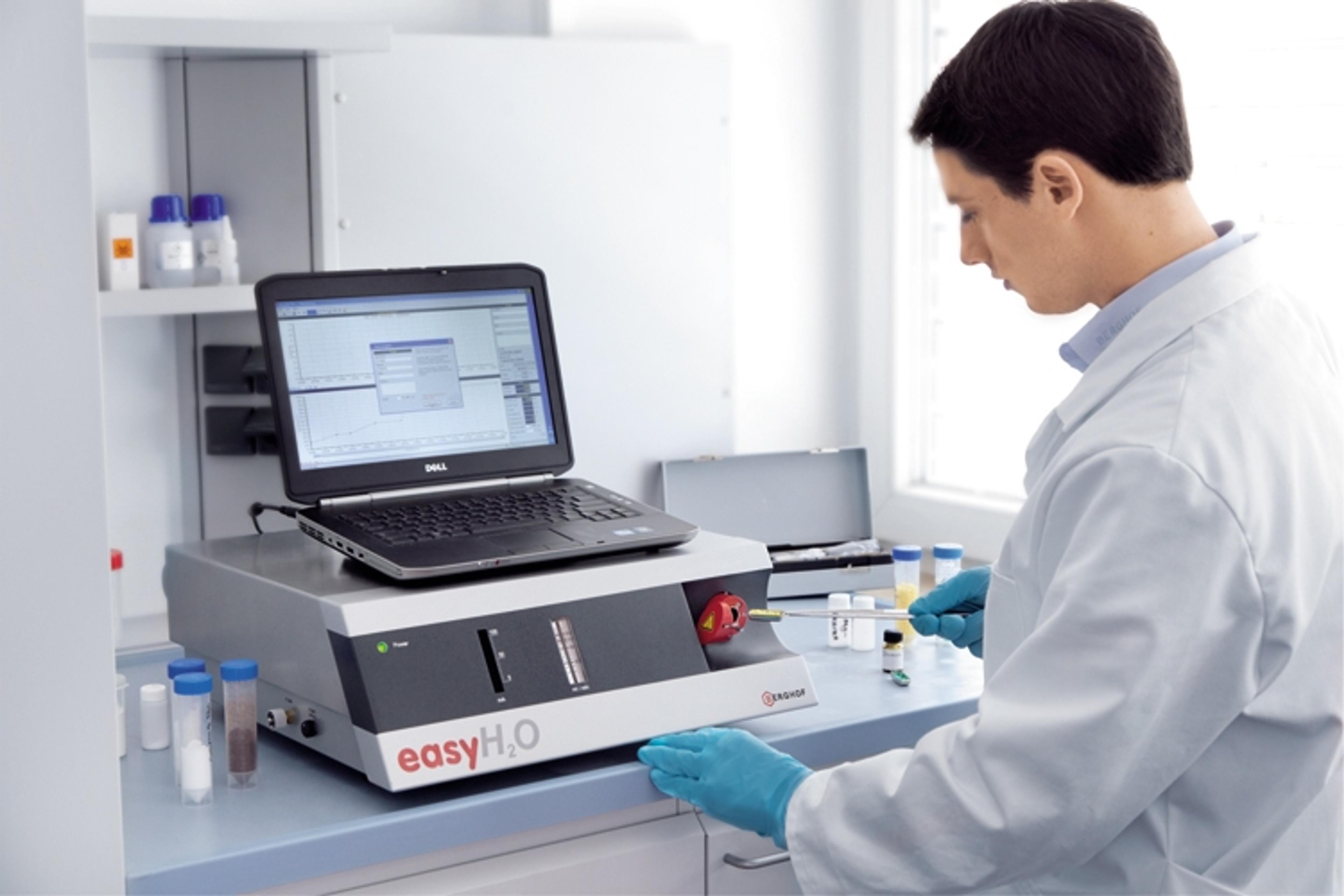
easyH20 Chemical-free Water Determination
Berghof Products + Instruments GmbHeasyH20 Chemical-free Water Determination. The Berghof easyH2O combines thermal evaporation of water with a selective, electrochemical water sensor to a new and innovative method of water analysis. Unlike the gravimetric moisture-measuring techniques, the result is not disturbed by substances which evaporate out of the sample together with the water. It therefore delivers reproducible, accurate results and facilitates separate identification of free surface and capillary water as well as bonded water. The water is evaporated out of the sample in a programmable oven and is fed to the sensor by a carrier gas. The coulometric sensor based on hygroscopic phosphorous pentoxide absorbs the water. The water is electrolysed immediately and the required electrical charge is proportional to the quantity of water which is determined. Thus the sensor regenerates itself and is always ready to use. Operation is extremely simple. No special or toxic chemicals are required to operate the system. The operator profits by reduced operating and disposal costs as well as reduced blank value input regarding chemicals.