
Use of Microorganisms to Develop an Alternative Source for Plant Oil as Bio Fuel
BMG LABTECH supports research group of the Kyoto University in Japan with science grant
27 Sept 2015
Industry news
BMG LABTECH Japan Ltd. and the Japanese company IR MAIL awarded the 2nd IR MAIL Science Grant to Shigenobu Kishino, a member of the Laboratory of Fermentation Physiology and Applied Microbiology of the Kyoto University in Japan. Kishino and his research group are performing High Throughput Screening measurements of oil-producing microorganisms to establish an alternative method of oil extraction. Financial support for this project comes from IR MAIL, while the microplate reader company BMG LABTECH has provided the group with its high-end multimode reader CLARIOstar® for one year.
Japan is often said to be a country with few natural resources. Yet when it comes to microorganisms, Japan is one of the richest countries in the world. It's extremely varied geography leads to a wide range of microorganisms. Throughout the year's seasons these microorganisms undergo a number of variations. This high amount and the variety of microbial resources is one of the reasons why Japan is numbered amongst the most advanced countries in the field of applied microbiology.
One of the research institutes is the laboratory of Shigenobu Kishino, which is part of the Division of Applied Life Sciences Graduate School of Agriculture at the popular Kyoto University. The aim of the laboratory is to discover and develop unique functions of microorganisms to create industrial applications for them. The laboratory participated successfully in the grant with its project using oleaginous microorganisms to produce plant oil that can be used as bio fuel. Taeko Takashiro, manager of BMG LABTECH Japan Ltd., presented Shigenobu Kishino with the CLARIOstar®: "We are happy to support this sustainable project with our versatile, high-performance microplate reader and to stand by with our applications support."
The group detected that oleaginous microorganisms convert the carbon source of the nutrient medium into oil, and accumulate the oil in the cell body. However, the oleaginous microorganisms accumulate the oil mainly in the cell body, and the lipid accumulation is spatially limited. To accumulate a large quantity of lipid, the group paid attention to the culture medium, and detected the microorganisms which excrete oils to the medium. Kishino and his research team want to use the CLARIOstar to construct a High-Throughput Screening method for these oil-excreting microorganisms and to select the promising ones. Due to their unlimited oil production, it is expected that the leakage type of oleaginous microorganisms obtained could be the next-generation of oil-producing microorganisms which could enable effective oil fermentation
Related products
Request Quote for All Products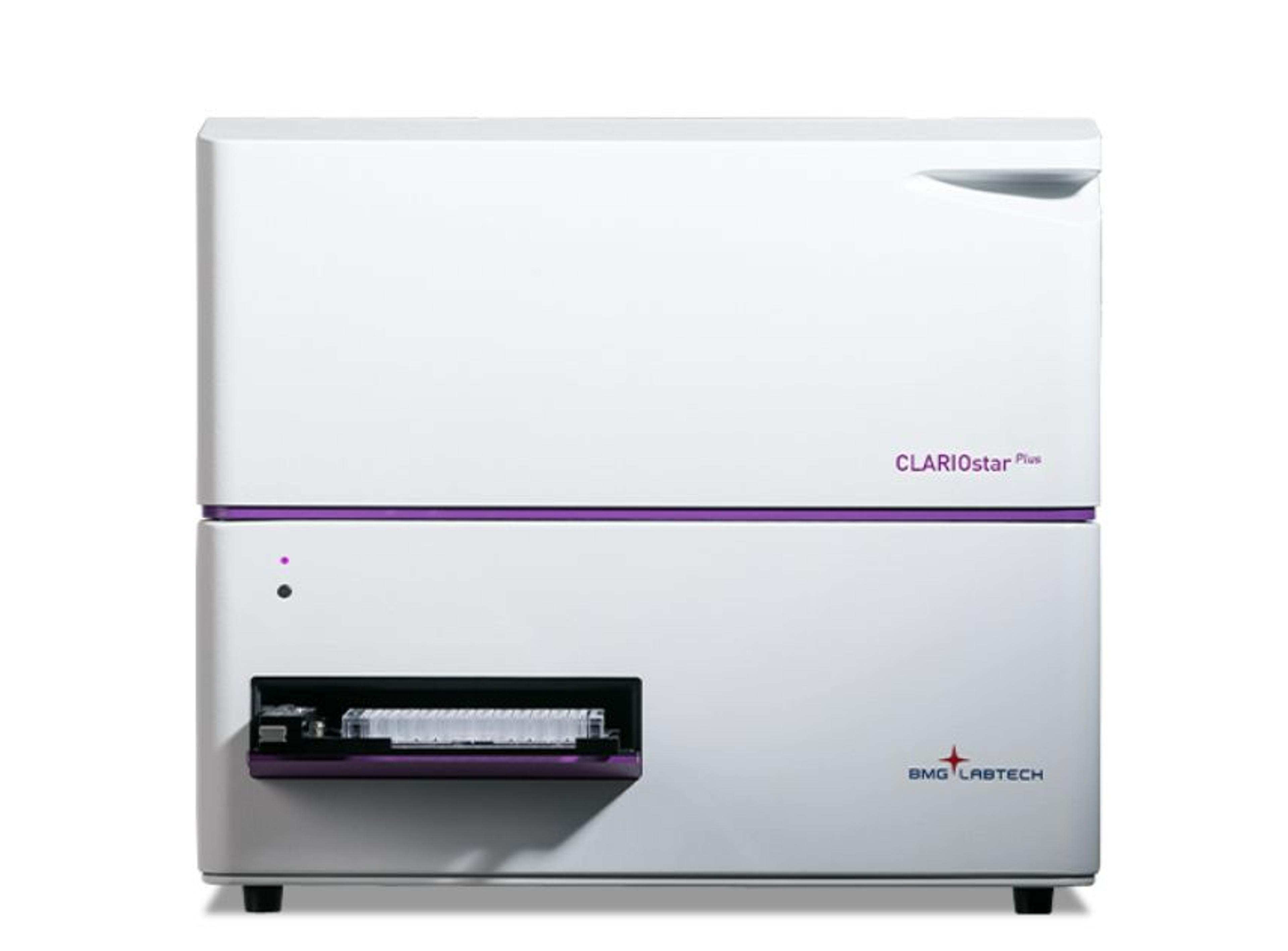
CLARIOstar® Plus Multi-mode Microplate Reader
BMG LABTECHMost flexible Multi-mode Microplate Reader for Assay Development