University of Bath Launches New Chemical Characterisation and Analysis Facility (CCAF)

15 Sept 2014

Lois Manton-O'Byrne, PhD
Executive Editor

Editorial article

University of Bath, UK, recently celebrated the official opening of its new Chemical Characterisation and Analysis Facility (CCAF). The facility showcased an influx of new analytical equipment in the area of Mass Spectrometry, NMR Spectroscopy and X-ray Crystallography.

This exciting new facility enables scientists from the University of Bath and around Europe to analyze compounds to the highest level. The team at CCAF not only assists with standard analysis, but is also available to help with method development, sample preparation, data processing and interpretation of results. The team, led by Dr Anneke Lubben, prides itself on providing a rapid, reliable and competitively priced service.

Dr Anneke Lubben, Head of CCAF and Senior Mass Spectrometrist at the University of Bath says: "Our facility combines cutting-edge analytical equipment with extensive in-house expertise to provide a comprehensive chemical characterisation service for the commercial sector. Our staff are expert analytical scientists and instrument specialists, with extensive experience of a wide range of application areas."

The new facility comprises of a range of new analytical equipment:

NMR Spectroscopy
Europe's First Agilent ProPulse 500 MHz NMR Spectometer

Mass Spectrometry
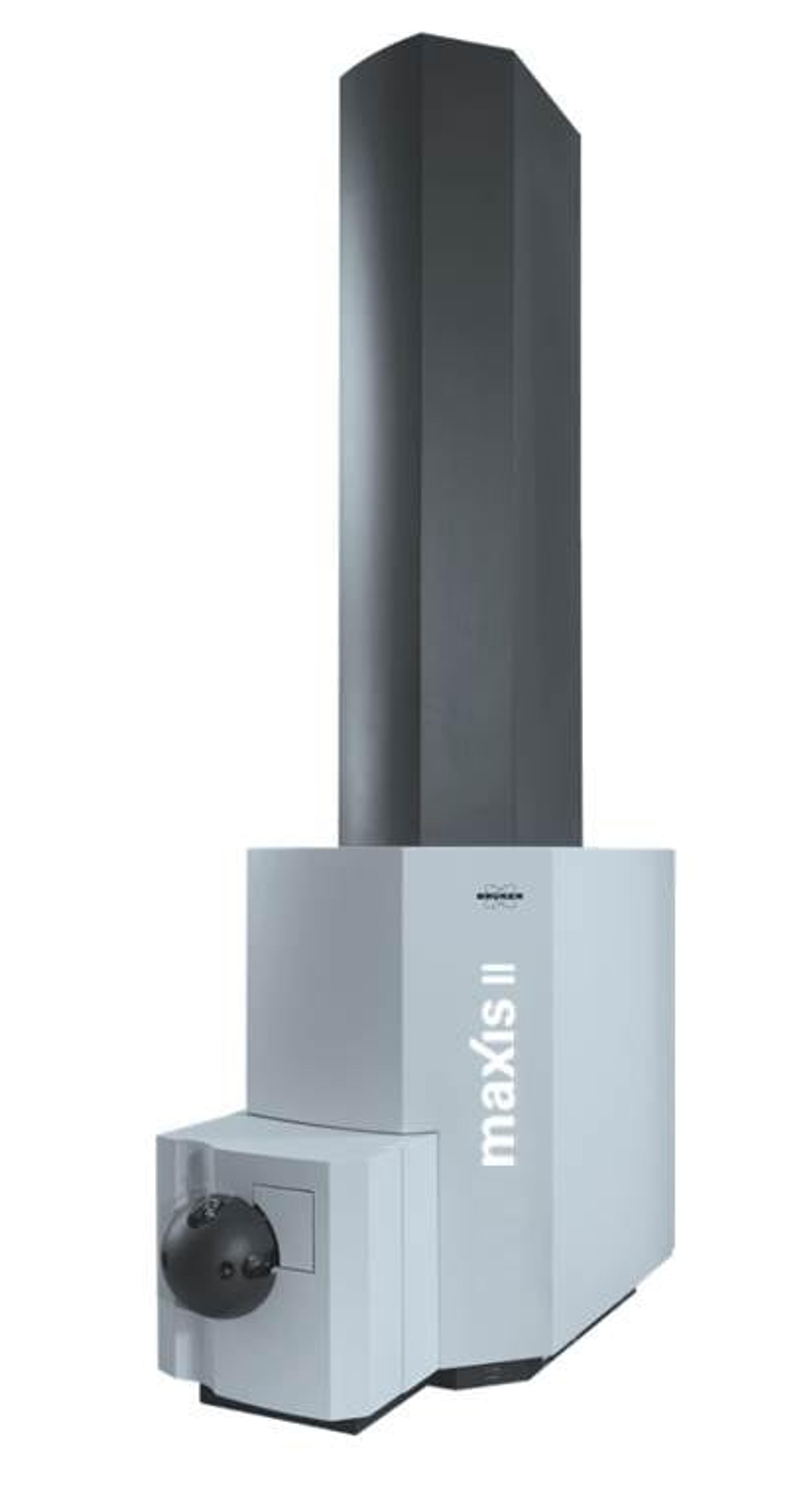
Bruker Daltonics MaXis HD – ESI-QTOF
Bruker Daltonics Autoflex Speed - MALDI-TOF/TOF

X-ray Crystallography
Agilent Technologies Supernova
Agilent Technologies Xcalibur


Dr John Lowe, Senior NMR Spectroscopist at the University of Bath commented: "CCAF offers scientists, from within the university and beyond, a wide range of modern, state-of-the-art analytical chemistry facilities. These include the three core techniques of x-ray crystallography, NMR spectroscopy and mass spectrometry, each of which has benefited from recent purchases of cutting edge, high specification equipment."

The new facility brings together a range of advanced analytical technologies that help scientists to get the most out of their experiments and achieve publications of the highest standards.


Picture: Dr Lois Manton-O'Byrne & Dr Anneke Lubben

autoflex maX

Bruker Daltonics

High-performance MALDI-TOF/TOF mass spectrometer with a unique combination of speed, sensitivity, and accuracy, providing advanced analytical capabilities for research, discovery, and routine applications.
(8)

maXis II

Bruker Daltonics

High performance, versatility and ease-of-use in a compact design for efficient mass spectrometry analysis.

(5)

Links

Tags

Mass SpectrometryMass spectrometry (MS) is a powerful analytical technique used to identify and quantify molecules based on the mass-to-charge ratio of gas-phase ions. It provides detailed information about the structure, composition, and properties of compounds and is widely used across fields such as environmental monitoring, materials science, drug discovery and development, food and beverage testing, and wider chemical research. Key MS techniques include tandem mass spectrometry (MS/MS), liquid chromatography–mass spectrometry (LS-MS) and inductively coupled plasma (ICP-MS). Choosing from these wide range of techniques and technologies can be a daunting task, so keep up to date with scientific applications, performance expectations, and customer reviews here all in one place. Visit our product directory to receive quotes direct from the manufacturer. NMR and EPR SpectroscopyNuclear magnetic resonance (NMR) spectroscopy is used to resolve the local chemical environment of atomic nuclei with spin, revealing information on molecular structure, dynamic processes and chemical reactions of organic molecules, from proteins to synthetics. Electron paramagnetic resonance (EPR) also known as electron spin resonance (ESR) spectroscopy is used to detect and quantify paramagnetic species in a sample, including free radicals as transition metal ions. By immersing the sample in a strong magnetic field, both NMR and EPR spectrometers probe the sample with either radio waves or microwaves respectively. A range of benchtop, solid-state and time domain NMR spectrometers & EPR spectrometers are available, as well as NMR tubes, NMR solvents, software, coils, and magnets. Find the best NMR & EPR equipment in our peer-reviewed product directory: compare products, check customer reviews and receive pricing direct from manufacturers.X-ray CrystallographyX-ray crystallography is an analytical technique used to determine the arrangement of atoms in a crystal. Monochromatic x-rays are produced from a synchrotron or x-ray generator. An x-ray crystallography system uses a detector to measure the x-ray diffraction from the crystal. The information is used to generate a 3D image of the crystal.X-Ray Diffraction and SpectroscopyX-Ray diffraction & spectroscopy are used in material characterization to discern the structure and elemental composition of a sample. X-Ray diffractometers (XRD) are superior instruments in elucidating the dimensional atomic structure of crystalline materials, including powders, thin films and single crystals. For large unit cells or ordered macromolecules, consider small-angle X-ray scattering (SAXS). X-ray spectroscopic techniques include X-ray fluorescence (XRF) and X-ray photoelectron spectroscopy (XPS), both providing simple and accurate methods for determining the elemental composition of a material. Energy dispersive (EDXRF) and wavelength dispersive (WDXRF) XRF spectrometers are available, as well as handheld/portable devices. High-resolution, 3D microstructure characterization of materials can be achieved with X-ray microscopes combining sub-micron resolution imaging with 3D computed tomography. Find the best XRD and XRF spectrometers in our peer-reviewed product directory: compare products, check customer reviews and receive pricing direct from manufacturers.Crystallization