‘To improve science communication, we need to create opportunities to practice communicating’
Rita Turpin discusses how she is encouraging science communications, and the challenges she’s faced as a scientist
23 Feb 2022
Editorial article
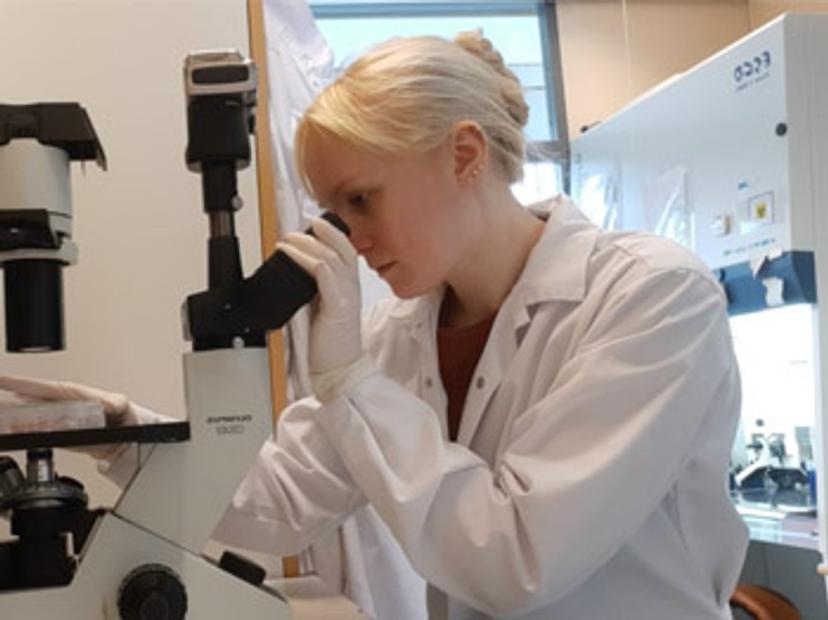
Lab product reviews can change the world by helping other scientists find the best equipment to accelerate their vital work. Here at SelectScience®, we are dedicated to promoting peer-to-peer communication that will make the difference - but we couldn't do it without our esteemed reviewers. In this regular feature, we put the spotlight on some of our most dedicated and impactful reviewers and find out what inspires them to keep sharing their knowledge with the global scientific community.
This week’s Reviewer in the Spotlight is Rita Turpin, a Ph.D. student working on breast cancer immunology at the University of Helsinki, Finland. Turpin’s research goals are motivated by developing new strategies to create an anti-tumor immune response against breast cancer. Here, Rita shares the challenges she’s faced as a scientist, how she is working to improve science communication, and why lab product reviews are important.
Tell us a bit about yourself and your Ph.D.
I’m approaching the final year of my Ph.D. journey in breast cancer immunology at the University of Helsinki, Finland. I’m particularly interested in new strategies to create and improve an anti-tumor immune response against breast cancer.
The big-picture goal of my research is to be able to treat previously untreatable forms of breast cancer and to prevent tumor recurrence for those who have already been successfully treated.
What have been your biggest challenges as a scientist?
When I became a scientist, I did not realize how many things needed to be mastered to complete basic experiments. Each reagent, equipment, software, etc. comes with a set of instructions and fine-tuning. Additionally, once the results arrive, there is still a learning curve for analyzing, interpreting, visualizing, and of course, writing a manuscript.
What do you think needs to be done to improve science communication?
Currently, I’m vice-chair of a science communication club called The Science Basement. We are training early career researchers to communicate science through public speaking, blogging, podcasts, school visits, and more. To improve science communication, we need to create opportunities to practice communicating.
Why do you read and write lab product reviews on SelectScience?
Research is expensive. With so many existing products, it can be difficult to choose the one that is most likely to work. Choosing an incorrect product, or using the product incorrectly, can create a situation where it is unclear whether the experimental results are true or not. By reading reviews, I can judge whether the results are clear-cut, and I can see whether any adjustments were made to the protocol to achieve these results. The reason I write reviews is to pay back the favor.
What is the most innovative piece of lab equipment you use?
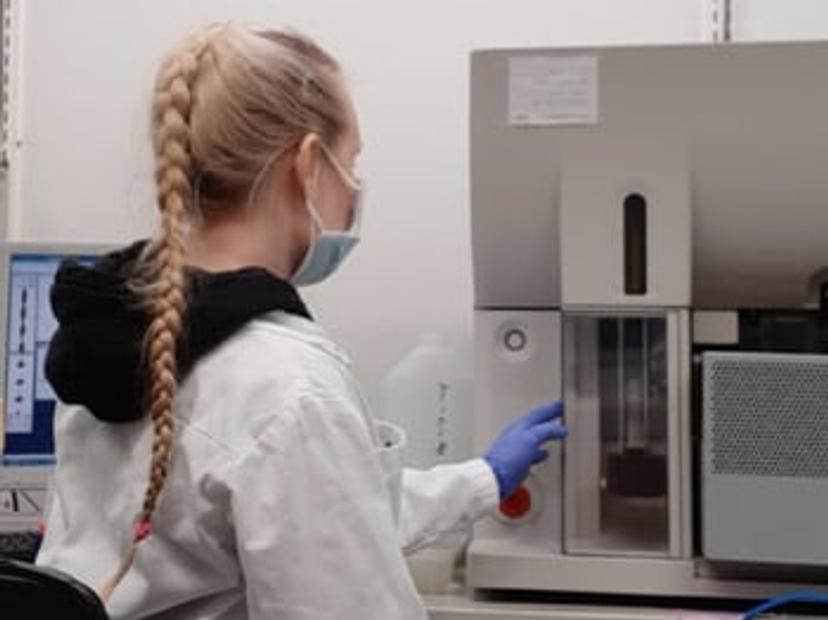
My newest best friend is the NovoCyte Quanteon Flow Cytometer by Agilent Technologies. I work with limited sample material, and I would struggle to split samples into multiple flow cytometry color panels while maintaining enough cells to draw accurate conclusions. This flow cytometer allows up to 25 colors at once, which means I can see a huge variety of cell types from one sample.

What do you envision for your future?
In the future, I envision my three kids thinking I’m a cooler scientist than Emily from “Emily’s Wonder Lab”. I would like to pursue science, but perhaps more from a communication standpoint than from the bench. It’s too difficult to say, though. I try not to think too hard about it, and just go with the opportunity that feels right.
Would you like to feature in our Reviewer Spotlight? Write your review here to be in with a chance >>