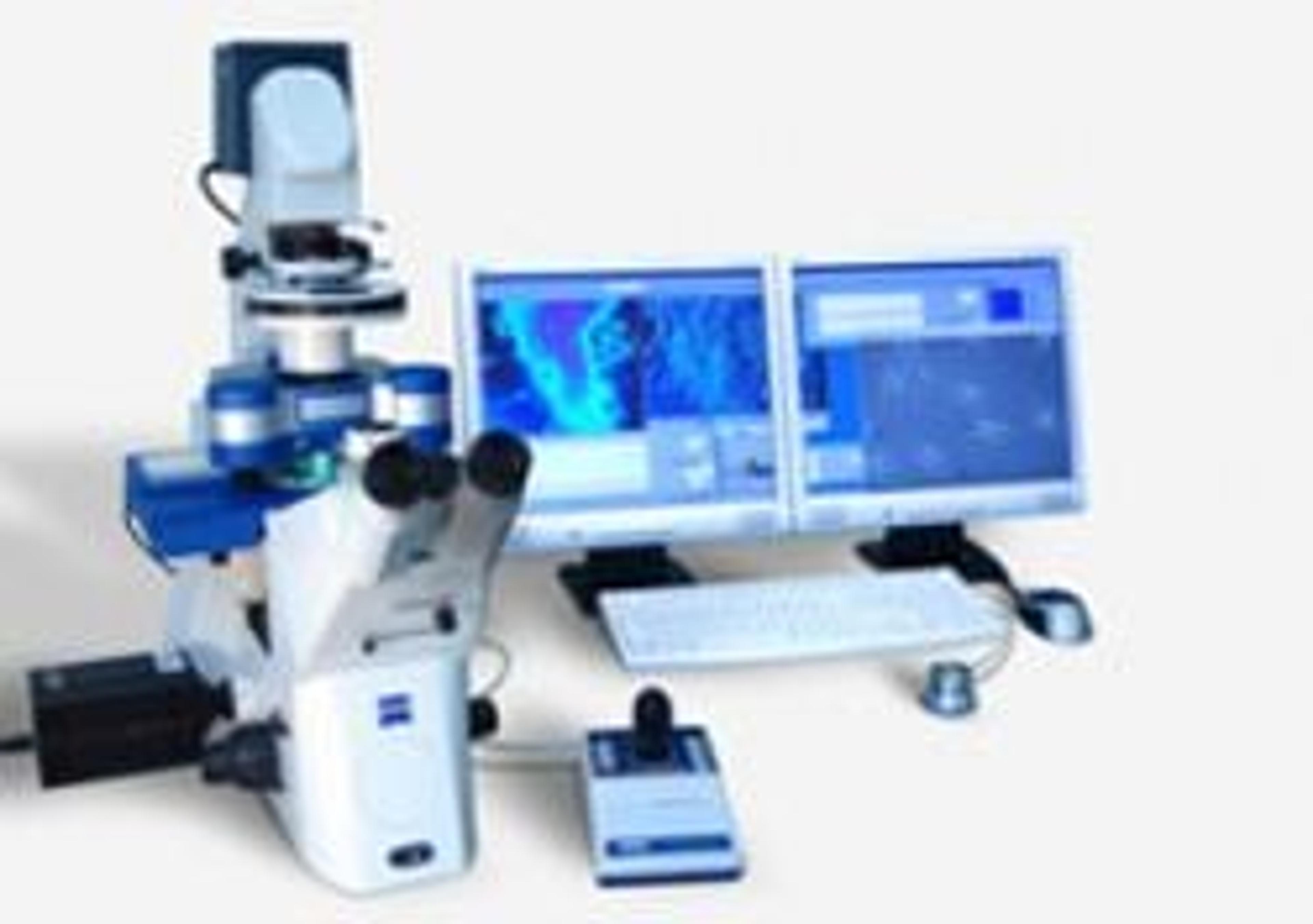
The NanoWizard<sup>®</sup> AFM from JPK is Applied for Interdisciplinary Research at the University of South Australia

Applications include smart wound healing and how plants can protect themselves from toxins

25 Jul 2016
Alex Waite
Editorial Assistant

Product news

JPK Instruments, a world-leading manufacturer of nanoanalytic instrumentation for research in life sciences and soft matter, reports on the use of their NanoWizard® AFM system at the University of South Australia, Adelaide. AFM is being applied to many areas including smart wound healing, plant toxicology and novel methods of nanoparticle characterization.

Dr Gordon McPhee is head of production for NextCell Pty in Adelaide, Australia. Situated on the Mawson Lakes Campus, he is located next to the University of South Australia (UniSA), Australia's leading university for interdisciplinary research, where he has access to their instrumentation as part of the group of Professor Nico Voelcker at the Future Industries Institute. Here, he uses JPK's NanoWizard® AFM system in multiple programs. These include investigating advanced materials for smart wound healing alternatives; characterization of live cell behaviour as influenced by substrate properties for skin graft improvements; new methods of mass spectrometry (MS) sample characterization leading to refined MS data analysis; understanding plant resistance methods to toxins; and novel methods of nanoparticle visualization.

Describing the uses of the NanoWizard®, Dr McPhee says “Often the AFM can contribute to more than one aspect of a project. For example, Quantitative Imaging or QI™ mode can deliver data on cell elasticity/morphology complemented by force spectroscopy performed on the substrate of choice. The ability to easily work on temperature controlled liquid immersed samples is also very useful for polymer material investigations. The instrument has proven a versatile addition to a very multidisciplinary group.”

Talking of the benefits of the design and operation of the NanoWizard®, Dr McPhee says “The tip-scanning approach of JPK versus the stage scanning approach of some other commercial designs of AFM is essential for combined fluorescence/AFM imaging and other biological applications. Integration with the JPK TopViewOptics™ allows accurate tip positioning on opaque samples such as porous silicon. The BioCell™ makes temperature control in liquids simple and allows live cell work to be performed. The variety of operating modes such as QI™, Force Mapping, conductive and traditional imaging, plus the ability to switch between them without changing any hardware is very convenient.”

The group publishes quite prolifically. For example, these three recent papers report extensively on the use AFM:

A Barley Efflux Transporter Operates in a Na+- Dependent Manner, as Revealed by a Multidisciplinary Platform. Yagnesh Nagarajan, Jay Rongala et al, Dec 15, 2015, The Plant Cell.

Silver Coating for High-Mass-Accuracy Imaging Mass Spectrometry of Fingerprints on Nanostructured Silicon. Taryn M. Guinan, Ove J. R. Gustafsson et al, Oct 13, 2015, Analytical Chemistry.

Tunable Thermoresponsiveness of Resilin via Coassembly with Rigid Biopolymers. Jasmin L. Whittaker, Naba K. Dutta et al, July 15, 2015, Langmuir.

The first of these papers drew tremendous interest from farming communities around the world resulting in several Internet and radio interviews.

NanoWizard II

JPK Instruments

New standards for soft matter and life science AFM Most stable platform for highest resolution in imaging and force measurements Stand-alone tip scanning design for flexibility in the applications Fits to all standard inverted research microscopes from Zeiss, Leica, Olympus and Nikon Integrates with advanced optical imaging (DIC, CLSM, TIRF, FRET ...) Patented DirectOverlay™ software feature for combining AFM and optical images distortion free In-situ imaging in biological/chemical fluids or in air Measurements at variable temperatures with perfusion possibilities Large scan field of 100×100×15 µm3 with highest closed loop performance through capacitive sensors

(1)

Links

Tags

Sample PreparationSample preparation can improve the quality and speed of separation techniques. Products to assist sample preparation include filtration equipment, evaporators, membranes and sieves.Atomic Absorption / Emission SpectroscopyAtomic absorption spectroscopy (AAS) and atomic emission spectroscopy (AES) — also called optical emission spectroscopy (OES) — are used to detect the elemental constituents in samples. Both techniques involve the atomization of a sample. Atomic absorption spectrometers may use a flame or furnace to create an atomic vapor of the sample before irradiation with spectral light. Optical emission spectrometers may use a flame, inductively coupled plasma (ICP), microwave plasma (MP) or spark arcs to atomize and excite the sample. At higher excitation energies, electrons can be emitted instead of photons, which can be useful for samples that can’t be atomized and for surface analysis. Explore electron spectroscopy equipment such as Auger spectrometers and photoelectron spectrometers for surface elemental analysis of samples. Find the best atomic absorption, photoelectron and optical emission spectrometers in our peer-reviewed product directory: compare products, check customer reviews and receive pricing direct from manufacturers.Fluorescence SpectroscopyFluorometers and spectrofluorometers (also called fluorescence spectrometers) are used to measure the intensity and wavelength of fluorescent light emitted from a sample after excitation by illumination. Spectrofluorometers utilize monochromators to select the desired wavelengths, whereas filter fluorometers employ a set of filters. Spectrofluorometers for measuring steady-state fluorescence and lifetime fluorescence (or time-resolved fluorescence) are available, as well as fluorescence microscopes and microplate readers. Find the best fluorescence spectroscopy products in our peer-reviewed product directory: compare products, check customer reviews and receive pricing direct from manufacturers.Mass SpectrometryMass spectrometry (MS) is a powerful analytical technique used to identify and quantify molecules based on the mass-to-charge ratio of gas-phase ions. It provides detailed information about the structure, composition, and properties of compounds and is widely used across fields such as environmental monitoring, materials science, drug discovery and development, food and beverage testing, and wider chemical research. Key MS techniques include tandem mass spectrometry (MS/MS), liquid chromatography–mass spectrometry (LS-MS) and inductively coupled plasma (ICP-MS). Choosing from these wide range of techniques and technologies can be a daunting task, so keep up to date with scientific applications, performance expectations, and customer reviews here all in one place. Visit our product directory to receive quotes direct from the manufacturer. ADME-ToxicologyADME-toxicology (ADME-Tox) studies are used in pharmacology and pharmacokinetics to assess the activity/toxicity of drugs <i>in vivo</i> or <i>in vitro</i>. Find bioassays for absorption, distribution, metabolism, and excretion of drug molecules including cytotoxicity, transporter/permeability, metabolism and activity assays as well as hepatocytes and cell lines for ADME. Find the best ADME-toxicology products in our peer-reviewed product directory: compare products, check customer reviews and receive pricing direct from manufacturers.Cellular PathologyCellular Pathology deals with the microscopic analysis of tissue samples and cells. Sample preparation and processing includes fixation, staining, sectioning and slide mounting, using equipment such microtomes and cryostats. In choosing immunohistochemistry and immunocytochemistry kits, consider chromogens, staining method, antibodies, microscopes and imaging.Cell-Based AssaysCell-based assays are used to monitor the presence, quantity and activities of a desired cellular analyte including drug molecules or biomarkers. This can reveal information on cell health (apoptosis, cytotoxicity, viability and proliferation assays), cell metabolism, cell migration and cell signaling mechanisms. Find the best cell-based assay products, kits and equipment with our peer reviewed product directory: compare products, check customer reviews and receiving pricing direct from manufacturers.In Vivo Imaging Systems<i>In vivo</i> imaging systems, including pre-clinical imaging systems and medical imaging systems are used to non-invasively visualize and capture images of live animals and plants. Monitor the natural processes or diseases of your subjects using small-animal pre-clinical imaging systems, including single photon positron emission tomography (SPECT), positron emission tomography (PET), computed tomography (micro-CT), magnetic resonance imaging (MRI), X-ray radiography, ultrasound, fluorescence and bioluminescence imagers. Multimodal systems and software solutions are also available for correlative analysis of organ, tissue, cell, or molecular-level processes. Find the best in vivo imaging products in our peer-reviewed product directory: compare products, check customer reviews and receive pricing direct from manufacturers.Toxicology / Drugs of Abuse TestingToxicology and Drugs of Abuse Testing is the investigation into toxic and illegal substances found at the scene of a crime or from a suspect and / or victim associated with a scene of a crime. Analyzers, immunoassays and drugs of abuse test kits and presumptive test kits are an essential aspect of toxicology investigation.Fluorescence MicroscopyFluorescence microscopy has become an essential tool in biology, as well as in materials science. The application of many fluorochromes has made it possible to identify cells and sub-microscopic cellular components with a high degree of specificity. Using multiple fluorescence labels, different probes can simultaneously identify several target molecules.Cell AnalysisThe analysis of cells allows researchers to understand the factors which contribute to cell health and function. These influencing processes can then be predicted and altered, leading to the development of medication and disease treatments.Live Cell ImagingLive cell imaging is the study of living cells using microscopes and high-content imaging systems. This technique provides in-depth insight into fast and complex biological processes, by allowing dynamic imaging of living cells instead of acquiring an individual image at a single point in time.AFMNanoparticlesNanoparticles are between 1-100nm in size. Nanoparticles can be used for a wide variety of applications including biomedical, catalysis and electronics.