The Latest Tools for Functional Genomics at Duke University

Director of the Duke University Functional Genomics Shared Resource shares her thoughts on key screening technologies

16 Jan 2019

Sarah Thomas
Associate Editor

Editorial article

Dr. So Young Kim, Director of the Duke Functional Genomics Shared Resource

Functional genomics aims to elucidate the relationship between genotype and phenotype and offers great insight into the understanding of basic biology, as well as health and disease.

The field utilizes a range of techniques and technologies to study the relationship of DNA sequence, gene expression and protein function. While previous analysis has taken a gene-by-gene approach, high-throughput genome-wide screening studies have enabled scientists to perform unbiased analyses to identify novel biology. Such studies require the use of flexible and automated technologies. Here, we speak to Dr. So Young Kim, Director of the Functional Genomics Shared Resource at Duke University, to learn about key screening technologies in her laboratory.


SS: What are the goals of the Duke Functional Genomics Shared Resource?

SYK: Our main mission is to provide access to functional genomics tools and various high-throughput screening technologies to the Duke research community. We do everything from cell line engineering to compound screens to pooled CRISPR functional genetic screens.


SS: What screening services do you offer at your facility?

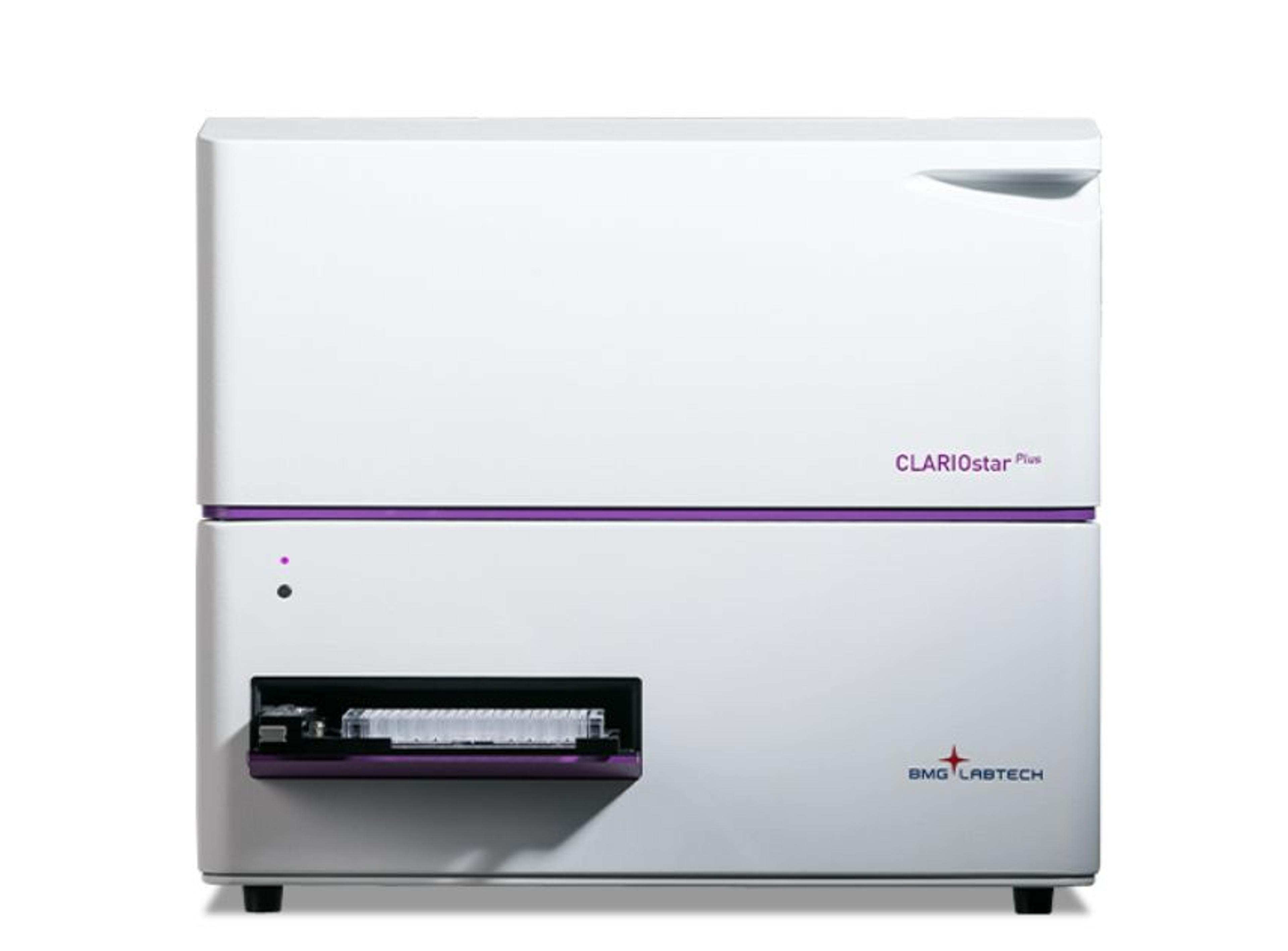
SYK: We provide both chemical and genetic perturbagen libraries for small, medium or large-scale screens. For genetic screens, we have siRNA, shRNA, CRISPR and open reading frame (ORF) libraries for interrogation of gene function in high-throughput formats. Some of these libraries are screened only in arrayed format on multi-well plates, some are screened only in pooled format and some can be screened in either format. In addition to the libraries, we also provide the infrastructure required for high-throughput screening. This includes liquid-handling robotics, automated plate processing, barcode labelers and readers for plate tracking and instruments for quantitative assays, including the BMG LABTECH CLARIOstar.


High-throughput screening is a great approach for the unbiased discovery of novel biology, a hypothesis-generating platform that provides the starting point for new and exciting avenues of investigation.

Dr. So Young Kim  Duke Functional Genomics Shared Resource


SS: Why is high-throughput screening an important technique in functional genomics?

SYK: High-throughput screening is a great approach for the unbiased discovery of novel biology, a hypothesis-generating platform that provides the starting point for new and exciting avenues of investigation. Especially with functional genetic screens, screeners can often end up with hits that they would never have predicted, given the limitations of the existing knowledge. With a well-designed high-throughput screening assay, you are allowing the cell to tell you what is important in the process being studied, rather than coming up with and testing one hypothesis at a time.


SS: How do you use the BMG LABTECH CLARIOstar in your facility?

SYK: We use the BMG LABTECH CLARIOstar quite extensively in our daily operations for everything from assaying cell viability for compound screens to measuring DNA concentrations with the LVis Plate. We have plate stackers and barcode readers with our CLARIOstar for automated plate assays and walkaway functionality, which is very convenient with our big chemical screens where we read 50-100, 384-well plates in a single batch. At the other end of the scale, we also use the kinetic function to read a single plate multiple times over an extended period, or spectral scans to read a single sample at many wavelengths. These low-throughput assays are especially popular with our facility users who are not screening with us but need a robust, sensitive reader for their assays.


SS: What made you choose the CLARIOstar? 

SYK: When deciding on a plate reader, we wanted something with multiple detection modes, robust and easy to use. Being a core facility, we see many projects with wildly different needs and we really needed a plate reader that is truly flexible and has the high-throughput capability. Additionally, the technical support from BMG LABTECH has really been phenomenal. They’ve always been responsive to questions and have provided a lot of assistance setting up and troubleshooting our plate reader assays, which has been really helpful these past few years.


SS: What do you see for the future of the Duke Functional Genomics Shared Resource?

SYK: In the near future, we hope to continue expanding our screening operations, as well as the scope and size of our screens, both chemical and genetic. Particularly for the CRISPR-based libraries, the technology is evolving quickly, and new tools are constantly being developed. We anticipate that with these new technical developments will come exciting new opportunities for discovery.


Learn more about the Duke Functional Genomics Shared Resource and the CLARIOstar multimode microplate reader.

Links

Tags

Genome AnalysisGenomics, the study of genomes, includes functional genomics, evolutionary genomics and comparative genomics. There are many genomic technologies such as DNA sequencing of whole genomes, computational biology and bioinformatics. DNA and nucleic acids must be isolated and concentrated from cells for analysis with kits, automated analyzers and software. Other useful technologies for studying genomics include PCR, microarrays and electrophoresis.Microplate Readers / DetectorsMicroplate readers are used to automate the detection and analysis of labeled or label-free components in microplates during assays or live-cell monitoring. Microplate readers are generally distinguished by their mode of detection. Types include absorbance, luminescence, fluorescence intensity, fluorescence polarization, TRF / FRET and multimode microplate readers. Microplate readers deliver a high throughput of samples by reading multiple wells simultaneously, with the 96-well format the most commonly used. As a result, microplate readers are often used in the drug discovery, bioassays, research and pharmaceutical industries for screening applications. Microplate loading can also be automated, with robotic microplate stackers to increase throughput. Find the best microplate readers in our peer-reviewed product directory: compare products, check customer reviews and receive pricing direct from manufacturers.Cell-Based AssaysCell-based assays are used to monitor the presence, quantity and activities of a desired cellular analyte including drug molecules or biomarkers. This can reveal information on cell health (apoptosis, cytotoxicity, viability and proliferation assays), cell metabolism, cell migration and cell signaling mechanisms. Find the best cell-based assay products, kits and equipment with our peer reviewed product directory: compare products, check customer reviews and receiving pricing direct from manufacturers.Gene Expression and Molecular CloningMolecular cloning is a set of techniques that utilizes vectors to transfer recombinant DNA into host cells and is an essential tool for investigating the expression of genes and proteins in bacterial or mammalian cells. A variety of vectors optimized for gene cloning and expression in a range of host organisms are available, alongside competent cells for genetic replication. Here, you can explore a range of molecular tools, high-quality genomic and cDNA libraries, premade clones, transformation and transfection reagents and mutagenesis or gene expression detection assays and expression arrays. Find the best gene expression and molecular cloning products in our peer-reviewed product directory: compare products, check customer reviews and receive pricing direct from manufacturers.RNA InterferenceRNA interference (RNAi) uses siRNA or miRNA for transcriptional silencing, gene knockdown and regulation of gene expression. RNAi requires chemical synthesis, introduction of DNA vectors into cells, an assay of RNAi effects and RNAi quantification or analysis. Consider target sequence selection, reagent preparation, controls, high specificity and effectiveness and low non-specific gene knockdown.High ThroughputHigh throughput experiments allow the simultaneous processing of several samples. This parallelization reduces the cost per experiment and increases reproducibility and output volume of data.Gene EditingGene editing is the precise alteration to an organism's DNA, with CRISPR being the most well-known technique. It is used in a wide range of applications, including the development of disease models and gene therapy, and crop improvement. Browse our peer-reviewed product directory to find the best gene editing solutions, compare products, check reviews, and get pricing directly from manufacturers.GenomicsGenomics is the study of genomes, focusing on the sequencing, analysis, and interpretation of genetic material. It is key in understanding genetic diseases, evolutionary biology, and personalized medicine. Techniques like next-generation sequencing (NGS) are commonly used in genomics research. Browse our peer-reviewed product directory to find the best genomics tools, compare products, check reviews, and get pricing directly from manufacturers.Genetic EngineeringScreeningUsing robotics, data processing and control software, liquid handling devices and sensitive detectors, screening allows a researcher to quickly conduct millions of chemical, genetic or pharmacological tests.Compound ScreeningCompound screening is a method used to discover specific compounds that could be promising candidates for pharmaceutical use. This potential is identified when compounds interact with the target protein during screening and could therefore be carried forward in the drug development process.CRISPRCRISPR technology enables precise editing of genes, allowing scientists to modify DNA at specific locations. This revolutionary tool is used in genetic research, drug development, and gene therapy. CRISPR has applications in agriculture, disease treatment, and creating genetically modified organisms (GMOs). Explore CRISPR solutions in our peer-reviewed product directory; compare products, check reviews, and get pricing directly from manufacturers.Drug Discovery & Development Screening
The Latest Tools for Functional Genomics at Duke University