The First Winner of BMG LABTECH’s SPECTROstar Nano is on His Way to Modernizing Beer and Wine Analysis
19 May 2011Product news
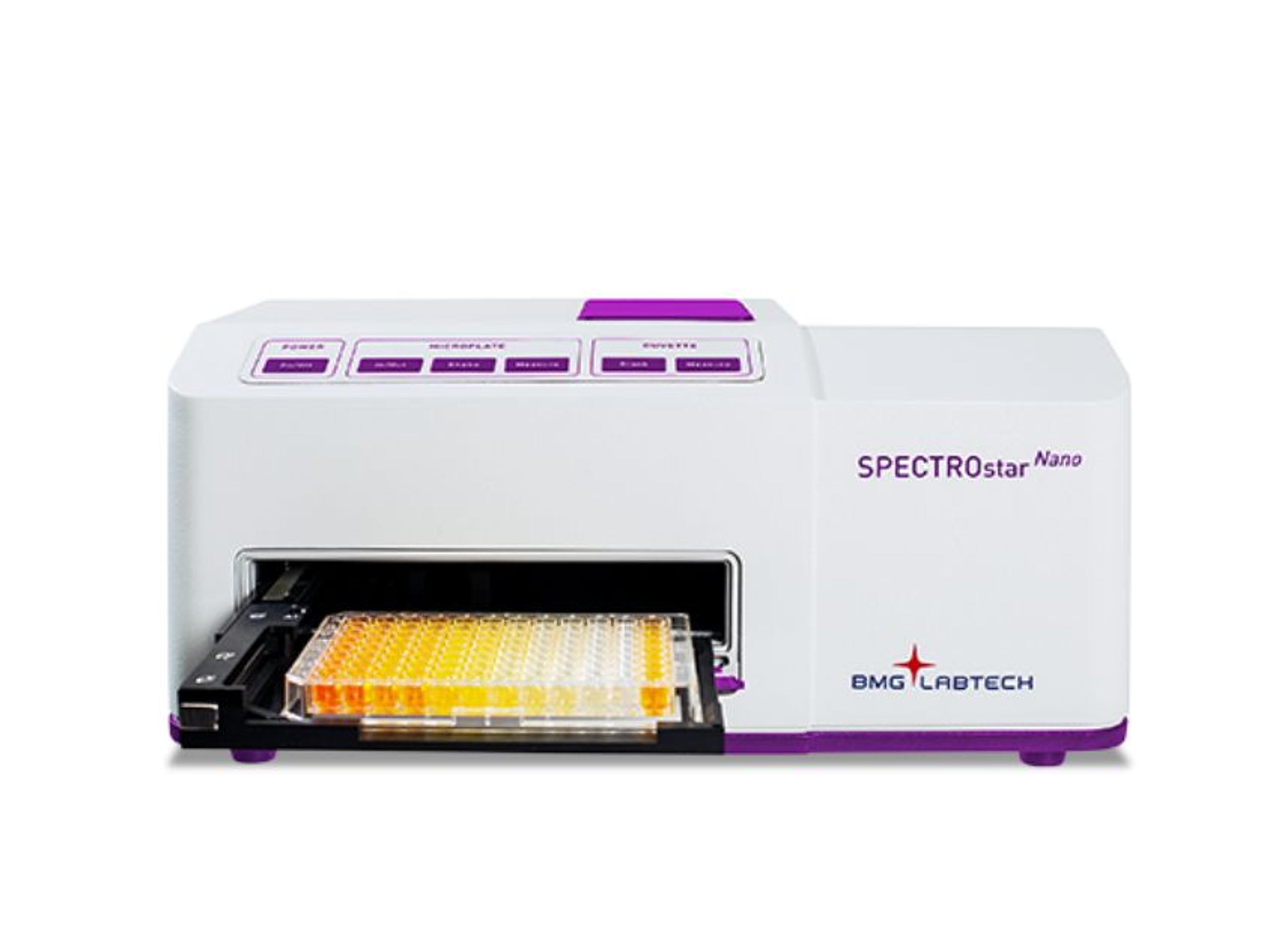
Last Week Eric Matthews from BMG LABTECH proudly presented the first of five free SPECTROstar Nanos to Dr. Gary Spedding of Brewing and Analytical Services, LLC in Lexington, Kentucky. Dr. Spedding was awarded this unique absorbance reader for his novel proposal on how he would implement new modernized micro-methods to replace archaic assays that are needed to fulfill quality control requirements for the brewing industry.
Dr. Spedding and his lab were thrilled to have their new SPECTROstar Nano installed and were anxious to begin developing new and improved methods for beer analysis. They now have the possibility of applying this cheaper, faster and more accurate method of analysis to a wider range of beverages (including wine, juice, and soft drinks) as well as to processed or raw materials. Dr. Spedding explains, “Our laboratory is a firm believer in using spectroscopic techniquesin the brewing laboratory, along with ELISA and other microplate approaches such as enzymatic assays.” Dr. Spedding believes many current methods can be modernized, that is made faster, scaled down and more accurate“Using standard spectroscopic methods and ELISA technology, the SPECTROstar Nano with its incubation and shaking capabilities, its ability to scan across the UV and visible wavelengths, and its ability to reference corrections to our existing assays will benefit our laboratory and limited research efforts enormously.”
Some of the analysis methods that Dr. Spedding would like to modernize or supplant include beer or wine color measurement (430 nm),polyphenol concentration (600 nm), flavonoid and tannin concentration(i.e. bitterness) (275 nm), and sulfite concentration(550 nm). But the method he would most like to modernize is the dangerous Kjeldahl assay; it uses boiling acid to measure the protein content in beer and wine. There is already preliminary data to support these modernization methods (Abernathy, et al. (2009); J. Inst Brew. 115 (2): 122-127.)and now there is an instrument to get the rest of the data.
If you, like Dr. Spedding, have a great idea on how the SPECTROstar Nano could redefine absorbance measurements in your lab, submit your entry before the next winner is chosen. Simply write a short 2-4 page proposal explaining how your lab would use this new and innovative absorbance reader. Its proprietary ultra-fast spectrometer instantaneously captures a full UV-Vis spectrum in microplates, cuvettes and low volumes samples. Fast, full spectrum measurements will redefine the most common absorbance assays such as ELISAs, DNA, RNA, Protein (Bradford, BCA, Lowry), cell growth, and beta-galactosidase.
The proposals will benefit from using the SPECTROstar Nano in a unique fashion or from proposing to use one of the instrument's many unique features such as: full UV/Vis spectrum per well, gas vent for atmospheric control, 1536 well plate reading capability, incubation and shaking, reference corrections to improve data, cuvette and plate kinetics, BMG LATECH's low volume LVis Plate, or robotic interface mode.