Tecan's Spark Reader Aiding Research Into Rare Skin Disease

3 Jul 2018
Aidan Barry
Administrator / Office Personnel

Industry news

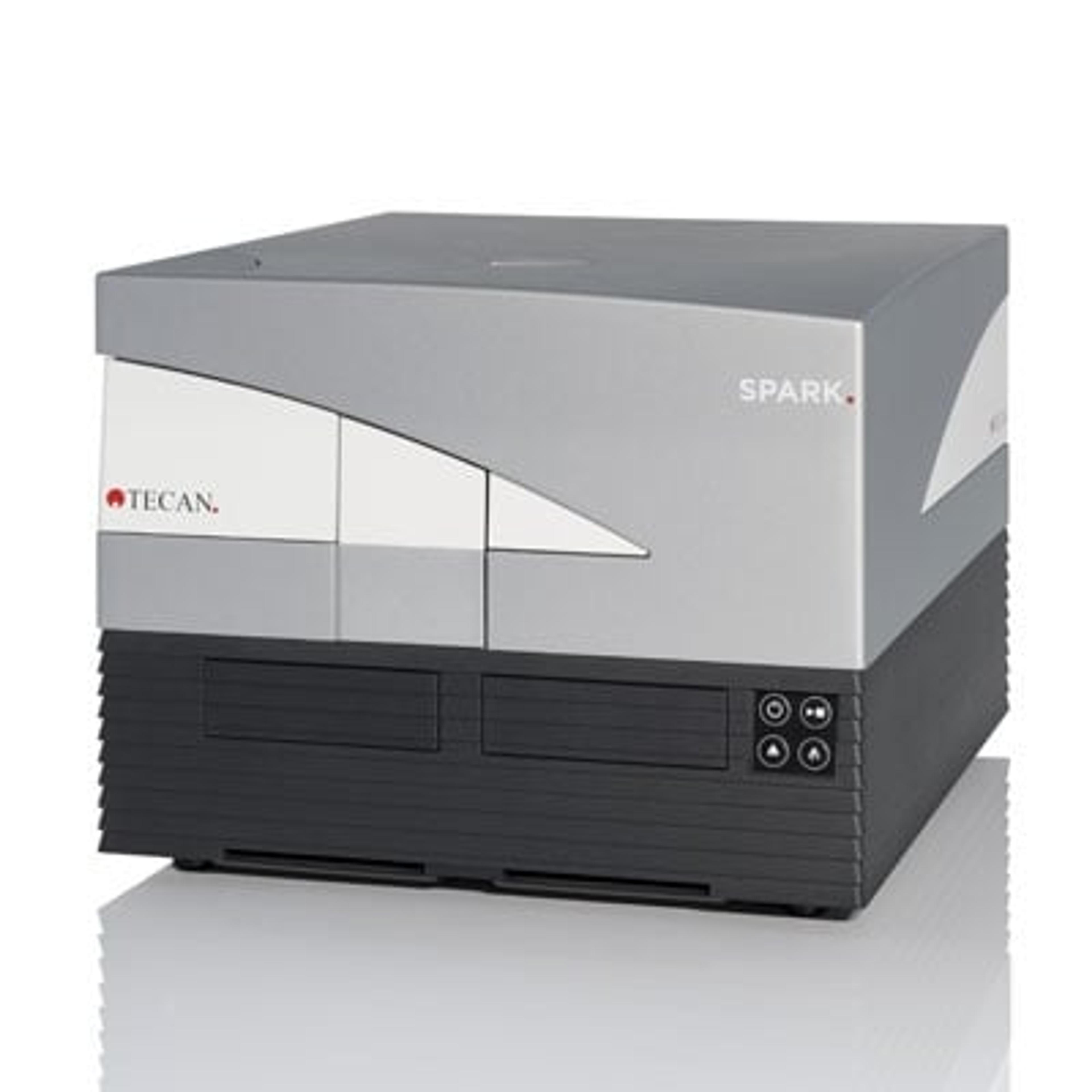
Researchers at the University Hospital of Salzburg's EB House Austria are using a Tecan Spark® multimode reader to investigate epidermolysis bullosa (EB), a rare inherited disease that causes the skin to become "as fragile as a butterfly’s wings", blistering in response to friction or trauma.

Dr Verena Wally, group leader of small molecules research, explained: “The main aim of my group is to identify potential therapeutic targets for EB. This requires a variety of functional assays, including cell viability, proliferation, migration and invasion assays – as well as luminescence- and fluorescence-based studies."

"We purchased a Spark reader in 2016 to support our research, and it has brought huge benefits to our workflow, saving time and freeing up personnel. For example, our Spark is equipped with the Gas Control Module (GCM™) and Live Viewer™, which offers us the functionality we need to automate migration assays, instead of taking pictures with a microscope and using cell counting software or counting them ourselves. Reproducibility has been a key advantage of the new platform, as the reader removes any user bias or human error. In addition, before the Spark, we were limited to taking measurements of time points when we were actually in the lab, but this could lead to us missing the time point that would actually be important. We can now leave the plate in the reader and take readings every few hours – gone are the days when if we missed the event, we had to start from the beginning.”

Do you use a Tecan plate reader? Write a review today for a chance to win $400!

Links

Tags

MicroplatesMicroplates are multi-well plates used to increase the throughput of biological investigations. The number of wells microplates contain can range from 6 to 3243 wells, with the 96-well format being the most commonly used. Microplates can come tailored for a range of applications including cell culture, PCR, filtration, storage, non-binding surface, protein crystallization, as well as pre-coated, deep well and normal Standard microplates. Additionally, options for microplate colors include clear , black, white or black with clear bottom and white with clear bottom for absorbance microplate reader applications. Find the best microplates for your lab in our peer-reviewed product directory: compare products, check customer reviews and receive pricing direct from manufacturers.Microplate Readers / DetectorsMicroplate readers are used to automate the detection and analysis of labeled or label-free components in microplates during assays or live-cell monitoring. Microplate readers are generally distinguished by their mode of detection. Types include absorbance, luminescence, fluorescence intensity, fluorescence polarization, TRF / FRET and multimode microplate readers. Microplate readers deliver a high throughput of samples by reading multiple wells simultaneously, with the 96-well format the most commonly used. As a result, microplate readers are often used in the drug discovery, bioassays, research and pharmaceutical industries for screening applications. Microplate loading can also be automated, with robotic microplate stackers to increase throughput. Find the best microplate readers in our peer-reviewed product directory: compare products, check customer reviews and receive pricing direct from manufacturers.Flow Cytometry / Cell CountingFlow cytometers are used to count, sort and examine multiple characteristics of cells. Other cell analysis equipment includes image cytometers, cell counters, fluorescence-activated cell sorters (FACS), magnetic-activated cell sorters (MACS), and a range of flow cytometry assay kits. Flow cytometers can reveal information on cell viability, cell proliferation, apoptosis and cell cycle progression, as well as identify cell populations and intracellular or cell-surface molecules. Additionally, some flow cytometers, known as FACS, have an additional sorting function after analysis. Cell counters and image cytometers count live and dead cell populations and can also conduct cell proliferation assays. Find the best flow cytometers, cell counters and cell sorters in our peer-reviewed product directory: compare products, check customer reviews and receive pricing direct from manufacturers.Cell-Based AssaysCell-based assays are used to monitor the presence, quantity and activities of a desired cellular analyte including drug molecules or biomarkers. This can reveal information on cell health (apoptosis, cytotoxicity, viability and proliferation assays), cell metabolism, cell migration and cell signaling mechanisms. Find the best cell-based assay products, kits and equipment with our peer reviewed product directory: compare products, check customer reviews and receiving pricing direct from manufacturers.Live Cell ImagingLive cell imaging is the study of living cells using microscopes and high-content imaging systems. This technique provides in-depth insight into fast and complex biological processes, by allowing dynamic imaging of living cells instead of acquiring an individual image at a single point in time.