
Taking Inspiration from Nature: How to Generate Potent Therapeutic Antibodies Found in Sharks
Find out how precise affinity measurements can enable the generation of tailor-made binding proteins
20 Feb 2017
Editorial article


Professor Harald Kolmar, Head of the Applied Biochemistry Department, Technical University of Darmstadt
Unlike conventional antibodies, sharks have been found to produce antibodies that are unique, comprising of only heavy chains, as opposed to a combination of a heavy and a light chain. It’s been discovered that this unusual characteristic can have significant advantages, such as better tissue penetration in vivo, and could be incredibly useful in the fight against diseases such as Alzheimer’s and cancer1. Antibody binding affinity assays are one method used to help generate antibodies found in sharks, but that’s not all. In this interview with Professor Harald Kolmar, Head of the Applied Biochemistry Department at the Technical University of Darmstadt, find out how this technology can be used to develop other therapeutic proteins.
What are your main research interests?
HK: Our research interests are in the field of protein and peptide engineering, with a main focus lying in the generation of tailor-made binding proteins for diagnostic and therapeutic applications.
What have been your most interesting findings?
HK: We have generated methods for ultra-high throughput screening of protein libraries exceeding one billion candidates. Also, we successfully improved enzyme selectivity and established a strategy for animal-free generation of highly potent, stable and specific antibodies from sharks. These were compiled to generate a semisynthetic library that can now be used to isolate binders using yeast display technology, thereby obviating animal immunization2.
How do these findings affect the wider scientific and non-scientific community?
HK: Shark-derived antibodies are valuable tools for diagnostic applications and also for the purification of therapeutic proteins. Further to this, it is believed that the proteins may have therapeutic value themselves. We were recently able to generate pH dependent shark antibodies that bind their target with very high affinity at physiological pH (7.4) and release it at lower pH (5.5-6.0). Validation of these binders was possible by taking Octet measurements at various pH levels.
For the isolation of therapeutic antibodies, protein A affinity chromatography is the standard method in downstream processing. My vision is to use shark antibodies as tailor-made affinity capturing reagents for application in downstream processing of biologics, thereby reducing manufacturing costs3. As well as our group, several companies (Ossianix, Elasmogen) are currently developing shark-derived antibodies for therapeutic applications, targeting disease areas such as autoimmune and inflammatory diseases and cancer.
My vision is to use shark antibodies as tailor-made affinity capturing reagents for application in downstream processing of biologics
Professor Harald Kolmar Technical University of Darmstadt
What is your typical approach for protein engineering?
HK: Primarily, we use ultra-high throughput screening of combinatorial protein libraries, where variants are individually displayed in multiple copies on the surface of yeast cells. Binders are identified using fluorescently labeled targets, followed by fluorescence-activated cell sorting. The clones are individually tested in the display format and later reformatted to be expressed individually as soluble proteins. At this point, the Octet® RED96 comes into play. The Octet is mainly used for kon, koff and KD determination and, in the case of shark antibodies, for epitope binding aimed at investigating whether two binders share the same binding site on the surface of the target protein.
What are the main advantages of this technology and would you recommend it?
HK: For the individual testing in medium throughput format of single candidates (dozens to hundreds), I strongly recommend the Octet system. Compared to other strategies, the assay comes at a relatively low cost, thus allowing for the screening of a larger number of candidate proteins in a university setting. Clever assay development allows for the reuse of the tips for several measurements. For many applications, the KD is not the only value of relevance. With the Octet, the kon and koff rates can also be measured directly and with high precision.
What are your future research goals?
HK: Our ambitious goal for the future is to generate protein-based binders, addressing intracellular targets. For this to happen, ways and means must be found to translocate the binding protein to the cytoplasm of a eukaryotic cell. We recently established a nanoparticle-mediated cell transduction system that also may be applicable to the transfer of binding proteins and peptides into cells.
What do you believe will be the trend for research in this field moving forward?
HK: In my opinion, the spectrum of targets that can be addressed by biologics is currently very restricted. Only extracellular or surface-exposed targets can be addressed due to the lack of accessibility of intracellular targets. As a consequence, I think that trends will aim to target biological macromolecules, i.e. proteins over small molecules, due to the fact that the latter often lack specificity and affinity. Hence, the natural candidates for interference with cellular processes are proteins.
With current methods of library screening and high throughput functional characterization at hand, candidates with predefined functionalities can be established in short time using the Octet RED96 for example. Crossing the barrier of the cellular membrane to achieve intracellular delivery of tailor-made and functionally optimized protein-based binders is a long-term ambitious goal that is definitely worth working on.
Have you used the product mentioned in this article? Share your experiences and write a product review to be in with the chance of winning an iPad Air® or $400 (or equivalent) Amazon® vouchers!
1 Könning, D., Zielonka, S., Grzeschik, J., Empting, M., Valldorf, B., Krah, S., Schröter, C., Sellmann, C., Hock, B. and Kolmar, H. (2016) ‘Camelid and shark single domain antibodies: Structural features and therapeutic potential’, Current Opinion in Structural Biology, 45, pp. 10–16. doi: 10.1016/j.sbi.2016.10.019.
2 Zielonka, S., Weber, N., Becker, S., Doerner, A., Christmann, A., Christmann, C., Uth, C., Fritz, J., Schäfer, E., Steinmann, B., Empting, M., Ockelmann, P., Lierz, M. and Kolmar, H. (2014) ‘Shark attack: High affinity binding proteins derived from shark vNAR domains by stepwise in vitro affinity maturation’, Journal of Biotechnology, 191, pp. 236–245. doi: 10.1016/j.jbiotec.2014.04.023.
3 Könning, D., Zielonka, S., Sellmann, C., Schröter, C., Grzeschik, J., Becker, S. and Kolmar, H. (2016) ‘Isolation of a pH-sensitive IgNAR variable domain from a yeast-displayed, Histidine-Doped master library’, Marine Biotechnology, 18(2), pp. 161–167. doi: 10.1007/s10126-016-9690-z.
Related products
Request Quote for All Products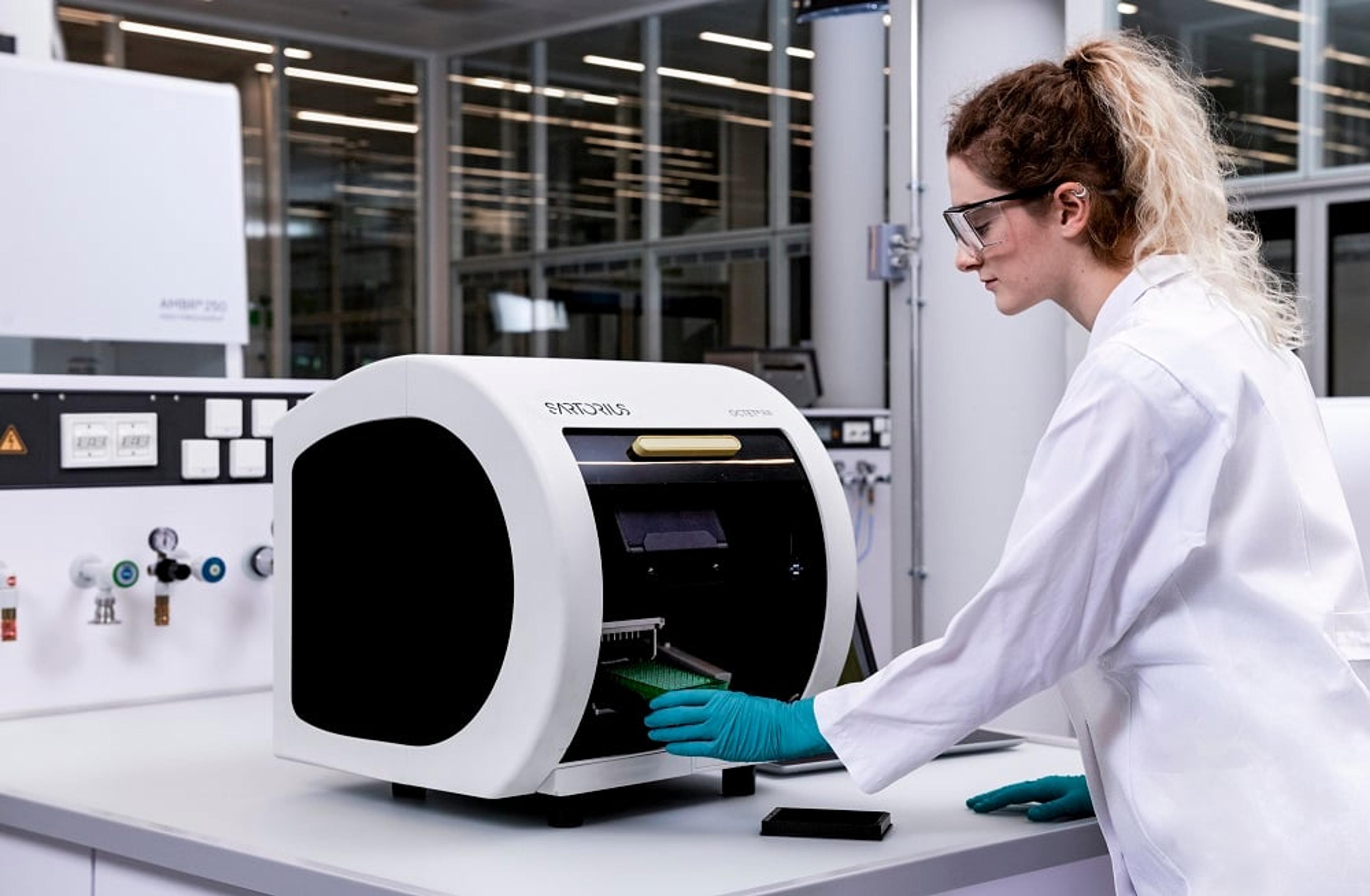
Octet® R8 BLI System
Sartorius GroupSuperior quantitation and kinetics performance with increased assay flexibility and cost efficiency.