Sunrise™ Reader Is a Real Winner for Celiac Patients

2 Aug 2012
Tesni Perry
Administrator / Office Personnel

Product news

Researchers in the Sensors and Biosensors Group at the Universitat Autònoma de Barcelona, Spain, have taken advantage of Tecan’s Sunrise™ absorbance reader and Magellan™ V4.0 software to establish a novel magneto-ELISA for gliadin, a constituent of the cereal protein gluten important in Celiac disease, based on optical detection.

Maria Isabel Pividori from the Sensors and Biosensors Group explained: “There is an increasing demand for rapid, simple and low cost techniques for accurate food analysis in decentralized analytical situations, and we have developed an electrochemical magneto immunosensor for the sensitive detection of gliadin – and small gliadin fragments – in natural or pretreated foods.”

Maria Isabel continued: “To assess the performance of the electrochemical immunosensor, we compared it with a novel magneto-ELISA, using optical detection performed on the Sunrise plate reader. The ELISAs were performed in 96-well microplates, using a magnetic separation plate to isolate the supernatant before measuring the absorbance in the Sunrise reader. This enabled immunoassays to be performed in a variety of different formats for multiple applications – such as evaluating protein coupling to magnetic beads and nanoparticles – as well as allowing assessment of different transducer materials for biosensing purposes. It also provides us with a quick and easy way to optimize reagents and assay parameters, making the Sunrise ideal for research applications.”

Full details of this study can be found in: Laube T et al. Biosens Bioelectron, 2011, 27, 46-52.


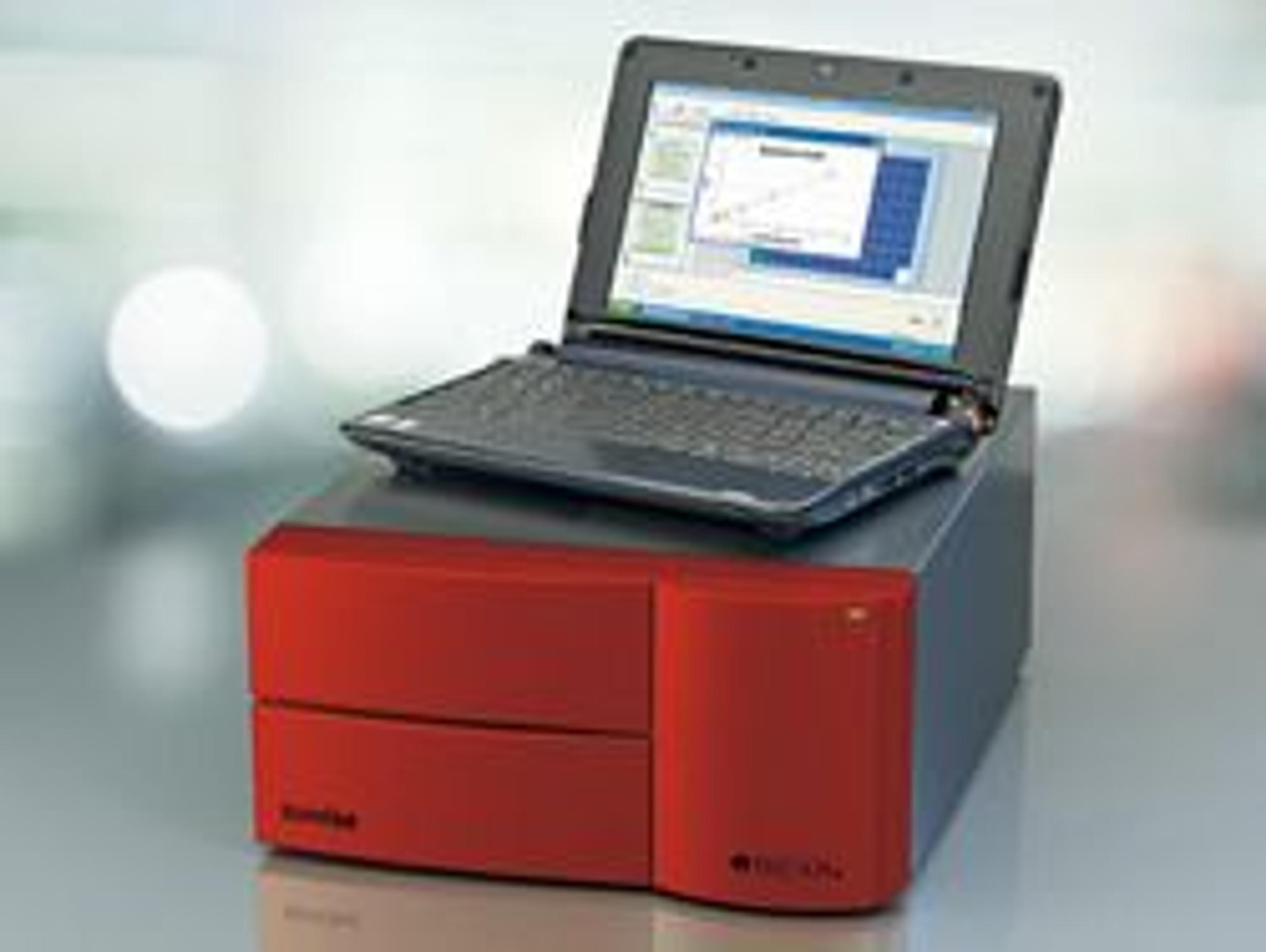
Sunrise™ absorbance reader

Tecan

The Sunrise is a versatile ELISA microplate reader that combines advanced optical performance with high measurement speed for diagnostic and research laboratories. 

(13)

Links

Tags

BiosensorsBiosensors are devices used to detect an analyte using biological molecules specific to the analyte coupled to a detector. Biosensor instruments may be photometric, typically using surface plasma resonance (SPR), electrochemical or QCM (quartz crystal microbalance) biosensors. Biosensors should be selective, portable, robust and sensitive and have a fast response time. Systems may be manual or automated and usually have associated software.ELISAEnzyme-linked immunosorbent assays (ELISA), also known as enzyme immunoassays (EIA), are used for the detection and quantification of proteins, peptides and antibodies in a sample. ELISA often comes in kit format, with pre-selected antibody pairs to detect specific proteins or biomarkers of diseases such as diabetes and obesity, or cardiovascular and neurological disorders. Detection is made possible with chemiluminescent, fluorescent or colorimetric substrates and detection instruments such as microplate / ELISA readers. Other kits available include: Enzyme-linked immunospot (ELISPOT) assays for the quantification of protein-producing cells and chemiluminescent immunoassays (CLIA) kits. Find the best ELISA kits and products in our peer-reviewed product directory: compare products, check customer reviews and receive pricing direct from manufacturers.ImmunologyImmunological techniques measure and characterize immune responses. Immunology kits and analysis systems often use techniques such as ELISA, radioimmunoassay (RIA) and immunodiffusion assays, Immunohistochemistry, and flow cytometry. Immunologists use equipment such as flow Cytometers, plate readers, plate washers and fluorescent microscopes.BiomarkersBiomarkers are biological markers which can be measured and evaluated to indicate a biological state. The use of biomarkers in research and diagnosis can indicate a normal or disease state or drug response of cells / tissues. Biomarkers include genetic markers, cell surface markers such as antigens, antibodies or receptors and secreted molecules such as cytokines. An assay system is required for identification of biomarkers. :Food and Beverage AnalyzersFood and Beverage Analyzers are commonly used to provide information about the chemical composition, structure and physical properties of food materials.Celiac Disease
Sunrise™ Reader Is a Real Winner for Celiac Patients