
Single Cell Genomics for Bioenergy and Environmental Applications
Expanding environmental microbial phylogeny with single cell genomics and metagenomics
27 Apr 2017Editorial article

The title slide from the presentation given by Dr. Robert Bower for Labcyte Genomics Symposium

The mission of the US Department of Energy Joint Genome Institute (JGI) is to serve as a genomic user facility in support of investigators in bioenergy, carbon cycling and biogeochemistry.
Dr. Robert Bowers, from the Department of Energy Joint Genome Institute (JGI), described new technologies applied to investigate microbial function in extreme environments, at the Labcyte Genomics Symposium. Learn about the latest single-cell and metagenomics projects on diverse environmental samples such as deep ocean, sub-sea floor hydrothermal vents, geothermal hot springs and sub-glacial lakes.
Dr. Bowers introduces the concept of bacterial ‘dark matter’ in environmental microbial ecology, and how the JGI are modifying their single-cell genome production pipeline to expand what is known about the environmental microbial phylogenetic tree.
Dr. Bowers describes the sequencing and analysis services provided by the JGI, and provides an overview of its research areas: metagenomics, plants, fungi, microbes and DNA synthesis. The current JGI pipeline for production of single-cell genomics is well established, providing targeted sequencing of candidate phyla lineages to its users. For this, single-cell isolation is followed by genome amplification, 16s RNA gene identification and, finally, shotgun sequencing and assembly. However, many environmental microbes cannot be mapped using conventional culturing and sequencing techniques. Novel phyla are often missed by 16s primers used in traditional amplicon studies, most likely due to primer mutation mismatches or large insertions, that even high quality 16s universal primers cannot eliminate completely.
Uncovering of 'microbial dark matter'
These taxonomic blind spots, referred to as microbial dark matter, are being uncovered using metagenomics and genomic binning techniques. Metagenomics data sets show that traditional 16s amplicon studies are missing as much as 10% of the microbial diversity present in the environment. Dr. Bowers describes progress by the JGI in moving away from using 16s targeted single-cell genome production, to reduce costs, but also to identify the significant proportion of environmental microbes that are currently missed.
Dr. Bowers describes how new technologies, in particular automated liquid handling, are improving shotgun metagenomics and single-cell genomic pipelines to help identify single-cell genomes from extreme environments. The group uses whole genome amplification of 16s PCR-negative single cells to permit sequencing and assembly. Going forwards, the JGI aims to use this more widely for remote environmental samples.
Novel single-cell genomes
During the presentation, a test case from the Dewar Creek Hot Spring, British Columbia, in collaboration with the University of Calgary, is presented. The case demonstrates that the application of this technology to samples, has provided several new candidate phyla from single-cells. Dr. Bowers uses the investigation into the composition and phylogeny of Dewar Creek Genomes, to illustrate how single-cell genomes that cannot be amplified with 16s primers, differ from the metagenome bins and 16s-positive genomes collected, and how genome level phylogeny uncovers potentially novel single-cell genomes, that may represent novel branches of phylogeny.
Looking to the future, population level genomics, metabolic reconstructions and single nucleotide polymorphism (SNP) identification within single cell genomes is the planned approach for new candidate phylum.
Watch the full presentation or learn more about the Echo® 525 Liquid Handler
Leave a product review today to be entered into a prize draw for the chance to win an iPad or $400 Amazon voucher (or equivalent currency)
Related products
Request Quote for All Products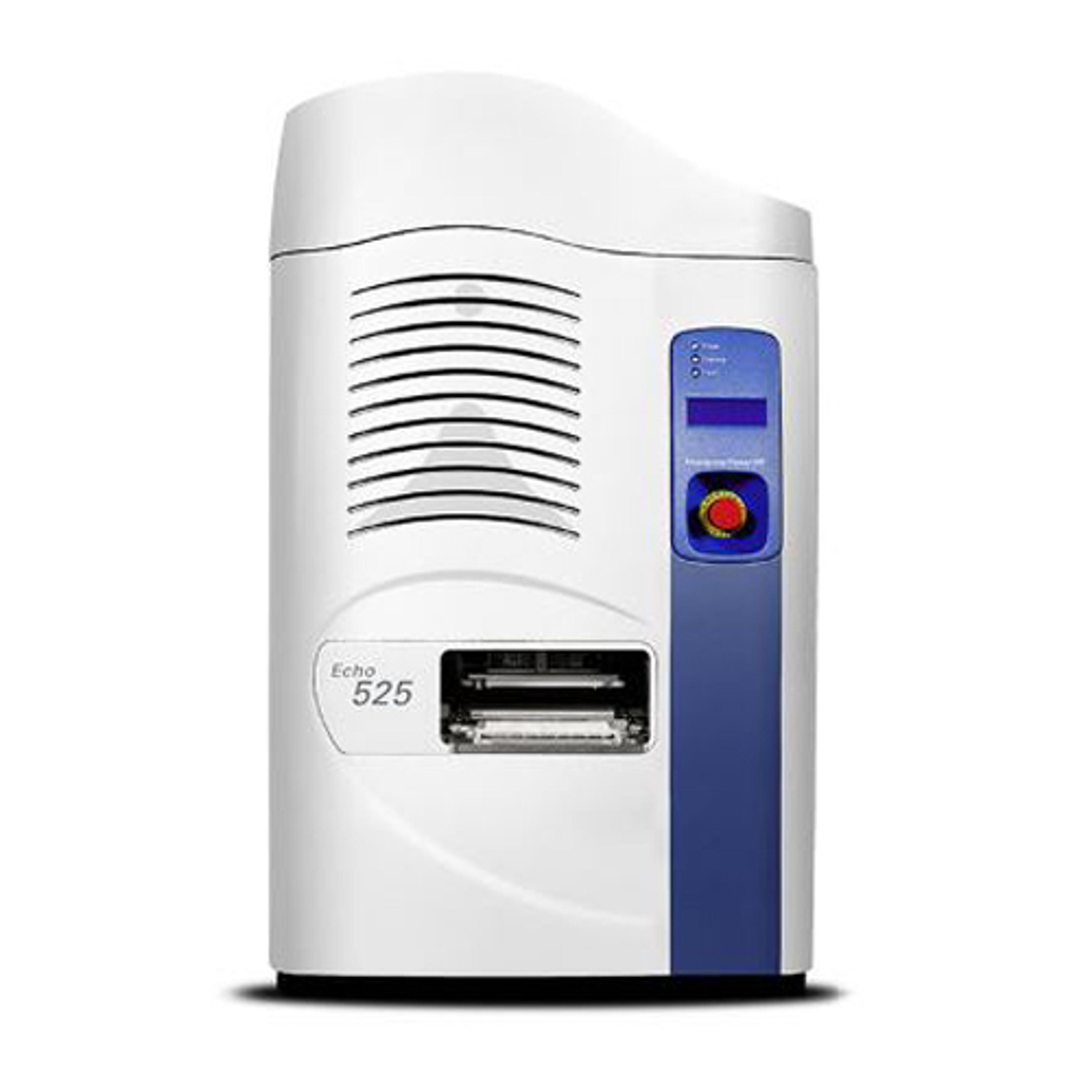
Echo® 525 Liquid Handler
Beckman Coulter Life SciencesThe Echo 525 platform, like the other Echo liquid handler models, is designed to use sound energy to transfer reagents. Unlike the other Echo models, the Echo 525 platform transfers at a larger volume increment (25 nL). This enables the more rapid transfer of aqueous reagents required in biochemical and genomics assays setup.