Shedding Light on the Tea of Immortality: Kombucha

Learn how Kombucha’s Organic Acids composition can impact its flavor and perceived health benefits.

3 Jan 2017

Emily Adam
Publishing / Media

Editorial article

Learn how Kombucha’s Organic Acids composition can impact its flavor and perceived health benefits.

the Dionex™ IonPac™ AS11-HC-4µm Column was ideal for the separation of organic acids in Kombucha samples.

Dr Beibei Huang  Thermo Fisher Scientific


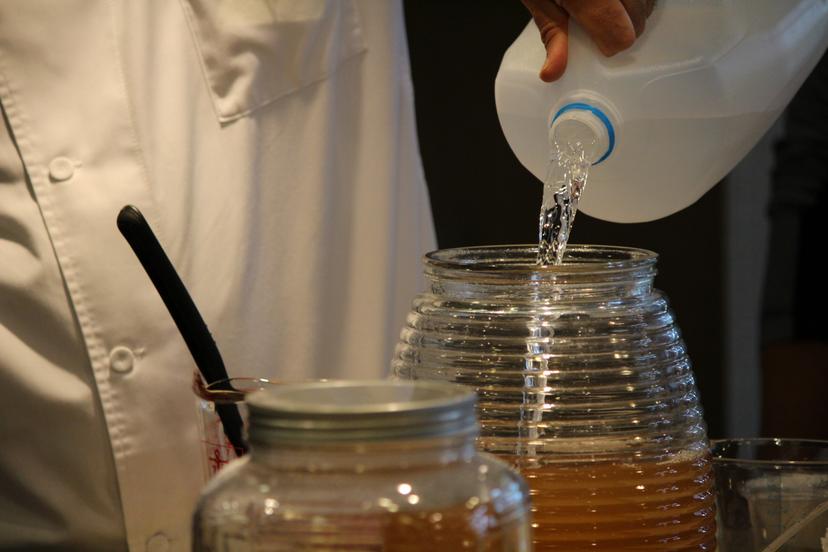
Kombucha, once known as ‘The Tea of Immortality’, has been consumed for more than 2,000 years, but it is only in recent times that its popularity has spread to the USA. Made by fermenting black or green tea and sugar with Kombucha culture, the tea is reminiscent of other effervescent alcoholic drinks. However, it isn’t the taste that attracts most westerners to the drink, but the perceived health benefits.

The reported health benefits of Kombucha are partly attributed to the organic acids it contains, including gluconate and lactate acid. Over recent years, Dr BeiBei Huang, Thermo Fisher Scientific, has worked to determine the organic residues found in Kombucha. As well as helping us gain further understanding of the drink’s benefits, it is thought this research may also aid in production quality control, as organic acid levels can alter the tea’s flavor.

Previous research to establish organic acid levels was limited by the sensitivity of the analysis, as components found in Kombucha interfere with detection. In an interview with SelectScience® at AOAC 2016, Dr Huang explained how she had achieved successful analyte characterization by using the Thermo Scientific™ Dionex™ IonPac™ AS11-HC-4µm Column in combination with the Thermo Scientific™ Dionex ICS-5000+ Reagent-Free HPIC System.

By utilizing ion chromatography to separate the organic acids, Dr Huang was able to carry out the analysis at a high resolution, while minimizing interference from sugars and phenols. Following her investigations, Dr Huang found that the Dionex™ IonPac™ AS11-HC-4µm Column was ideal for the separation of organic acids in Kombucha samples.

Watch the full video interview or visit the AOAC special feature to learn more.

Leave a product review today to be entered into a prize draw for the chance to win an iPad or $400 Amazon voucher (or equivalent currency).

Links

Tags

Gas ChromatographyGas chromatography (GC) is an analytical technique used to separate and quantitate mixtures of small and volatile compounds. Gas chromatographs or GC systems include components such as GC columns, detectors, pumps and autosamplers. Choose from packed or capillary GC columns, flame ionization (FID), photoionization (PID) electron capture detectors and selective or non-selective detectors. Find the best gas chromatographs in our peer-reviewed product directory: compare products, check customer reviews and receive pricing direct from manufacturers.UHPLC and HPLCHigh performance liquid chromatography (HPLC) and ultra high performance liquid chromatography (UHPLC), also known as UPLC, are analytical techniques used to separate, identify and quantitate components of complex mixtures including biological samples such as proteins and lipids as well as chemical mixtures of pesticides, drugs and oils. Both techniques are liquid chromatographic methods but differ by operating pressures (HPLC < 6000 psi < UHPLC ). Components of HPLC and UHPLC systems include columns, detectors, pumps, autosamplers and column heaters. Explore a range of UHPLC and HPLC columns for your specific sample needs including reverse phase, normal phase, ion exchange, HILIC, ion exclusion and size exclusion columns. For more specialized HPLC, explore FPLC, countercurrent LC and simulated moving bed systems. Find the best UHPLC and HPLC equipment in our peer reviewed product directory: compare products, check customer reviews and receive pricing direct from manufacturers.Food and Beverage AnalyzersFood and Beverage Analyzers are commonly used to provide information about the chemical composition, structure and physical properties of food materials.Chromatography Method DevelopmentChromatography method development is the process of designing and optimizing chromatographic techniques to separate and analyze complex mixtures. This includes selecting appropriate stationary and mobile phases, determining flow rates, and optimizing detection methods. Successful method development is essential for high-quality results in fields like pharmaceuticals, food safety, and environmental analysis. Explore chromatography method development tools in our peer-reviewed product directory; compare products, check reviews, and get pricing directly from manufacturers.ChromatographyChromatography is a powerful technique used to separate and analyze components of mixtures based on their chemical properties. It is widely used in fields like biochemistry, pharmaceuticals, and environmental analysis. By exploiting differences in the interaction of substances with a stationary phase and a mobile phase, chromatography enables precise purification and quantification of compounds. Whether you're working with complex biological samples or industrial chemicals, chromatography is essential for obtaining high-quality results. Browse our peer-reviewed product directory to find the best chromatography systems, compare products, read customer reviews, and get pricing directly from manufacturers.Organic CompoundsOrganic compounds are carbon-based molecules that form the building blocks of life. These include hydrocarbons, lipids, proteins, and nucleic acids. Understanding organic compounds is crucial in chemistry, biochemistry, and pharmacology. Explore organic compound analysis tools in our peer-reviewed product directory; compare products, check reviews, and get pricing directly from manufacturers.Food QualityFood quality refers to the attributes of food that influence its safety, nutrition, and taste. Monitoring and ensuring food quality are essential in production to meet health regulations and consumer expectations. Techniques like spectroscopy, chromatography, and microbial testing are used to assess food properties and detect contaminants. Browse our peer-reviewed product directory to find food quality testing solutions; compare products, check reviews, and get pricing directly from manufacturers.
Shedding Light on the Tea of Immortality: Kombucha