Rising Stars in the Chemistry/Biochemistry Department at U.T. Arlington are the Second Winners of a SPECTROstar Nano from BMG LABTECH

2 May 2011
bridget bridget
Laboratory Director

Product news

For young and exuberant scientists it is sometimes hard to accomplish new and exciting research when applying for classic funding sources. Often there may be limited interest in the research subject at that time or proposals are just too risky for funding.

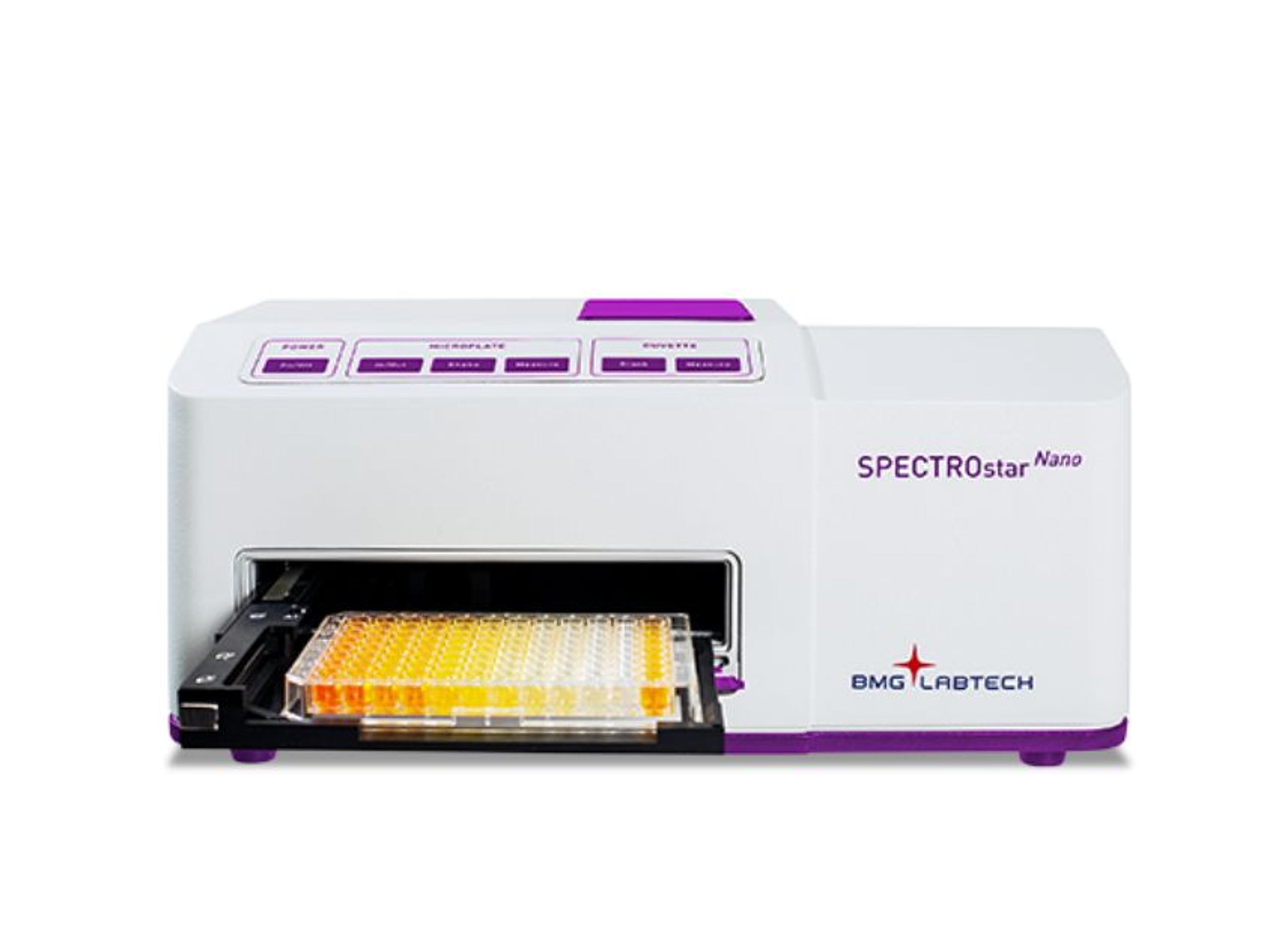
In order to address their need for a new absorbance microplate reader for teaching and in their labs, researchers at the University of Texas at Arlington decided to pull their new and innovative ideas together to apply for BMG LABTECH’s SPECTROstar Nano competition. Combining their ideas into one proposal helped to mitigate the risk of submitting just one idea and it also helped to show how six different laboratories can use one instrument for a myriad of applications. To find out how they propose to use the SPECTROstar Nano to redefine absorbance measurements at UTA, you can read their winning proposal on our website at the company article page.

Dr. Kevin Schug, one of the scientists at UTA is thrilled to hear that their proposal was chosen. “At the Department of Chemistry & Biochemistry in the University of Texas at Arlington, we have a significant number of junior faculty who are pursuing new and innovative research and teaching approaches. The award of a SPECTROstar Nano system gives us many new capabilities, which we previously lacked. Not only will we be able to use the instrument for a wide range of research and teaching efforts, the instrument will provide support for the advancement of our junior faculty in their academic careers, as well as exposure to students of state-of-the-art instrumentation. We are extremely excited about the prospects that this award has afforded, and we appreciate the opportunity given by BMG LABTECH to compete for this instrument.”

If you, like the young professors at UTA, have a great idea for the SPECTROstar Nano, submit your entry before the third winner is chosen next month. Simply write a short 2-4 page proposal on how your lab would use this new and unique instrument. Its proprietary ultra-fast spectrometer instantaneously captures a full UV-Vis spectrum in microplates, cuvettes and low volumes samples. Fast, full spectrum measurements will redefine the most common absorbance assays such as ELISAs, DNA, RNA, Protein (Bradford, BCA, Lowry), cell growth, and beta-galactosidase.

Tell us how you propose to use the SPECTROstar Nano in a unique fashion or one of the instrument’s many unique features such as: full UV/Vis spectrum per well, gas vent for atmospheric control, 1536 well plate reading capability, incubation and shaking, reference corrections to improve data, cuvette and plate kinetics, BMG LATECH’s low volume LVis Plate, or robotic interface mode. For more information go to the company article page or ask your local BMG LABTECH representative.

Don’t forget to submit your proposal before May 15th to qualify to win the third of five SPECTROstar Nanos from BMG LABTECH.
Links

Tags

Fluorescence SpectroscopyFluorometers and spectrofluorometers (also called fluorescence spectrometers) are used to measure the intensity and wavelength of fluorescent light emitted from a sample after excitation by illumination. Spectrofluorometers utilize monochromators to select the desired wavelengths, whereas filter fluorometers employ a set of filters. Spectrofluorometers for measuring steady-state fluorescence and lifetime fluorescence (or time-resolved fluorescence) are available, as well as fluorescence microscopes and microplate readers. Find the best fluorescence spectroscopy products in our peer-reviewed product directory: compare products, check customer reviews and receive pricing direct from manufacturers.UV-Visible SpectroscopyUltraviolet-visible (UV-Vis) spectrophotometers are used to measure the interaction of UV and visible light with a sample, including transmission, reflectance & absorbance. The two major instrument classes are single-beam or double-beam spectrophotometers. More specialized equipment includes colorimeters, spectroradiometers and refractometers. Portable and microvolume spectrophotometers are also available. For the modular spectroscopy lab, explore a range of light sources for combination with a spectrograph/spectrometer and optics. Find the best UV-Vis spectroscopy products in our peer-reviewed product directory: compare products, check customer reviews and receive pricing direct from manufacturers.Genome AnalysisGenomics, the study of genomes, includes functional genomics, evolutionary genomics and comparative genomics. There are many genomic technologies such as DNA sequencing of whole genomes, computational biology and bioinformatics. DNA and nucleic acids must be isolated and concentrated from cells for analysis with kits, automated analyzers and software. Other useful technologies for studying genomics include PCR, microarrays and electrophoresis.OligonucleotidesOligonucleotides are small nucleic acid polymers, usually less than 20 bases in length. Oligonucleotides can be made via enzymatic cleavage or more commonly by chemical synthesis with polymerases. Their use includes FISH, southern blots, microarrays and as primers in PCR. High fidelity synthesis kits and detection systems are available for easy production and detection, respectively.ProteomicsProteomics is the systemic bioinformatics study of proteins and amino acids, including their structure, size, function and identification. Tools used in proteomics include chromatography, blotting and gels, protein arrays, mass spectrometry and ELISA and associated analysis software. Analyzers and proteomic systems should be sensitive, high resolution, fast and may be automated for high-throughput.Cell-Based AssaysCell-based assays are used to monitor the presence, quantity and activities of a desired cellular analyte including drug molecules or biomarkers. This can reveal information on cell health (apoptosis, cytotoxicity, viability and proliferation assays), cell metabolism, cell migration and cell signaling mechanisms. Find the best cell-based assay products, kits and equipment with our peer reviewed product directory: compare products, check customer reviews and receiving pricing direct from manufacturers.Protein PurificationProtein purification is a vital step in drug discovery, therapeutics, biotech and life science research. The purification process typically involves subcellular or membrane protein extraction with cell lysis kits, separation of proteins from cell debris by filtration or spin columns, and the isolation of proteins of interest from other proteins and impurities with affinity purification (including fusion protein tags and antibody binding proteins A, G and L), immunoprecipitation or chromatographic methods, such as ion exchange, size exclusion and immobilized metal affinity chromatography. All purification methods come in multiple formats for your laboratory needs, including agarose or magnetic beads, resins, columns and filter plates. Find the best protein purification equipment in our peer-reviewed product directory: compare products, check customer reviews and receive pricing direct from manufacturers.Gene Expression and Molecular CloningMolecular cloning is a set of techniques that utilizes vectors to transfer recombinant DNA into host cells and is an essential tool for investigating the expression of genes and proteins in bacterial or mammalian cells. A variety of vectors optimized for gene cloning and expression in a range of host organisms are available, alongside competent cells for genetic replication. Here, you can explore a range of molecular tools, high-quality genomic and cDNA libraries, premade clones, transformation and transfection reagents and mutagenesis or gene expression detection assays and expression arrays. Find the best gene expression and molecular cloning products in our peer-reviewed product directory: compare products, check customer reviews and receive pricing direct from manufacturers.BiomarkersBiomarkers are biological markers which can be measured and evaluated to indicate a biological state. The use of biomarkers in research and diagnosis can indicate a normal or disease state or drug response of cells / tissues. Biomarkers include genetic markers, cell surface markers such as antigens, antibodies or receptors and secreted molecules such as cytokines. An assay system is required for identification of biomarkers. :
Rising Stars in the Chemistry/Biochemistry Department at U.T. Arlington are the Second Winners of a SPECTROstar Nano from BMG LABTECH