Rigaku Presents X-Ray Analytical Instrumentation Portfolio at Pittcon 2017
Visit Rigaku at Booth # 3512
7 Mar 2017
Product news
Rigaku Corporation is pleased to announce its attendance at the 68th annual Pittsburgh Conference on Analytical Chemistry and Applied Spectroscopy (Pittcon 2017), held March 5 - 9, 2017 at McCormick Place in Chicago, IL USA. Rigaku is exhibiting its benchtop lines of X-ray diffraction (XRD) and X-ray fluorescence (XRF) instrumentation at Booth # 3512
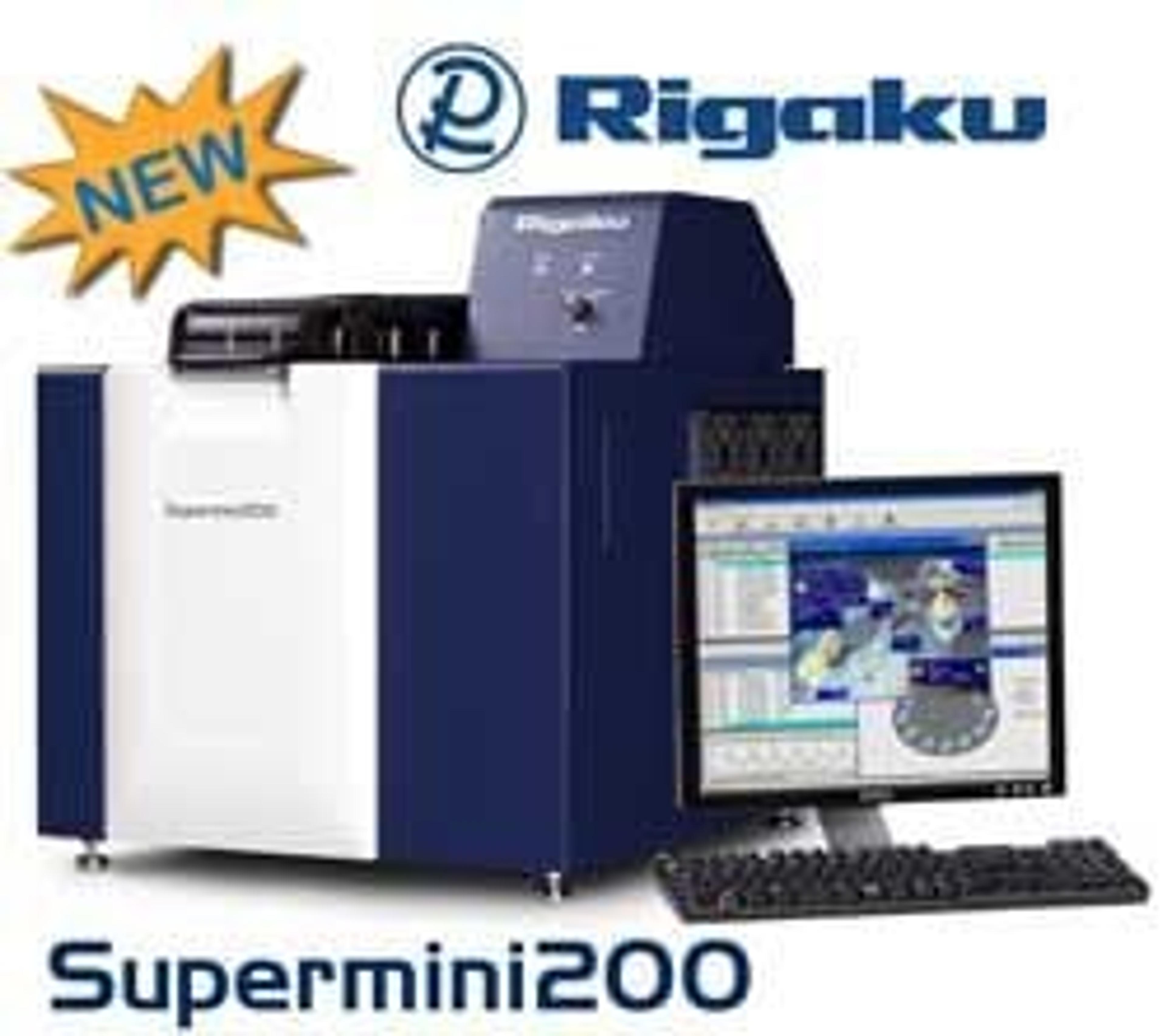
Rigaku (The Woodlands, TX) is showing the Rigaku Supermini200 benchtop wavelength dispersive X-ray fluorescence (WDXRF) spectrometer and the Rigaku MiniFlex benchtop X-ray diffractometer.
The Rigaku Supermini200 analyzer is the world's only high-power (200 W) benchtop sequential wavelength dispersive X-ray fluorescence spectrometer for elemental analysis of oxygen (O) through uranium (U) of almost any material. It uniquely delivers low cost-of-ownership with high resolution and lower limits of detection (LLD).
Ideally suited for today's fast-paced XRD analyses, the fifth generation MiniFlex delivers speed and sensitivity through innovative technology enhancements such as the optional D/teX high-speed detector coupled with a powerful 600 W X-ray source. The MiniFlex comes standard with the latest version of PDXL, Rigaku's full-function powder diffraction analysis package.
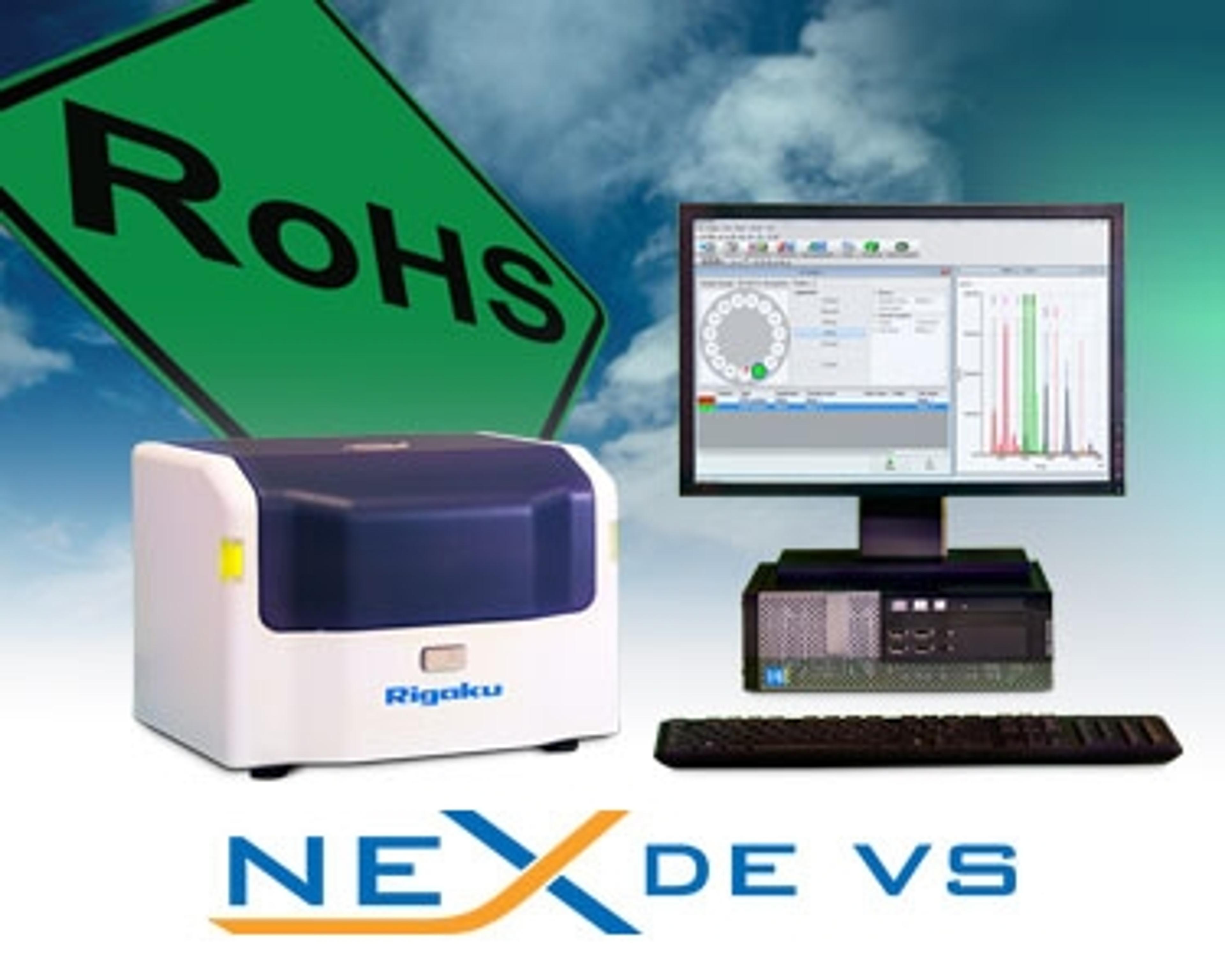
Applied Rigaku Technologies (ART, Austin, TX) will feature the new Rigaku NEX DE VS direct excitation variable spot X-ray fluorescence elemental analyzer. The newest addition to the Rigaku NEX DE series of high-performance, direct excitation energy dispersive XRF (EDXRF) elemental analyzers, The NEX DE VS is uniquely suited for small spot analysis. It features a high-resolution camera combined with automated collimators allowing for precise positioning of a sample for the analysis of 1 mm, 3 mm, and 10 mm spot sizes.
For on-line elemental analysis, the ART division presents the NEX OL process elemental analyzer. The NEX OL enables real-time process elemental analysis for liquid stream applications. It is also designed to service web and coil applications, with the ability to analyze multi-element composition and/or coating thickness.
The ART division is also displaying the Rigaku NEX QC+ low-cost benchtop EDXRF spectrometer. The NEX QC+ is a compact elemental analyzer with an intuitive “icon-driven” touch screen interface and built-in printer for easy operation and convenience.
Also presenting from Rigaku Analytical Devices is Mr. Fumihito Muta of Rigaku Corporation and Dr. Yasuo Seto, Ph.D., Director of the Forensic Science National Research Institute of Police Science. The presentation titled “On-site determination of chemical warfare agents by handheld Raman with 1064 nm excitation laser” highlights use of the Rigaku Progeny handheld Raman analyzer and will be on March 8, 2017 at 10am.