
Revolutionize care with pioneering bispecific antibody therapy
Jiseon Kim, Senior Scientist at ProGen, explores the transformative potential of a bispecific antibody-based drug to lay the foundation for improved healthcare quality
14 Dec 2023
In this exclusive interview with Jiseon Kim, Senior Researcher at ProGen, we explore the groundbreaking research on the development of a novel antibody-based drug for the treatment of cancer and autoimmune diseases. Through the utilization of Neo Tri-ImmunoGlobulin (NTIG), a fusion protein platform designed to enable multi-targeting and long-term drug persistence, Kim’s team is revolutionizing the field of drug discovery and antibody-based medicine. Learn about the inner workings of the NTIG technology and its potential impact on future healthcare quality. We also discuss the advanced technologies that Kim and her team rely on to overcome the numerous challenges faced during their research journey and the profound impact this drug could have on shaping the future of medicine.
Breakthroughs in antibody-based medicine
Jiseon Kim has been developing a novel drug aimed at combating cancer and autoimmune disease. “Our company is developing new drugs using a platform technology called Neo Tri-ImmunoGlobulin (NTIG). NTIG is a fusion protein platform that enables multi-targeting and allows drugs to have long-term persistence,” explains Kim. “The research team are working on developing an immune drug using this NTIG technology, while also testing which conditions are best for the drug to operate in.”
The novel drug design is a bispecific antibody (BsAb). Bispecific antibodies are a class of biotherapeutics used in antibody-based medicine that are engineered to simultaneously bind two different target molecules. Unlike traditional monoclonal antibodies that typically bind to a single target, bispecific antibodies have the ability to engage two distinct antigens or receptors, leading to unique therapeutic applications. “This drug works to amplify an effect by placing other substances into the N terminal or the C terminal of general antibodies. It is expected to be much more effective than conventional combination therapy,” explains Kim.

The clinical therapeutic effects of this form of antibody are well known for having superior therapeutic effects compared to monoclonal antibodies.
Jiseon Kim Senior Researcher at ProGen
"The clinical therapeutic effects of this form of antibody are well known for having superior therapeutic effects compared to monoclonal antibodies. Jiseon Kim Senior Researcher at ProGen "The clinical therapeutic effects of this form of antibody are well known for having superior therapeutic effects compared to monoclonal antibodies. We aim to develop these new drugs by discovering candidate materials that best match this unique platform. The target indications are mainly aimed at two things: anti-cancer and auto-immune diseases,” says Kim. To help develop this drug, Kim also uses Cyt-NTIG technology.
Cyt-NTIG technology is a combination of the NTIG platform technology and Progeny’s proprietary Engineered Cytokine. This platform technology overcomes the systemic adverse effects of cytokines through specific targeting. Kim says, “even now, we are in the process of finding the optimal compatibility, or candidate materials, by analyzing the characteristics and changing the active pharmaceutical ingredient (API). However, since we have a lot of experience analyzing characteristics by attaching various APIs, we expect to be able to develop new drugs faster in the future based on this experience.”
Overcome research challenges
Even with the utilization of the advanced technology used by the experts at ProGen, it is no surprise that this type of research is complex and heavily relies on the role of proteins. The complex nature of proteins and antibody-based drugs raises many significant challenges for the research team to overcome. “Our experiments are currently conducted using 96 well plates, where drug activity should be compared for each well. It is often difficult to compare each well due to the differences in pipetting proficiency,” says Kim. “The bispecific antibody has cytokines on one side and APIs on the other. The toxicity of these two substances is also different. Cytokines cause a lot of toxicity when they enter the human body, so they should be introduced less, and on the contrary, API should be introduced more. To this end, we apply the drug through mutation, so that the effectiveness of cytokines can be reduced as much as possible. In other words, it's a process of reducing activity or binding. There's a challenge to control this affinity,” explains Kim.
Being able to accurately measure binding affinity is a very important part of knowing the properties of a substance, especially for antibody-based medicine.
Jiseon Kim Senior Researcher at ProGen
About measuring affinity, Kim says, “compared to existing substances, there are some that need to increase binding affinity, and, in some cases, there are substances that need to lower binding affinity. In this way, cytokines had to lower binding affinity. We conducted research to increase and decrease the reaction rate using an Octet device.” The Octet® R8 BLI System by Sartorius is one of the key instruments that Kim uses to conduct her research effectively. This eight-channel system offers an advanced fluidics-free approach to protein characterization. This technology enables researchers to analyze single or multiple channels, with the capability to accommodate up to eight channels, offering unparalleled flexibility in sample throughput based on specific requirements.
“Binding force is quantifying how strongly it binds to the target protein. Understanding this binding affinity when characterizing proteins, nucleic acids, and biomolecules, is key to understanding the biomolecular interactions,” explains Kim. “For example, if the binding force is underestimated, the target may be occupied much more extensively by drug candidates, which can predict the potential for mechanism-based toxicity. For this reason, measuring binding affinity is one of the most important things in the process of developing new drugs, so we measure binding affinity label-free and in real-time.” In terms of additional support provided by the team at Sartorius, Kim states, “the most difficult part of our experiments with Octet was when non-specific binding appeared. When it comes out, there's a lot of things to worry about. At this time, we received comprehensive support from the Sartorius BioA team for various kinetic assay methods. So whenever new problems arise, we try to measure the binding affinity based on the troubleshooting method proposed by them.”
The need for speed in drug development
When asked to discuss the primary characteristics of the Octet® R8 System, Kim highlights speed as one of the most important features. “The Octet is good for the early stage of study because of the fast speed for screening assays. We are currently in the early stages of new drug development, and we are continuing to discover candidate materials. We need to change the materials we work with frequently, so speed is important for our work.” Kim continues, “from our perspective of formulating new drugs, there is a timeline that we are aiming for each pipeline we are developing. The schedule required for each pipeline will be different, but it will be helpful to proceed quickly. Every company that develops new drugs wants to be fast discovering drugs with good efficacy, develop them and preoccupy the market. Therefore, rapid analysis supports this goal.”
The value of essential laboratory tools in research
In the world of scientific research, precise and accurate measurements are paramount. This is where pipettes, essential laboratory tools, play a vital role. They have become a must-have within nearly all areas of research and are widely used across various disciplines, including biology, chemistry, antibody-based medicine, and many others. The reliability and versatility of pipettes have revolutionized experimental techniques, enabling scientists to perform meticulous and reproducible experiments with precision.
Existing general antibodies have a limited treatment rate, so the cure rate is quite low. When our new drug comes into the world, we hope to contribute to increasing the cure rate of patients so that they can lead healthy lives.
Jiseon Kim Senior Researcher at ProGen
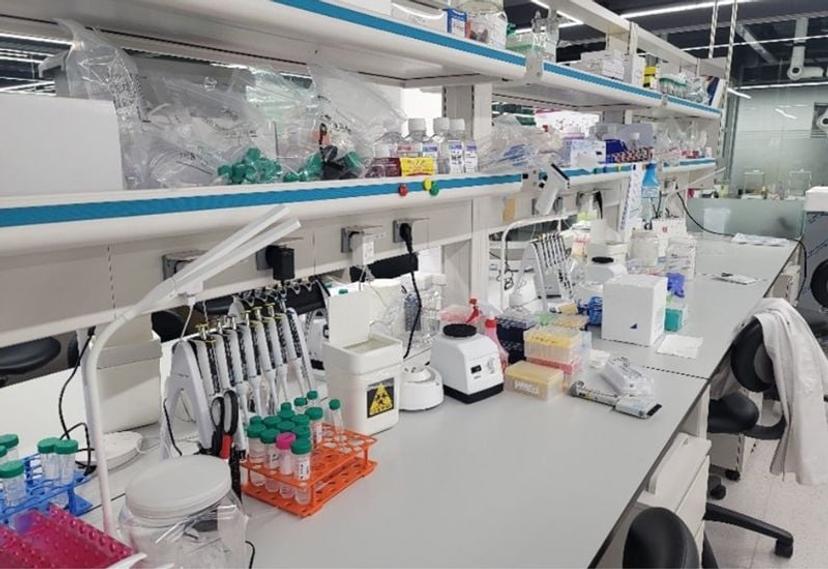
Kim and her team heavily rely on pipettes to facilitate and streamline research efforts. “Pipettes are widely used in basic experiments, including cell seeding or buffer change. When I conduct contamination-prone experiments, I use Sartorius’ sterilization tips, which are used to help conduct the experiment without contamination issues,” explains Kim. The pipettes Kim is referring to are Tacta® Mechanical Pipettes, which are single-channel pipettes that cover a volume range of 0.1 µL – 10,000 µL, and multichannel pipettes are available from 0.5 µL up to 300 µL volume. “Tacta was convenient because it has good grip, along with a lightweight and smooth operation. It was also beneficial to use a Safe Cone Filter to reduce the contamination of the pipette.” Kim continues, “compared to other brands, Tacta is light, easy to use, and more cost effective.”
A bright future in research
When asked about her aspirations for the future and the potential impact of this newly developed drug, Kim says, “we hope to contribute to increasing the cure rate of patients. Existing general antibodies have a limited treatment rate, so the cure rate is quite low. When our new drug comes into the market, we hope to increase the cure rate of patients so that they can lead healthy lives.” Kim and her dedicated team are diligently working toward the development of their latest drug, aiming to provide relief to individuals with autoimmune diseases and cancer. Their collective mission could soon revolutionize healthcare quality and create a lasting and transformative impact on the treatment of such diseases.
Related products
Request Quote for All Products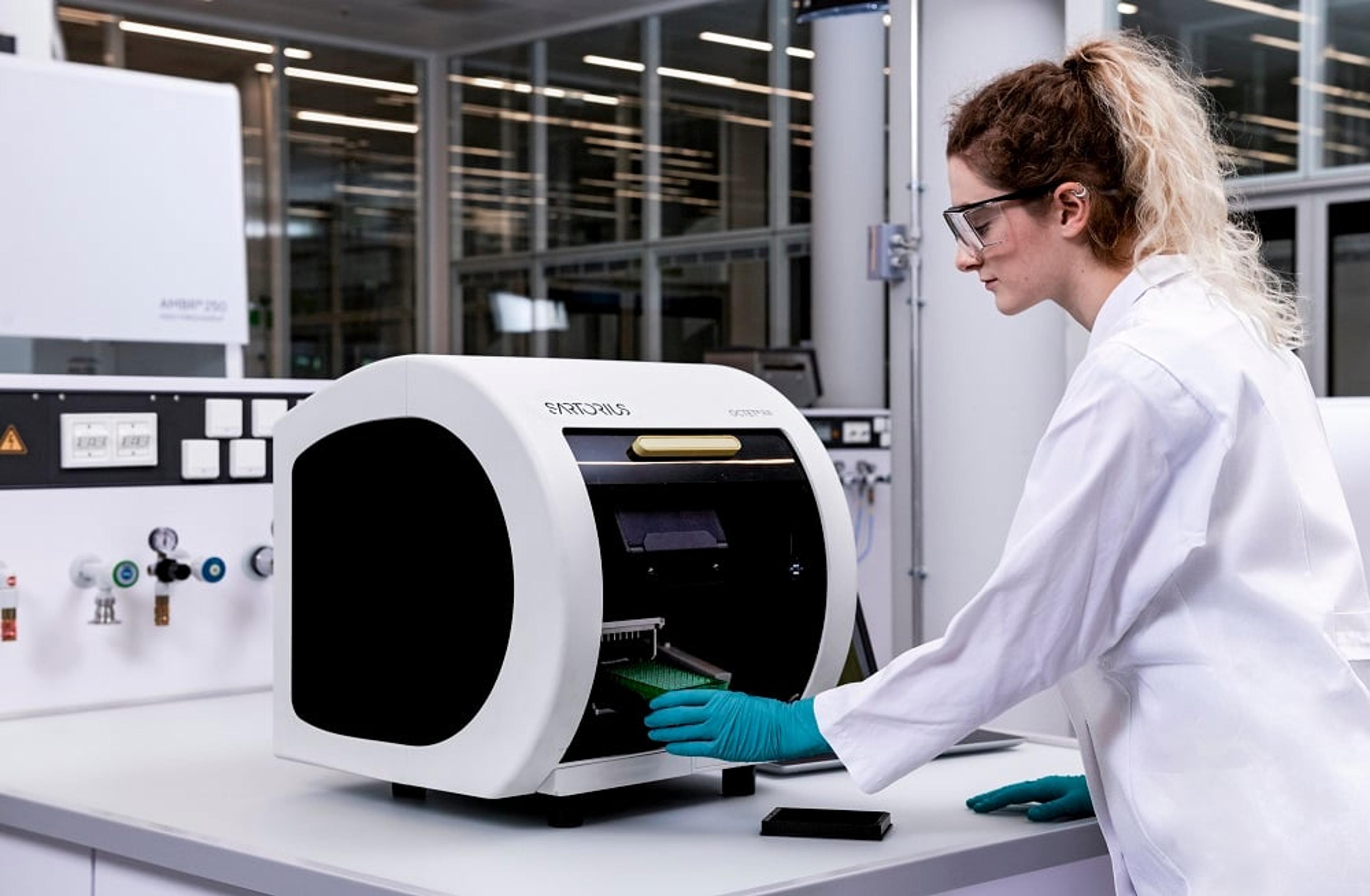
Octet® R8 BLI System
Sartorius GroupSuperior quantitation and kinetics performance with increased assay flexibility and cost efficiency.