
PerkinElmer introduces first ready-to-use HTRF® and AlphaLISA® assay kits for CHO HCP impurities detection and quantification
New high-throughput, no-wash assays contribute to the development, manufacture and quality control of safer, more effective biotherapeutics
5 Apr 2022
Industry news
PerkinElmer, Inc., a global leader committed to innovating for a healthier world, today announced two ready-to-use HTRF® and AlphaLISA® no-wash assay kits designed to quickly and easily detect and quantify CHO HCP impurities during biopharmaceutical manufacturing. Recombinant therapeutic proteins, such as monoclonal antibodies, some vaccines, and other biologics, must be free of residual host cell protein (HCP) impurities to prevent immunogenicity or reduced potency, stability, or overall effectiveness of a drug.
PerkinElmer's HTRF and AlphaLISA CHO HCP kits are the first on the market designed for ready-to-use homogeneous, no-wash assays for the detection and quantification of CHO HCP impurities. These off-the-shelf kits are designed to deliver a streamlined workflow, a broader dynamic range, and higher sensitivity than traditional multi-step ELISA assays. The kits are also easily automatable and can be miniaturized to a small sample volume, significantly increasing throughput to 384-well plates.
"The ability to quickly and easily detect, quantify and subsequently eliminate CHO HCP impurities during biopharmaceuticals manufacturing has continued to be a key challenge," said Alan Fletcher, senior vice president of life sciences at PerkinElmer. "These innovative HTRF and AlphaLISA assay kits are designed to make this critical step more effective and efficient within existing workflows and contribute to quality control and successful biotherapeutics."
The addition of these assays further propels PerkinElmer’s ability to provide scientists with end-to-end workflow solutions spanning from early-stage drug discovery and development with assays, cell lines, microplates, and plate readers, into later-stage research and development with high-content screening, image analysis, and data management, automated liquid handling and more.
Want the latest science news straight to your inbox? Become a SelectScience member for free today>>
Related products
Request Quote for All Products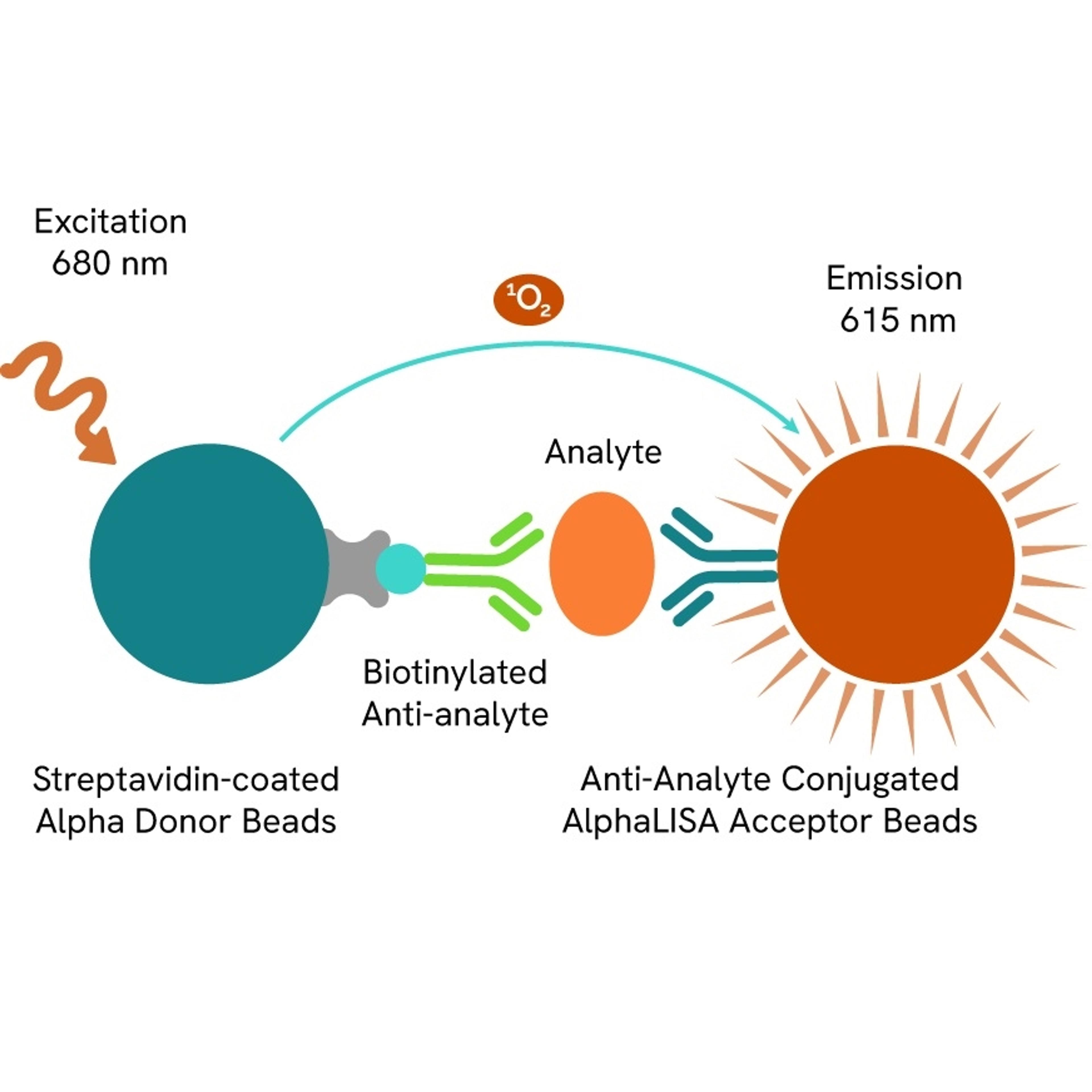
AlphaLISA
RevvityAlpha is a bead-based, no-wash luminescent technology. When Alpha Donor and Acceptor beads are brought together through binding to target, a cascade of chemical reactions is set in motion, creating an amplified signal. These versatile beads are conjugated with various biomolecules that enable detection of unique biological events, offering maximum flexibility.