
PerkinElmer helps accelerate gene therapy research with industry-first ready-to-use viral vector assays
Streamlined workflows aim to shorten research and development for novel therapies to combat diseases like cancer and Alzheimer's
23 Nov 2022
Product news
PerkinElmer, a global leader committed to innovating for a healthier world, has launched ready-to-use Adeno-associated Virus Vectors (AAV) Detection Kits to support researchers working on gene therapies for a variety of serious diseases. The high-throughput viral assays are designed to help researchers quickly and easily characterize viral vector particles being produced to enable decision-making for safe and efficient gene transfer.
The validated and fully automatable assays are built on PerkinElmer's proprietary AlphaLISA® technology which requires no separation and are the only optimized, no-wash AAV detection assays currently available on the market. The new offering provides researchers expanded options to measure viral titers beyond ELISA and other wash-based systems, which can be time-consuming and limited in assay range.
Designed to streamline gene therapy research and development workflows with an easier-to-use and more high throughput method, each of the seven kits detects specific serotypes to target different cell types in the body for gene therapy application.
"One of the best ways to support gene therapy researchers is to provide solutions to help them navigate the unique workflows they work with to shorten and simplify the path from lab to clinic,” said Dr. Alan Fletcher, Senior Vice President, Life Sciences at PerkinElmer. “Our new AAV detection kits are designed to do that by eliminating long, tedious protocols while expanding the detection range to enable potential cures for people living with cancer, Alzheimer’s, muscular dystrophy, infectious diseases, and more.”
Additional Innovation Details
PerkinElmer's off-the-shelf AlphaLISA AAV Detection Kits:
- Support a variety of serotypes including AAV1, AAV2, AAV3B, AAV5, AAV6, AAV8, and AAV9
- Leverage bead-based luminescent amplification to deliver a wider detection range for viral titer (load) measurements in a no-wash format
- Can be miniaturized to small sample volumes to support 384 and 1536 well plate throughput
The AAV assays expand PerkinElmer's cell and gene therapy portfolio which also includes gene editing and modulation, cell counting, antibody and flow cytometry innovations. They also further propel the Company's ability to provide researchers with end-to-end workflow solutions from early-stage discovery through later stage research and development.
Want the latest science news straight to your inbox? Become a SelectScience member for free today>>
Related products
Request Quote for All Products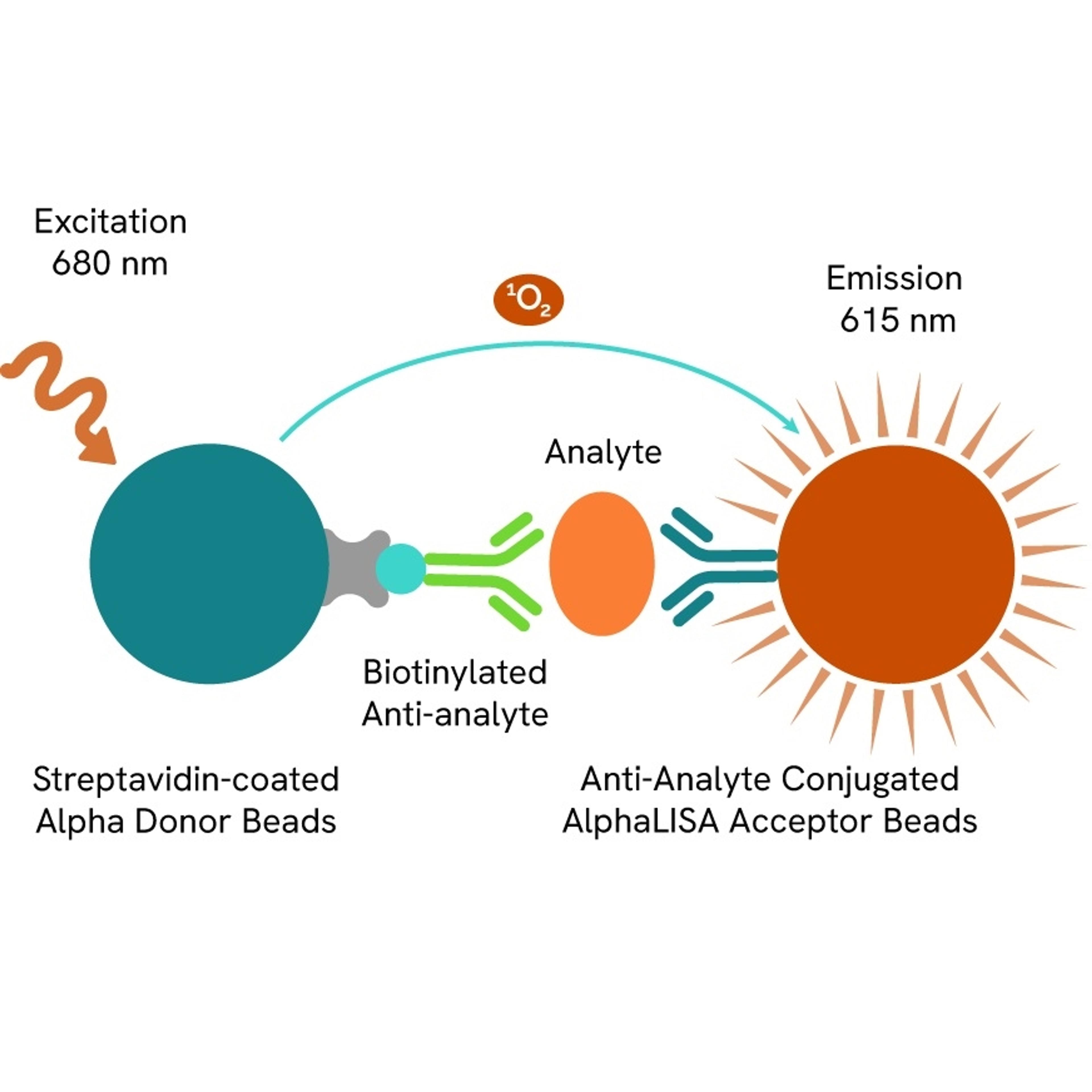
AlphaLISA
RevvityAlpha is a bead-based, no-wash luminescent technology. When Alpha Donor and Acceptor beads are brought together through binding to target, a cascade of chemical reactions is set in motion, creating an amplified signal. These versatile beads are conjugated with various biomolecules that enable detection of unique biological events, offering maximum flexibility.