PerkinElmer expands KRAS oncology drug discovery assays with new ready-to-use AlphaLISA kits

Will enable cancer researchers to accelerate identification and optimization of therapeutic leads by better decoding KRAS mutations present in 25% of tumors

4 Aug 2021

Diane Li
Assistant Editor

Product news

PerkinElmer, Inc., a global leader committed to innovating for a healthier world, has announced four new ready-to-use AlphaLISA® KRAS kits, designed to help scientists better understand complex KRAS protein structures and mutations so they can more easily, quickly, and precisely identify potential new therapeutic candidates for a wide range of prevalent cancers. Researchers will now be able to choose between PerkinElmer’s HTRF® or AlphaLISA assays to use the best methods for their individual labs.

The Company’s AlphaLISA and HTRF kits are the first ready-to-use homogenous assays for KRAS/SOS1 inhibition analysis on the market. Prior to these offerings, labs looking to measure this inhibition in a no-wash format needed to develop their own assays, source their own proteins, and optimize assay conditions, which can be time and resource consuming. PerkinElmer’s AlphaLISA and HTRF kits streamline workflows by offering fully validated kits to identify novel KRAS inhibitors in a no-wash format with no optimization necessary, and each kit comes with recombinant proteins, detection reagents, and assay buffers.

“KRAS mutations are present in approximately 25% of tumors, making them one of the most common gene mutations linked to cancer,” said Alan Fletcher, senior vice president of life sciences and technology, PerkinElmer. “Because KRAS mutations are found in numerous types of cancer, from lung to colorectal to pancreatic cancers, it’s a prime drug target. However, due to its complex protein structure, it’s been quite difficult to research for many years. We’re proud to help advance opportunities for researchers to learn more about KRAS mutations in the hopes of providing better treatment opportunities by bringing our AlphaLISA kits to market in this critical research space.”

The addition of these assays further propels PerkinElmer’s ability to provide end-to-end solutions for oncology researchers, which includes early stage drug discovery with assays, cell lines, microplates and plate readers, as well as later stage research with high-content screening, image analysis and management, automated liquid handling, and more. Learn more about PerkinElmer’s cancer research solutions for genomics, cell-based assays, cellular imaging, in vivo imaging, and informatics here.

Do you use PerkinElmer products in your lab? Write a review today for your chance to win a $400 Amazon Gift Card>>

AlphaLISA

Revvity

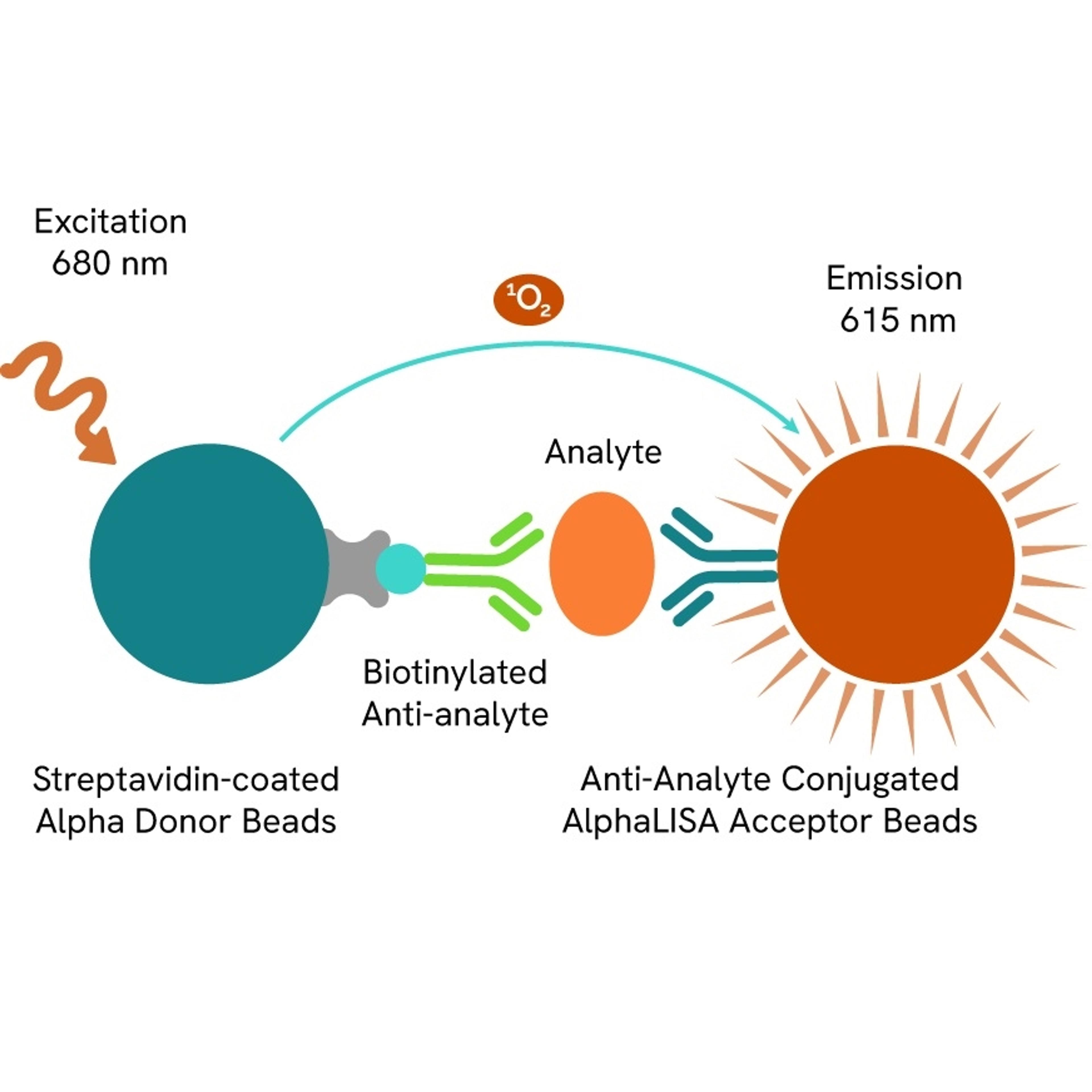
Alpha is a bead-based, no-wash luminescent technology. When Alpha Donor and Acceptor beads are brought together through binding to target, a cascade of chemical reactions is set in motion, creating an amplified signal. These versatile beads are conjugated with various biomolecules that enable detection of unique biological events, offering maximum flexibility.

(1)

Links

Tags

Cell Adhesion AssaysCell adhesion assays are used to quantitate attachment and analyze the molecular mechanisms for extracellular matrix adhesion, cell migration and sensitivity to inhibitors. Find the best cell adhesion assay equipment in our peer-reviewed product directory: compare products, check customer reviews and receive pricing direct from manufacturers.Cell-Based AssaysCell-based assays are used to monitor the presence, quantity and activities of a desired cellular analyte including drug molecules or biomarkers. This can reveal information on cell health (apoptosis, cytotoxicity, viability and proliferation assays), cell metabolism, cell migration and cell signaling mechanisms. Find the best cell-based assay products, kits and equipment with our peer reviewed product directory: compare products, check customer reviews and receiving pricing direct from manufacturers.Biopharmaceutical AdvancesBiopharmaceutical advances follow the development of pharmaceuticals derived from biotechnology, also known as biotechnology medicines. Biopharmaceuticals may be produced from cell lines, plants, or microbial cells. Important considerations of biopharmaceutical use include application, cost, production process and purification.Cancer CellsCancer cells are abnormal cells that divide uncontrollably, leading to the formation of tumors and the spread of cancer. Studying cancer cells is crucial for developing new treatments and understanding tumor biology. Explore cancer cell research products in our peer-reviewed product directory; compare products, check reviews, and get pricing directly from manufacturers.Cancer DiagnosticsThere are a wide variety of diagnostic tests for cancer available, and this range continues to expand as our knowledge of cancer improves. Current diagnostic methods include biopsy, imaging and blood tests for known biomarkers. New methods in research development include liquid biopsies and cancer breathalyzers.Assay DevelopmentThe process of proving an assay to be sensitive with respect to the target is known as assay development. The assay should be able to characterize novel compounds and measure the potency of these compounds against a validated biological target.Drug DiscoveryDrug discovery is the process of identifying potential new medications, involving stages such as target identification, compound screening, and preclinical development. It relies on cutting-edge technologies like high-throughput screening, artificial intelligence, and molecular modeling to accelerate the identification of drug candidates. Drug discovery plays a pivotal role in developing new therapies for diseases ranging from cancer to rare genetic disorders. Browse our peer-reviewed product directory to find the latest drug discovery technologies, compare options, check customer feedback, and get pricing directly from manufacturers.TumorsTumor research focuses on understanding abnormal cell growth that leads to cancer. Identifying biomarkers, studying tumor microenvironments, and developing targeted therapies are critical for advancing cancer treatment. Early detection and personalized treatment options are key to improving outcomes for patients. Browse our peer-reviewed product directory to explore tools for tumor research, diagnostics, and cancer therapies; compare products, read customer reviews, and get pricing directly from manufacturers.Drug DevelopmentDrug development refers to the process of bringing a new drug to market.Cancer ResearchAlthough cancer is often referred to as a single condition, it actually consists of more than 100 different diseases. Microscopy, mass spectrometry, high throughput sequencing and flow cytometry are some of the most common techniques employed in cancer research labs.
PerkinElmer expands KRAS oncology drug discovery assays with new ready-to-use AlphaLISA kits