New Software Allows Wyatt Technology’s Automated DLS Instrument to be used in Labs Operating Under GLP and GMP

6 Mar 2017

Lois Manton-O'Byrne, PhD
Executive Editor

Product news

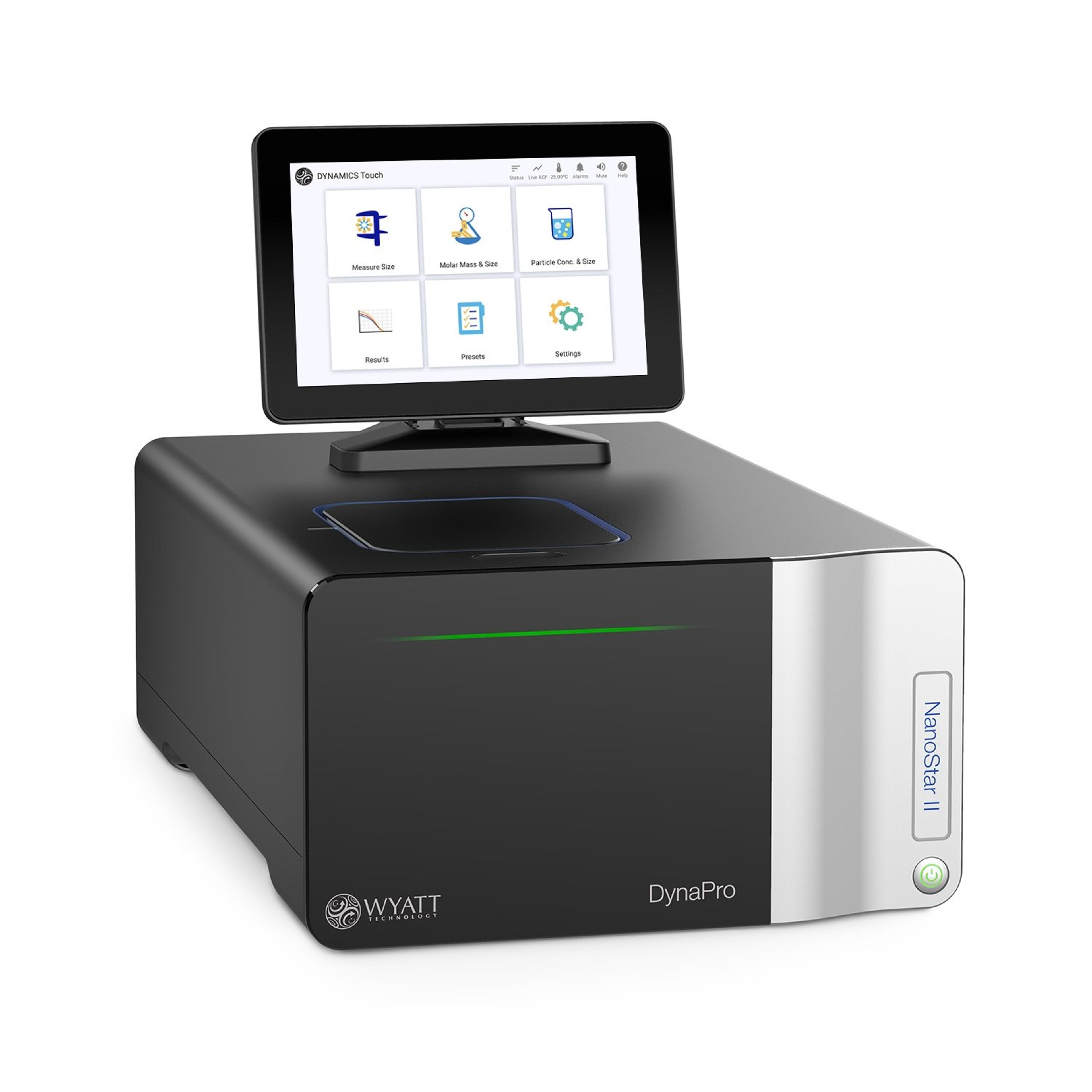
Wyatt Technology, a leader in instrumentation for absolute macromolecular and nanoparticle characterization, announces the release of its 21CFR11-compliant software for its groundbreaking DynaPro® Plate Reader II (PRII). The DynaPro PRII is the only high-throughput, automated dynamic light scattering instrument capable of measuring the size and stability of biopharmaceuticals and nanoparticles directly in microtiter plates, including the most popular 96, 384 and 1536 wellplate versions.

The DynaPro PRII is widely used in the biopharmaceutical industry to characterize aggregation as well as thermal, conformational and colloidal stability of biotherapeutics. It finds extended application in assessing the developability of candidate molecules with minimal sample consumption in order to identify promising therapeutics, and in the subsequent rapid development of stable, safe formulations.

The DYNAMICS® software for control, data acquisition and extended analysis of dynamic light scattering data, is included with each instrument. With the release of the 21CFR11-compliant Security Pack (SP) in DYNAMICS, labs operating under GLP or GMP regulatory requirements may now take advantage of the DynaPro PRII’s automation to measure dozens, hundreds or even thousands of samples per day.

Additional instruments for GLP and GMP labs

DYNAMICS SP supports additional advanced instrumentation from Wyatt Technology besides the DynaPro PRII. The DynaPro NanoStar, a traditional cuvette-based dynamic light scattering detector popular with protein scientists due to its high sensitivity and ultra-low sample requirement, has also seen early adoption into GxP labs, as has Wyatt’s Möbius zeta potential/dynamic light scattering instrument.

With the release of DYNAMICS SP, any GMP or GLP lab that requires determination of nanoparticle size, protein aggregation, or the zeta potential of a drug delivery or diagnostic nanoparticle is now empowered to reduce hands-on time and increase throughput, thanks to the automation made possible by operating the DynaPro PRII or the Möbius with DYNAMICS SP.

Links

Tags

Microplate Readers / DetectorsMicroplate readers are used to automate the detection and analysis of labeled or label-free components in microplates during assays or live-cell monitoring. Microplate readers are generally distinguished by their mode of detection. Types include absorbance, luminescence, fluorescence intensity, fluorescence polarization, TRF / FRET and multimode microplate readers. Microplate readers deliver a high throughput of samples by reading multiple wells simultaneously, with the 96-well format the most commonly used. As a result, microplate readers are often used in the drug discovery, bioassays, research and pharmaceutical industries for screening applications. Microplate loading can also be automated, with robotic microplate stackers to increase throughput. Find the best microplate readers in our peer-reviewed product directory: compare products, check customer reviews and receive pricing direct from manufacturers.Protein PurificationProtein purification is a vital step in drug discovery, therapeutics, biotech and life science research. The purification process typically involves subcellular or membrane protein extraction with cell lysis kits, separation of proteins from cell debris by filtration or spin columns, and the isolation of proteins of interest from other proteins and impurities with affinity purification (including fusion protein tags and antibody binding proteins A, G and L), immunoprecipitation or chromatographic methods, such as ion exchange, size exclusion and immobilized metal affinity chromatography. All purification methods come in multiple formats for your laboratory needs, including agarose or magnetic beads, resins, columns and filter plates. Find the best protein purification equipment in our peer-reviewed product directory: compare products, check customer reviews and receive pricing direct from manufacturers.Biopharmaceutical AdvancesBiopharmaceutical advances follow the development of pharmaceuticals derived from biotechnology, also known as biotechnology medicines. Biopharmaceuticals may be produced from cell lines, plants, or microbial cells. Important considerations of biopharmaceutical use include application, cost, production process and purification.Software PlatformsSoftware platforms are useful for various stages of laboratory experiments from data collection to data storage and processing. For instance lab software is available for system control, data management, data analysis and qualification / validation.Protein BiologyThe analysis of protein expression, identity and function is vital for many areas of life science research and drug discovery. Some of the most commonly used techniques in protein analysis include Western blotting, electrophoresis and mass spectrometry.BiopharmaceuticalsBiopharmaceuticals are proteins and other compounds (such as nucleic acids) produced by living organisms that have uses as therapeutics or for in vivo diagnostics. The most well known example of a biopharmaceutical product, and the first to be approved for therapeutic use, was recombinant human insulin.Dynamic Light ScatteringDynamic light scattering is used to measure the size distribution of particles in suspension by analyzing the way light scatters off them. It is commonly used in materials science, nanotechnology, and protein characterization. Browse our peer-reviewed product directory to find the best dynamic light scattering systems, compare products, check reviews, and get pricing directly from manufacturers.BiotherapeuticsBiotherapeutics are proteins and other compounds (such as nucleic acids) produced by living organisms that have uses as therapeutics or in <i>in vivo</i> diagnostics. The most well-known example of a biotherapeutic product, and the first to be approved for therapeutic use, was recombinant human insulin.PharmaceuticalsPharmaceuticals are medicinal drugs used in healthcare to diagnose, prevent, cure and treat illnesses. Pharmaceuticals that are excreted after use appear in wastewater and can have detrimental effects on the environment.NanoparticlesNanoparticles are between 1-100nm in size. Nanoparticles can be used for a wide variety of applications including biomedical, catalysis and electronics.GLP