New Multi-Angle Light Scattering Detector for Protein and Polymer Characterization

24 Apr 2017

Lois Manton-O'Byrne, PhD
Executive Editor

Product news

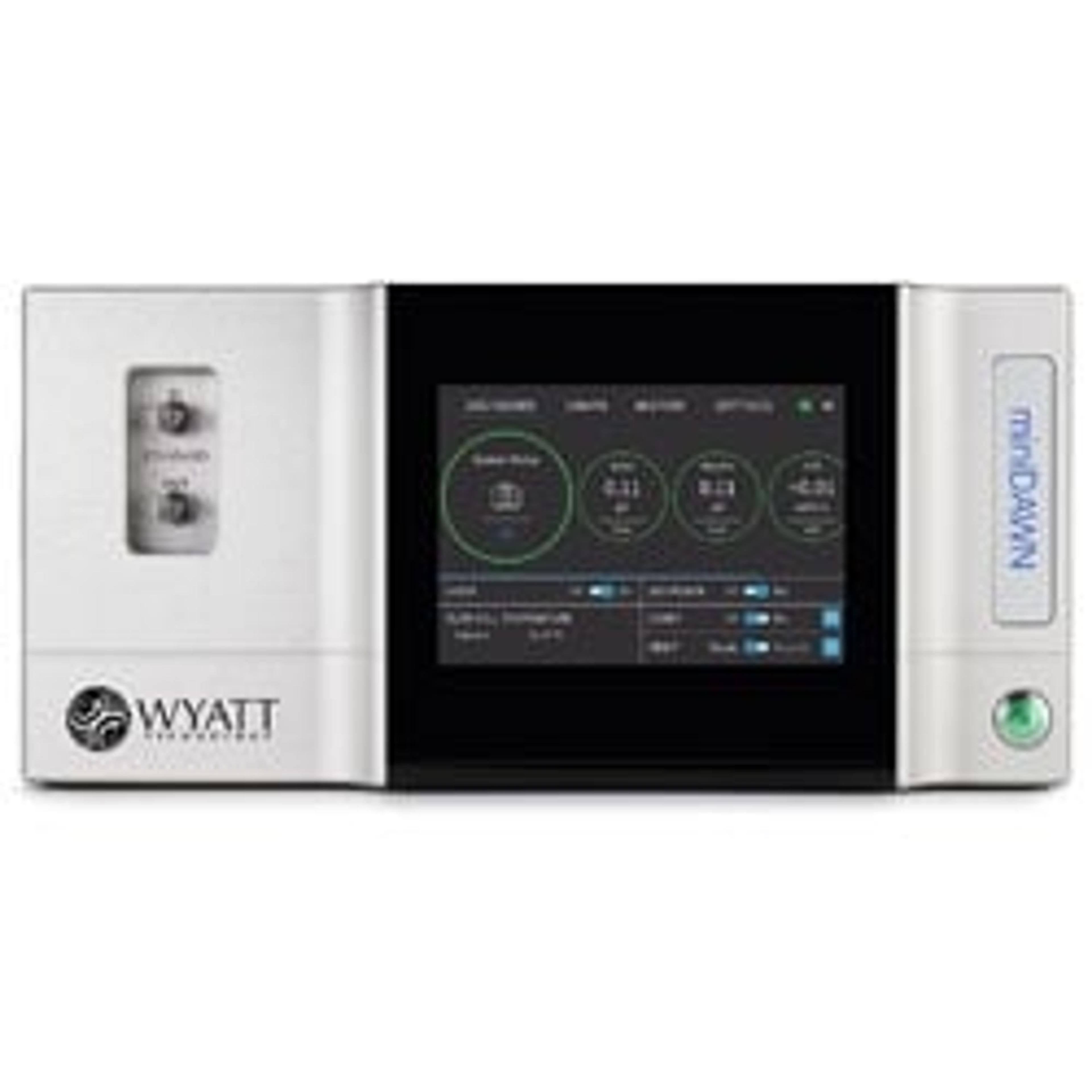
Wyatt Technology, a leader in instrumentation for absolute macromolecular and nanoparticle characterization, announces the launch of its next generation multi-angle light scattering (MALS) detector for SEC/GPC, the miniDAWN® TREOS® II. The TREOS II is the only SEC-MALS detector for size exclusion or gel permeation chromatography that offers full field serviceability, extended ease-of-use, and a built-in upgrade path from HPLC to UHPLC technology.

The miniDAWN TREOS II interfaces to most HPLC-SEC systems to characterize all types of macromolecules and nanoparticles in solution with radii below 50 nm, from 200 Da to 10 MDa. This range covers most proteins, peptides and small polymers. It provides superior sensitivity for its class of compact MALS detectors, robustly measuring the molar mass and size of as little as 25 ng of 100 kDa polystyrene when using standard GPC columns. This level of performance is 4x better than competing light scattering instruments. With the addition of a WyattQELS embedded dynamic light scattering module, the TREOS II can simultaneously determine hydrodynamic radius (rh) from 0.5 to 50 nm and rms radius (rg) from 10 nm to 50 nm.

Continuing a tradition of excellence in meeting the most demanding needs of its customers, Wyatt has ensured that its next-generation MALS detector combines improved performance with higher productivity.

miniDAWN™

Waters | Wyatt Technology

The miniDAWN™ Multi-Angle static Light Scattering (MALS) detector performs absolute characterization of the molar mass and size of macromolecules and nanoparticles in solution, offering superb sensitivity over a wide range of molecular weight, size and concentration.

(42)

Links

Tags

UHPLC and HPLCHigh performance liquid chromatography (HPLC) and ultra high performance liquid chromatography (UHPLC), also known as UPLC, are analytical techniques used to separate, identify and quantitate components of complex mixtures including biological samples such as proteins and lipids as well as chemical mixtures of pesticides, drugs and oils. Both techniques are liquid chromatographic methods but differ by operating pressures (HPLC < 6000 psi < UHPLC ). Components of HPLC and UHPLC systems include columns, detectors, pumps, autosamplers and column heaters. Explore a range of UHPLC and HPLC columns for your specific sample needs including reverse phase, normal phase, ion exchange, HILIC, ion exclusion and size exclusion columns. For more specialized HPLC, explore FPLC, countercurrent LC and simulated moving bed systems. Find the best UHPLC and HPLC equipment in our peer reviewed product directory: compare products, check customer reviews and receive pricing direct from manufacturers.Size Exclusion ChromatographySize exclusion chromatography (SEC) is a liquid chromatographic technique used to separate and identify molecules based on their size, including polymers, proteins, nanoparticles & nucleic acid. SEC is further subdivided into gel filtration chromatography (GFC) and gel permeation chromatography (GPC) when an aqueous or organic mobile phase is used respectively. HPLC-based SEC systems and columns are available for analytical separation alongside SEC spin columns or filters to prep samples for many protocols. Find the best size exclusion chromatography equipment in our peer-reviewed product directory: compare products, check customer reviews and receive pricing direct from manufacturers.Protein PurificationProtein purification is a vital step in drug discovery, therapeutics, biotech and life science research. The purification process typically involves subcellular or membrane protein extraction with cell lysis kits, separation of proteins from cell debris by filtration or spin columns, and the isolation of proteins of interest from other proteins and impurities with affinity purification (including fusion protein tags and antibody binding proteins A, G and L), immunoprecipitation or chromatographic methods, such as ion exchange, size exclusion and immobilized metal affinity chromatography. All purification methods come in multiple formats for your laboratory needs, including agarose or magnetic beads, resins, columns and filter plates. Find the best protein purification equipment in our peer-reviewed product directory: compare products, check customer reviews and receive pricing direct from manufacturers.Protein QuantificationThe detection and quantification of proteins in a sample is vital across life sciences, pharmaceutical research and clinical diagnostics, and a variety of equipment is available to scientists to simplify the workflow. Proteins of interest can be easily labeled and detected on light-based detection instruments. Immunoassay kits allow you to identify a specific protein of interest and protein detection beads or antibody microarrays allow you to identify multiple specific proteins at once. Protein interactions and enzyme activity can also be monitored with protein-protein interaction assays. Additionally, the biophysical characterization of proteins is made easy with biokinetic analyzers. Find the best protein detection and quantification products in our peer-reviewed product directory: compare products, check customer reviews and receive pricing direct from manufacturers.Chromatography Method DevelopmentChromatography method development is the process of designing and optimizing chromatographic techniques to separate and analyze complex mixtures. This includes selecting appropriate stationary and mobile phases, determining flow rates, and optimizing detection methods. Successful method development is essential for high-quality results in fields like pharmaceuticals, food safety, and environmental analysis. Explore chromatography method development tools in our peer-reviewed product directory; compare products, check reviews, and get pricing directly from manufacturers.Dynamic Light ScatteringDynamic light scattering is used to measure the size distribution of particles in suspension by analyzing the way light scatters off them. It is commonly used in materials science, nanotechnology, and protein characterization. Browse our peer-reviewed product directory to find the best dynamic light scattering systems, compare products, check reviews, and get pricing directly from manufacturers.PolymersPolymers are large molecules made up of many repeat units. Natural polymers such as DNA and proteins are essential to life, whereas synthetic polymers such as polystyrene and polyethylene are used widely due to their functionality. Typical techniques for analysis include GPC, SEC, DSC, FT-IR and NMR.NanoparticlesNanoparticles are between 1-100nm in size. Nanoparticles can be used for a wide variety of applications including biomedical, catalysis and electronics.Protein Biology
New Multi-Angle Light Scattering Detector for Protein and Polymer Characterization